
Below is the complete list of Anne Rice’s Lives of the Mayfair Witches books in order. For this series, the chronological reading order is the same as the order of publication.
Publication Order of Lives of the Mayfair Witches Books


About Lives of the Mayfair Witches
Anne Rice’s Lives of the Mayfair Witches is a Southern Gothic trilogy about inheritance, desire, occult power, family secrecy, and the terrible weight of ancestry. Set largely in New Orleans, the series centers on the Mayfair family, a wealthy and mysterious line of witches whose history is bound to a powerful spirit named Lasher. The core trilogy consists of The Witching Hour, Lasher, and Taltos, but its influence extends into Rice’s wider supernatural universe, especially where the Mayfair world later intersects with The Vampire Chronicles.
The Witching Hour is the foundation of the series and one of Rice’s most ambitious novels. It introduces Rowan Mayfair, a brilliant neurosurgeon who does not yet understand her connection to the vast Mayfair lineage, and Michael Curry, a man whose near-death experience leaves him changed. Their relationship draws them into the family’s long history, where generations of Mayfair women have been watched, influenced, and sometimes destroyed by Lasher. The book’s scale is unusual: it moves between contemporary story and extended family chronicle, allowing Rice to build the Mayfairs as a dynasty rather than merely a cast of characters.
The series is deeply concerned with power passed through bloodlines. The Mayfair legacy offers wealth, beauty, influence, and psychic ability, but those gifts are entangled with manipulation and possession. Lasher is not simply a ghost or a demonic intruder. He is seductive, patient, intimate, and bound to the family’s identity over centuries. Rice uses him to explore a disturbing question: when a family myth has shaped generations, can any one heir truly stand outside it?
Lasher continues the story after the revelations and upheavals of the first novel, narrowing the focus while pushing the supernatural consequences further. Rowan’s choices and Lasher’s ambitions become central, and the series moves from family haunting into a more physical and dangerous form of supernatural transformation. The novel is darker and more divisive in tone, partly because it forces the mystical ideas of The Witching Hour into direct bodily and emotional consequences. The Mayfair gift is no longer only a legacy to uncover; it has become something that can reshape lives immediately and violently.
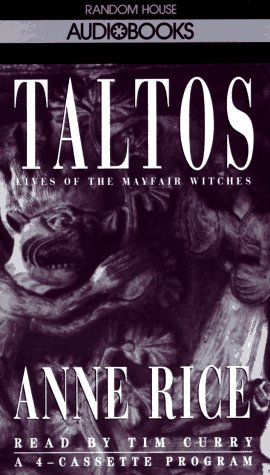
Taltos expands the mythology again by exploring the ancient race connected to Lasher’s nature. The title itself signals that the series is no longer only about one New Orleans family and its spirit. Rice broadens the supernatural history behind the Mayfairs, linking personal inheritance to older, stranger possibilities. The novel also gives greater importance to the Talamasca, the secretive scholarly order that observes supernatural beings throughout Rice’s fiction. Their presence helps connect the Mayfair books to the wider architecture of her imagined world.
The trilogy should be distinguished from later crossover novels. Books such as Merrick, Blackwood Farm, and Blood Canticle bring Mayfair-related material into The Vampire Chronicles, but they are not part of the original Lives of the Mayfair Witches trilogy. They matter for readers following Rice’s full supernatural continuity, especially the overlap between vampires, witches, and the Talamasca, but the Mayfair family saga has its essential shape in the three main books.
What makes Lives of the Mayfair Witches distinctive is its combination of sensual atmosphere and genealogical obsession. Rice writes New Orleans as a city of houses, gardens, secrets, old money, Catholic residue, and stories that cling to place. The Mayfairs are both glamorous and cursed, powerful and trapped. Across the trilogy, witchcraft is less a set of spells than a language of inheritance: what families give, what they hide, what they excuse, and what finally comes demanding payment.