
Below is the complete list of Walter Mosley’s Leonid McGill books in order. For this series, the chronological reading order is the same as the order of publication.
Publication Order of Leonid McGill Books


About Leonid McGill
Leonid McGill knows that becoming a better man does not erase the damage caused by years of dishonesty. A former boxer and private investigator with a history of working for criminals, he has spent much of his life manipulating evidence, deceiving people, and accepting assignments that compromised his conscience. Walter Mosley places this morally conflicted detective at the centre of the Leonid McGill series, a collection of six hardboiled mysteries set in contemporary New York City.
Introduced in The Long Fall (2009), McGill is a short, powerfully built Black investigator approaching late middle age. His unusual first name reflects his father’s communist sympathies, while his Scottish surname comes from an ancestral slaveholder. Both details suggest the complicated relationship between personal identity and inherited history that runs through Mosley’s fiction.
McGill operates from an office in Manhattan, where his knowledge of the city’s criminal networks remains a valuable professional asset. He has spent years cultivating relationships with corrupt businessmen, dangerous criminals, and powerful individuals who prefer their problems resolved without official attention. These connections provide information and occasional protection, but they also make escaping his past extremely difficult.
In The Long Fall, McGill accepts an apparently straightforward assignment to locate several young men. When his investigation contributes to deadly consequences, he must confront the moral implications of work he once performed without hesitation. His determination to change becomes the foundation of a continuing struggle between financial survival, personal responsibility, and the temptation to return to familiar methods.
Unlike a conventional detective seeking to restore justice, McGill begins the series as someone who has actively contributed to injustice. His efforts to reform are therefore complicated by people who remember his earlier activities and expect him to continue operating according to the same rules.
His domestic life offers little relief. His marriage to Katrina is deeply troubled, and his relationships with the three children he has helped raise involve affection, resentment, and difficult questions about loyalty. The complications surrounding his family frequently intersect with his investigations, forcing him to consider how his professional choices affect those closest to him.
In Known to Evil (2010), McGill’s attempt to locate a missing young woman brings him into contact with individuals whose wealth and political influence make them especially dangerous. The assignment demonstrates how easily his investigative work can become entangled with the interests of people accustomed to operating beyond ordinary legal restrictions.
The series continues exploring compromised justice through cases involving blackmail, murder, financial crimes, and concealed family histories. All I Did Was Shoot My Man (2012), for example, follows McGill’s efforts to uncover the truth surrounding a woman convicted after shooting her boyfriend during a robbery. The investigation raises questions about guilt, manipulation, and whether someone can be both responsible for a violent act and the victim of a larger deception.
By And Sometimes I Wonder About You (2015), McGill’s professional responsibilities have become increasingly difficult to separate from his family troubles. His investigations reveal how wealth and privilege can conceal generations of wrongdoing, while his personal relationships expose vulnerabilities that physical strength and streetwise intelligence cannot resolve.
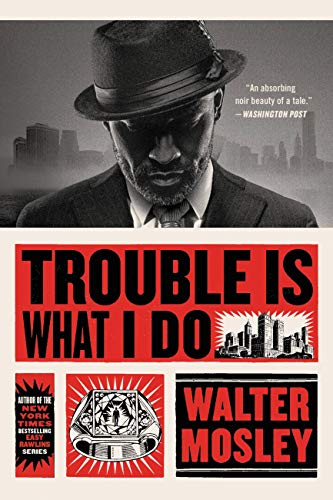
Trouble Is What I Do (2020) places McGill in another confrontation involving powerful interests and dangerous family secrets. The novel continues his movement toward becoming an investigator willing to protect vulnerable individuals despite the considerable risks involved.
A related short story, Karma (2010), provides additional insight into McGill’s background and his complicated relationship with the consequences of earlier decisions. It complements the six full-length novels without replacing their central narrative.
Mosley’s contemporary New York setting distinguishes Leonid McGill from his better-known Easy Rawlins mysteries, which take place primarily in mid-twentieth-century Los Angeles. Where Easy’s investigations reveal the historical realities of racial segregation and changing American society, McGill confronts the inequalities of a modern city shaped by immense wealth, organised crime, political influence, and economic insecurity.
The novels retain the moral complexity of classic hardboiled fiction while giving unusual attention to the investigator’s own responsibility for past wrongdoing. McGill is intelligent, physically formidable, and capable of considerable violence, but his greatest conflicts frequently concern decisions that cannot be resolved through intimidation or detective work.
His continuing struggle gives the series its distinctive character. Each investigation offers another opportunity to act differently, yet his earlier choices remain capable of threatening everything he hopes to preserve. Through McGill, Mosley examines redemption not as a single transformative event, but as a difficult process requiring repeated acts of courage, restraint, and moral responsibility.