
Below is the complete list of J.K. Rowling’s Harry Potter books in order. For this series, the chronological reading order is the same as the order of publication.
Publication Order of Harry Potter Books


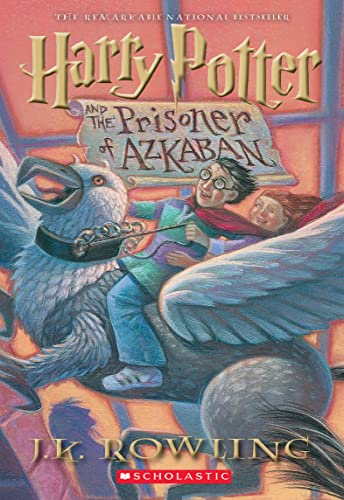


Publication Order of Harry Potter Companion Books


Publication Order of Harry Potter Illustrated Editions Books
with Jim Kay


Publication Order of Harry Potter Short Stories/Novellas Books

Publication Order of Harry Potter Picture Books

Publication Order of Pottermore Presents Books
Fantastic Beasts The Original Screenplay Books
By: J.K. Rowling, Steve Kloves


About Harry Potter
J.K. Rowling’s Harry Potter series is a seven-book fantasy sequence that follows Harry Potter from neglected orphan to central figure in a hidden magical war. The story begins with Harry Potter and the Philosopher’s Stone, published in the United States as Harry Potter and the Sorcerer’s Stone, and follows Harry through each year of his education at Hogwarts School of Witchcraft and Wizardry. Although the books are often remembered for spells, houses, creatures, and school adventure, the series is held together by a much larger conflict involving identity, death, loyalty, prejudice, and the return of Lord Voldemort.
Harry enters the magical world at eleven, discovering not only that he is a wizard but that his parents were murdered by Voldemort when he was a baby. That history makes him famous before he understands why, and Rowling uses that imbalance to shape much of the series. Harry is repeatedly treated as a symbol, a survivor, or a threat, while he himself is still a boy trying to understand friendship, school, family, and the strange expectations placed on him.
Hogwarts gives the early books much of their charm and structure. The castle, moving staircases, portraits, ghosts, feasts, Quidditch matches, and house rivalries create a world that feels both magical and familiar. Harry’s friendships with Ron Weasley and Hermione Granger form the emotional center of the series. Ron brings warmth, humor, and a connection to everyday wizarding family life, while Hermione brings intelligence, discipline, and moral courage. Their friendship is not perfect, but its growth across the books gives the story its strongest human foundation.
The first three novels are often more school-mystery driven, with each book built around secrets hidden within Hogwarts or Harry’s past. The Chamber of Secrets deepens the history of Voldemort and introduces questions of blood status and prejudice, while The Prisoner of Azkaban expands Harry’s understanding of his parents, betrayal, and the people who loved them. By The Goblet of Fire, the series changes scale dramatically. The wider wizarding world becomes more visible, the danger turns public and irreversible, and Voldemort’s return moves the story into darker territory.
The later books are increasingly concerned with power and its misuse. The Ministry of Magic, the press, school authority, family lineage, and magical law all become part of the conflict. The Order of the Phoenix shows how denial and bureaucracy can become dangerous, while The Half-Blood Prince looks more closely at Voldemort’s origins and the choices that made him what he became. By The Deathly Hallows, the school-year pattern breaks almost completely, sending Harry, Ron, and Hermione outside Hogwarts to face the final pieces of the war.
One of the series’ strengths is the way earlier details return with greater meaning. Objects, names, family histories, spells, and casual remarks often become important later, giving the books a strong sense of long-term design. The structure rewards reading in order because Harry’s understanding grows gradually, and the tone matures with him. The world that first appears whimsical becomes more morally complicated as the characters age.
Harry Potter is ultimately a coming-of-age fantasy about love, choice, and resistance to dehumanizing power. Its magic is memorable, but its lasting force comes from the relationships beneath it: the friends who stay, the adults who sacrifice, the families people are born into, and the families they choose. The series follows Harry through fear, anger, grief, and responsibility, but it never loses sight of the idea that courage is often built through loyalty, not isolation.