
Below is the complete list of Beverly Lewis’ Annie’s People books in order. For this series, the chronological reading order is the same as the order of publication.
Publication Order of Annie’s People Books


About Annie’s People
Beverly Lewis’s Annie’s People trilogy follows Annie Zook, a young Amish woman whose artistic gift places her at odds with the expectations of her family and Old Order community. Set in Paradise, Pennsylvania, the series develops around a question more complicated than whether Annie should remain Amish or enter the outside world: whether she can live honestly when faith, family loyalty, creative identity, and romantic attachment appear impossible to reconcile.
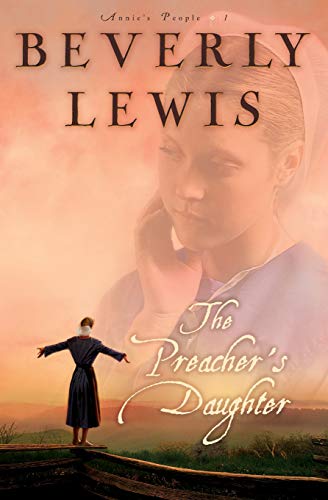
In The Preacher’s Daughter, twenty-year-old Annie has not yet committed herself to the Amish church. As the daughter of a preacher, her hesitation carries unusual weight, and her private devotion to painting makes the decision still more difficult. Representational art is incompatible with the standards governing her community, so the work that gives her comfort must remain concealed. Annie’s secret studio becomes both a refuge and evidence of the divided life she is attempting to maintain.
The opening novel surrounds Annie with characters facing their own forms of confinement. Her longtime pen pal Louisa Stratford arrives from Colorado after breaking an engagement, exchanging an affluent modern environment for the simplicity of Amish country. Louisa shares Annie’s love of art, but her outsider’s freedom also throws Annie’s restrictions into sharper relief. Esther Hochstetler, Annie’s friend, confronts severe difficulties within her marriage, while an old disappearance continues to trouble several families. These threads prevent the trilogy from becoming a narrow romance or a simple argument about Amish rules. The community contains genuine affection and spiritual conviction, but also pain that is difficult to address when preserving order depends upon silence.
Ben Martin introduces another challenge to Annie’s intended future. An Englisher with personal reasons for coming to Paradise, he is drawn to Annie and increasingly entangled in questions about his own history. Their relationship is not merely forbidden courtship placed across a cultural divide. Ben’s search for answers becomes connected to secrets already buried within the community, giving the romantic story consequences for several households.
The Englisher deepens Annie’s conflict after she promises her father that she will abandon her art and prepare to join the church. What appears to be a decisive act of obedience instead exposes how difficult it is to suppress a defining part of herself. Her growing attachment to Ben increases the pressure, while Ben’s concealed past complicates his position as an outsider. Lewis uses the middle volume to tighten the links among art, ancestry, religious commitment, and communal authority rather than resolving any one thread in isolation.
By The Brethren, Annie is living with the shunned Esther and has been separated from both Ben and her painting. Her choices now carry public consequences, and revelations involving Ben’s identity force the community to confront matters it has resisted. The final novel brings Annie’s personal struggle into direct contact with the authority of the church brethren, asking what obedience means when accepted tradition conflicts with conscience and truth.
The trilogy is designed as one continuous narrative. Mysteries, relationships, and acts of concealment pass directly from one volume into the next, while later discoveries alter the meaning of earlier events. Its strongest element is the parallel between Annie’s hidden art and the secrets kept by others: both reveal the emotional cost of living behind an acceptable outward appearance. Through Annie, Louisa, Esther, and Ben, Lewis presents several different searches for belonging, each shaped by the difficult realization that a secure community and an authentic life are not always the same thing.