
Below is the complete list of Beverly Lewis’ Home To Hickory Hollow books in order. For this series, the chronological reading order is the same as the order of publication.
Publication Order of Home To Hickory Hollow Books



About Home To Hickory Hollow
Beverly Lewis’s Home to Hickory Hollow series consists of five related stand-alone novels set in the Old Order Amish community of Hickory Hollow, Pennsylvania. Rather than following one family through a continuous saga, the books introduce a different central conflict and principal cast in each installment. Familiar residents, shared customs, and the Lancaster County setting provide continuity, but every novel reaches its own resolution. The series begins with The Fiddler and concludes with The Last Bride.
Hickory Hollow is already an established part of Lewis’s fictional landscape, having served as the setting associated with her Heritage of Lancaster County novels. Returning to it allows her to explore the community from several angles. Some protagonists were raised within Amish life and must decide how closely their personal choices can conform to its expectations. Others arrive as outsiders, attracted by what they perceive as the community’s simplicity, stability, or spiritual purpose. Through both perspectives, Lewis distinguishes admiration for Plain life from the demanding reality of joining or remaining within it.
The Fiddler introduces Amelia Devries, a classically trained violinist who secretly performs traditional fiddle music under another identity. After becoming stranded in the Pennsylvania mountains, she meets Michael Hostetler, a young Amish man facing uncertainty about his own future. Their encounter brings together two musicians whose talents and obligations pull them in different directions. Amelia’s struggle between professional success and personal fulfillment establishes one of the series’ recurring concerns: a calling can be genuine even when the life built around it has become restrictive.
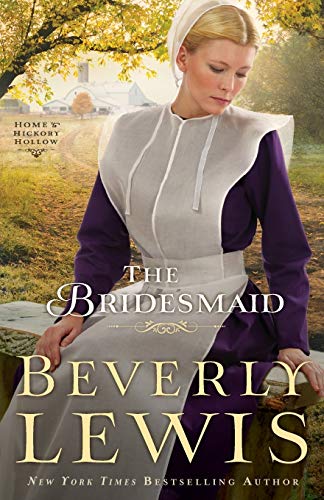
In The Bridesmaid, Joanna Kurtz has repeatedly stood beside other women at their weddings while her own prospects remain unsettled. Her connection with Eben Troyer offers the possibility of marriage, but distance, family responsibilities, and communal expectations complicate their courtship. The novel gives familiar romantic material greater weight by asking what each person may reasonably sacrifice and whether affection can survive when neither is completely free to relocate.
The Guardian shifts toward Jodi Winfield, an English schoolteacher who finds a lost Amish child while house-sitting near Lancaster. Returning the girl to Hickory Hollow draws Jodi into a community she does not fully understand. Her involvement with the child’s family develops alongside her own spiritual uncertainty, using the contrast between outsider and insider experience without presenting Amish life as an effortless solution to modern disappointment.
That outsider perspective becomes even more central in The Secret Keeper. Jennifer Burns deliberately seeks admission into the Old Order Amish church, believing she is prepared to surrender modern conveniences and adopt Plain customs. Her journey reveals that conversion involves more than clothing, household skills, or an affection for old-fashioned life. The community must judge whether her commitment is durable, while Jennifer must confront the difference between idealizing a culture and submitting to its faith, discipline, and collective authority.
The Last Bride returns the emphasis to conflict within an Amish family. Tessie Miller loves Marcus King despite her father’s opposition, and the couple secretly marry outside the community while pretending to remain single at home. Their attempt to postpone confrontation turns private disobedience into a far more painful crisis. The novel examines secrecy, church discipline, grief, and the precarious position of a woman whose circumstances may be judged before the truth is known.
Across the series, Hickory Hollow functions as the continuing character. The novels share an interest in vocation, courtship, obedience, honesty, and belonging, yet approach those subjects through different lives rather than repeating one family pattern. Reading them in publication order preserves the gradual familiarity of the community and its recurring figures, but their stand-alone construction also reflects the series’ central idea: every household within a seemingly uniform society contains its own private tests of faith and conscience.