
Below is the complete list of Charles Todd’s Inspector Ian Rutledge books in order. For this series, the chronological reading order is the same as the order of publication.
Publication Order of Inspector Ian Rutledge Books


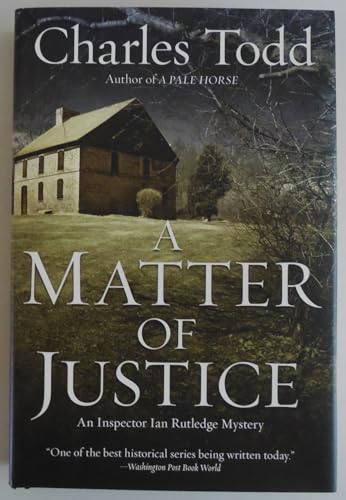


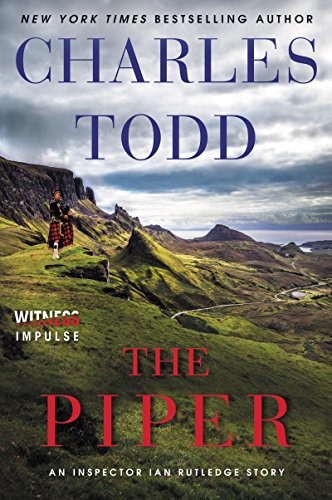


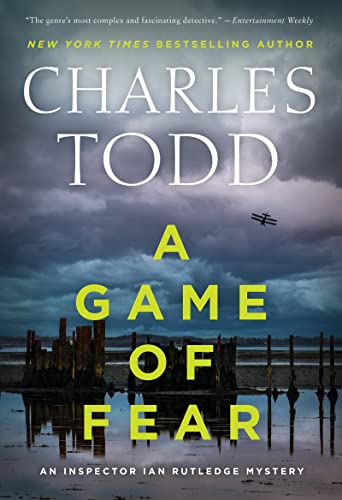

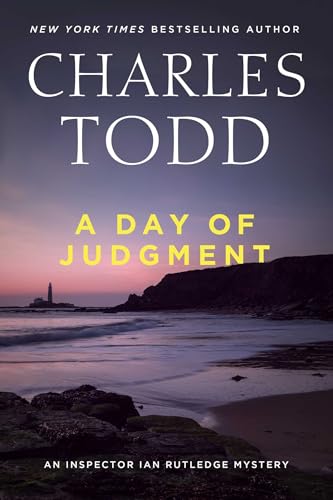
About Inspector Ian Rutledge
Charles Todd’s Inspector Ian Rutledge series is one of the defining modern historical mystery sequences set in the shadow of the First World War. Written under the Charles Todd name by Caroline Todd and her son Charles Todd, the series follows Ian Rutledge, a Scotland Yard inspector who returns to police work after service on the Western Front. The books are murder mysteries, but their deeper subject is aftermath: what war has done to memory, conscience, class, family, village life, and the fragile idea of normality in postwar Britain.
The series begins with A Test of Wills, which introduces Rutledge as a capable detective whose professional calm hides severe psychological damage. During the war, he ordered the execution of Hamish MacLeod, a Scottish soldier under his command, and Hamish’s voice now lives in his mind as an accusing, advising, relentless presence. This device is central to the series, but it is not used as a simple gimmick. Hamish represents guilt, trauma, instinct, memory, and the part of Rutledge that survived the trenches without ever fully returning from them.
Rutledge’s cases often take him away from London into villages, market towns, country houses, coastal communities, and rural landscapes where old hierarchies still matter. The settings are quiet on the surface, but the Todds repeatedly show how silence can preserve rot. Families conceal disgrace, communities protect reputation, veterans carry unspoken wounds, and the polite order of English society masks resentment, fear, poverty, jealousy, and grief. Rutledge’s strength as an investigator lies partly in his ability to read those pressures. He knows what people hide because he is himself a man built around concealment.
The series is best read in publication order because Rutledge’s inner life develops alongside the cases. Each book generally presents a distinct investigation, so the sequence is not a single continuous plot in the modern thriller sense. Still, the emotional continuity matters. Rutledge’s relationship with Hamish, his damaged confidence, his effort to maintain authority at Scotland Yard, and his uneasy return to civilian life accumulate across the novels. Reading from the beginning preserves the slow understanding of how isolated he is, and how much discipline it takes for him to keep functioning.
The mysteries themselves are traditional in structure but psychologically modern in tone. Rutledge interviews witnesses, studies physical evidence, tests alibis, and follows inconsistencies, yet the solution usually depends on more than procedure. The Todds are interested in motive as moral pressure: love warped by duty, inheritance poisoned by secrecy, wartime choices brought home, social shame turned dangerous, and grief expressed as violence. The killer is rarely just a clever criminal. More often, the crime grows from a private history that the community has failed, or refused, to face.
Hamish also changes the way the reader experiences detection. He questions Rutledge, provokes him, warns him, and sometimes sees what Rutledge resists seeing. Their inner dialogue gives the books a haunted rhythm, making investigation feel inseparable from self-interrogation. Rutledge is solving murders in a country that wants to move on, while his own mind will not allow him that luxury.
The Inspector Ian Rutledge novels stand apart because they treat the detective figure not as a detached genius, but as a wounded professional whose insight has been purchased at great cost. The series combines the pleasures of classic British mystery with a sustained portrait of trauma after war. In Rutledge’s world, the past is never past; it waits in letters, rumors, battlefields, locked rooms, family stories, and the voice of a dead man who still refuses to be silent.