
Below is the complete list of Alexander McCall Smith’s 44 Scotland Street books in order. For this series, the chronological reading order is the same as the order of publication.
Publication Order of 44 Scotland Street Books


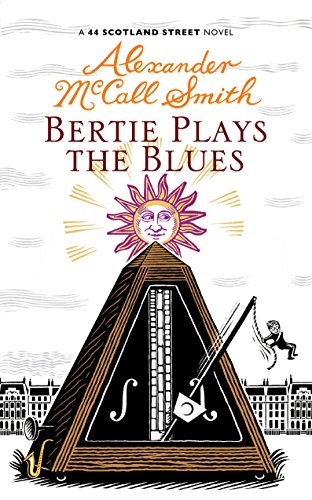


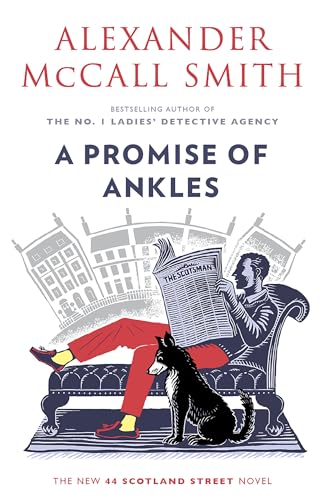


About 44 Scotland Street
Alexander McCall Smith’s 44 Scotland Street series is an ensemble comedy of manners set in Edinburgh’s Georgian New Town. Its fictional address stands on a real street, providing a meeting place for tenants, neighbors, friends, relatives, artists, professionals, and persistent meddlers whose lives overlap in unpredictable ways. The novels are less concerned with a single continuing plot than with the accumulation of everyday dramas: friendships deepen, romances falter, families interfere, careers change, and seemingly minor decisions reveal large questions about character.
The series originated as a daily serial in The Scotsman, inspired partly by the tradition of newspaper fiction and Armistead Maupin’s Tales of the City. That background explains its episodic structure, frequent shifts between characters, and ability to turn a conversation, misunderstanding, or social embarrassment into a complete miniature drama. The installments were later collected into novels, beginning with 44 Scotland Street, and the project developed into what the author’s official site describes as the world’s longest-running serial novel.
The opening book introduces Pat Macgregor, a young woman taking a second gap year who moves into the building with Bruce Anderson, a vain and self-satisfied surveyor convinced of his irresistible appeal. Their neighbors include the intellectual and observant Domenica Macdonald, portrait painter Angus Lordie, and the Pollock family. These characters establish the series’ broad social range, moving between rented flats, galleries, cafés, professional offices, schools, and Edinburgh institutions where status and self-image are continually tested.
Bertie Pollock gradually becomes the emotional center of the sequence. Intelligent, truthful, and far more perceptive than the adults controlling his life, Bertie longs for ordinary childhood pleasures while his domineering mother, Irene, subjects him to Italian lessons, saxophone practice, psychotherapy, yoga, and ambitious educational theories. His patient father, Stuart, rarely succeeds in challenging Irene’s plans. Bertie’s attempts to gain modest freedoms provide much of the comedy, but his predicament also allows McCall Smith to explore parental vanity, childhood autonomy, and the harm adults can cause while insisting they know what is best.
Around Bertie develops one of contemporary fiction’s most recognizable neighborhood ensembles. Domenica offers sharp judgments on Edinburgh society; Angus moves through artistic circles with his loyal dog, Cyril; Big Lou provides food, conversation, and emotional steadiness at her café; Bruce repeatedly allows vanity and opportunism to guide his decisions. Characters depart, return, marry, separate, travel, and reinvent themselves, yet the series preserves the sense that Edinburgh continually draws their stories back together.
Publication order gives these developments their proper emotional and comic timing. Relationships and long-running jokes build gradually, while a decision that appears insignificant in one volume may return with consequences several books later. Even so, the original serial form makes the novels more forgiving than a tightly plotted saga. Individual episodes often stand on their own, and the pleasure comes as much from observing the characters’ habits as from anticipating a particular resolution.
The 44 Scotland Street books are warm without treating their characters as faultless. McCall Smith writes sympathetically about loneliness, pride, love, selfishness, artistic ambition, family pressure, and the human need to be taken seriously. His Edinburgh is both a specific city and a small moral world in which people repeatedly inconvenience, misunderstand, disappoint, and rescue one another.