
Below is the complete list of Rick Riordan books in order. For this series, the chronological reading order is the same as the order of publication.
Publication Order of Percy Jackson and the Olympians Books


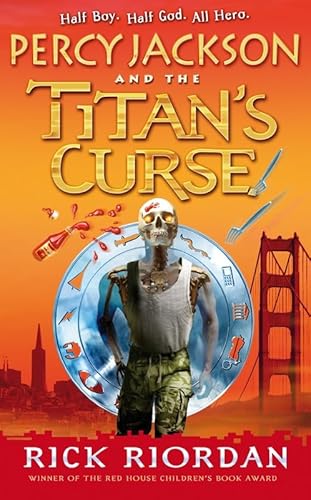


Publication Order of Percy Jackson and the Olympians Companion Books


Publication Order of Percy Jackson and the Olympians: The Graphic Novels Books


Publication Order of Camp Half-Blood Books

Publication Order of The Heroes of Olympus Books


- The Blood of Olympus (2014)
The Blood of Olympus was first published in 2014; within the The Heroes of Olympus series, it is listed as book #5.
Publication Order of The Heroes of Olympus Companion Books

Publication Order of The Heroes of Olympus: The Graphic Novels Books
with Robert Venditti


Publication Order of Kane Chronicles Books


Publication Order of Kane Chronicles Companions Books


Publication Order of Kane Chronicles: The Graphic Novels Books
with Orpheus Collar


Publication Order of Percy Jackson & Kane Chronicles Crossover Books


Publication Order of Magnus Chase and the Gods of Asgard Books


Publication Order of Magnus Chase and the Gods of Asgard Companion Books

Publication Order of Nico Di Angelo Adventures Books
with Mark Oshiro


Publication Order of The Trials of Apollo Books


Publication Order of Tres Navarre Books


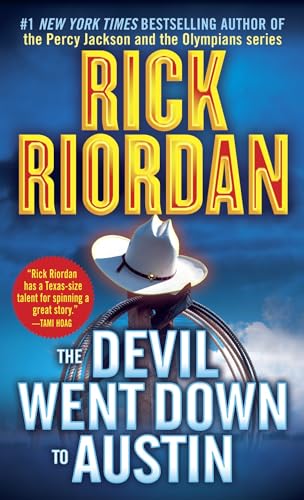
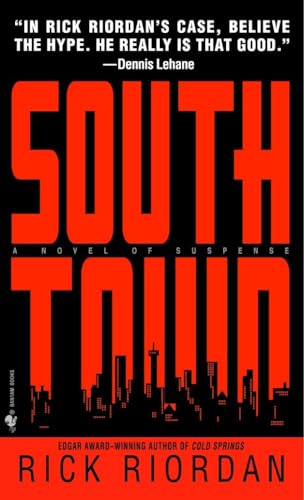
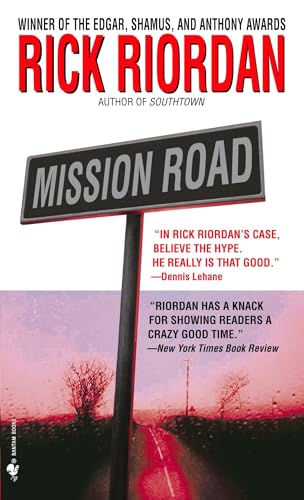

Publication Order of Standalone Novels Books


Publication Order of Short Stories/Novellas Books
- A Small Silver Gun (1998)
A Small Silver Gun was published in 1998 and is listed as book #1 in the Short Stories/Novellas series.
Publication Order of The 39 Clues Books


About Rick Riordan
Rick Riordan is an American author best known for turning ancient mythology into fast, funny, character-driven adventure fiction for young readers. Born in San Antonio, Texas, in 1964, he began his career not as a full-time novelist but as a teacher, working for many years with middle school students. That classroom background is central to understanding his fiction. Riordan’s books move quickly, explain complex mythological ideas in an accessible way, and often speak directly to readers who may feel restless, different, underestimated, or out of place.
Before Percy Jackson made him internationally famous, Riordan wrote the Tres Navarre mystery series for adults, beginning with Big Red Tequila. Those early novels showed his interest in mystery structure, danger, regional setting, and sharp first-person narration. His career changed dramatically with The Lightning Thief, the first Percy Jackson and the Olympians novel, published in 2005. The book introduced Percy Jackson, a boy with ADHD and dyslexia who discovers that he is the son of Poseidon. Instead of treating Percy’s differences as weaknesses, Riordan reframed them as part of his identity as a demigod, a choice that helped many young readers feel seen.
Percy Jackson became the foundation for Riordan’s larger fictional universe. The original five-book series modernized Greek mythology through Camp Half-Blood, quests, gods with contemporary personalities, monsters hiding in plain sight, and a narrator whose sarcasm made the danger feel approachable. Percy’s voice is one of Riordan’s greatest strengths: funny, impatient, loyal, and emotionally honest. The books are adventurous, but they are also about friendship, family, courage, and growing up while carrying responsibilities no child should have to face alone.
Riordan later expanded the world through The Heroes of Olympus, which widened the cast and brought Roman mythology into the story. The Kane Chronicles turned to Egyptian mythology through siblings Carter and Sadie Kane, while Magnus Chase and the Gods of Asgard explored Norse myth with a different kind of humor and a more urban fantasy feel. The Trials of Apollo took one of the Greek gods himself and made him vulnerable, arrogant, comic, and gradually more self-aware. Across these series, Riordan’s bibliography is best understood as a set of connected mythological adventure worlds rather than one simple sequence.
Another major part of Riordan’s legacy is the Rick Riordan Presents imprint, which publishes mythology-inspired books by other authors from different cultural backgrounds. While Riordan’s own books drew heavily from Greek, Roman, Egyptian, and Norse traditions, the imprint allowed other writers to tell stories rooted in Korean, Cuban, Mexican, Indian, African, and other mythological traditions with their own voices and authority. This widened the idea of what a mythology adventure for young readers could look like.
In recent years, Riordan has continued returning to the Percy Jackson universe through books such as The Chalice of the Gods, Wrath of the Triple Goddess, and the Nico di Angelo novel The Sun and the Star, co-written with Mark Oshiro. He has also been closely involved with the Disney+ adaptation of Percy Jackson and the Olympians, giving the screen version a stronger connection to the spirit of the books than earlier adaptations had.
Riordan’s writing endures because it combines speed, humor, mythology, and emotional clarity. His heroes are rarely the polished, chosen-one figures they first appear to be. They are anxious, impulsive, grieving, loyal, angry, confused, brave, and often learning as they go. That mix of ancient myth and modern vulnerability made Rick Riordan one of the defining children’s and middle-grade authors of the twenty-first century.