
Below is the complete list of Agatha Christie’s Miss Marple books in order. For this series, the chronological reading order is the same as the order of publication.
Publication Order of Miss Marple Books


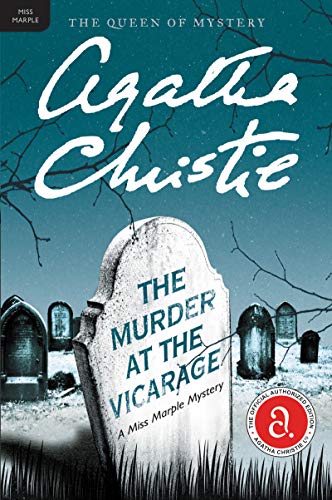




Publication Order of Miss Marple Short Stories/Novellas Books



Publication Order of Miss Marple Collections Books


About Miss Marple
Agatha Christie’s Miss Marple books work very differently from the Hercule Poirot novels, and that difference is exactly why they endure. Miss Marple does not dominate a room in the way Poirot does. She is quiet, elderly, apparently harmless, and often underestimated almost immediately. But Christie uses that surface brilliantly. Miss Marple’s power lies in her understanding of people. She knows vanity, malice, greed, resentment, romantic foolishness, and family spite not because she has traveled the world or studied criminal psychology in any formal way, but because she has watched human nature repeat itself in endless small variations. Her great gift is analogy. Somewhere in every murder she sees a village type she has met before.
That village perspective is central to the series. St. Mary Mead may look like a peaceful English village, but in Miss Marple’s hands it becomes proof that no community is innocent simply because it is small. Christie repeatedly uses Miss Marple to make the same unsettling point: the same impulses that produce scandal, cruelty, and murder in a quiet parish are present everywhere else too. The drawing room, the seaside hotel, the country estate, the Caribbean resort, and the train carriage all contain recognizable human patterns. Miss Marple solves crimes because she understands that people do not become better merely by changing setting.
Publication order matters because the books show Christie refining Miss Marple from an initially occasional village observer into one of her great central detectives. The early short stories and the first novel, The Murder at the Vicarage, establish the method and the tone: Miss Marple appears mild, but she is relentlessly perceptive, and her judgments are often sharper than anyone expects. As the series continues through books such as The Body in the Library, A Murder Is Announced, and 4:50 from Paddington, Christie grows more confident in letting Miss Marple move beyond the village without ever losing her essential logic. The later novels keep proving that her local wisdom applies almost anywhere.
Another reason order matters is that Miss Marple is not simply a puzzle device. She is a character with a very specific moral texture. Christie does not romanticize her into a saintly old lady dispensing comfort. Miss Marple can be dry, exacting, and quietly merciless in her assessments. Yet she also carries a certain humanity that keeps the books from becoming cold. She understands weakness because she has watched it all her life. Her knowledge of sin is not abstract, and neither is her sympathy. That combination makes her a subtler figure than her cozy reputation sometimes suggests.
The Miss Marple books also have a different emotional atmosphere from many Poirot novels. Poirot often feels theatrical, symmetrical, and consciously intellectual. Miss Marple feels domestic, observant, and rooted in social texture. Her mysteries are less about display and more about penetration. Christie uses her to uncover not just crimes but private shames, hidden histories, and the dangerous pressure inside ordinary family life. Many of the strongest Marple novels are really about what people have been pretending for years before the murder ever occurs.
That is one reason the series remains so rewarding after the list above. These books are often grouped under the idea of the “cozy mystery,” but that label only partially fits. They are certainly readable, witty, and grounded in familiar settings, but they are also full of emotional chill. Christie understood how much violence can grow out of inheritance, dependency, jealousy, and the long boredom of conventional lives. Miss Marple sees those things because she never mistakes good manners for goodness.
For readers who already have the order above, the best way to think about the Miss Marple books is as a long demonstration of Christie’s quietest and sharpest method. Read in publication order, the series becomes more than a set of village mysteries solved by a clever old woman. It becomes a sustained study of how well one person can understand the darkness in others precisely because she has spent a lifetime watching the ordinary world closely.