
Below is the complete list of Marc Cameron books in order. For each series, the chronological reading order is the same as the order of publication.
Publication Order of Jericho Quinn Books


Publication Order of Jericho Quinn Short Stories/Novellas Books

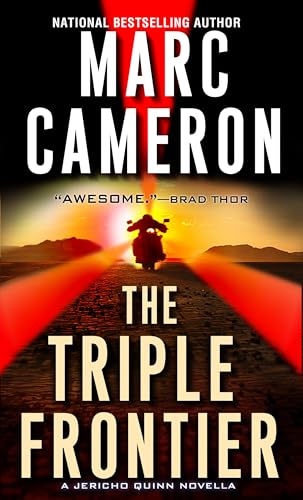
Publication Order of Arliss Cutter Books


Publication Order of Jack Ryan Universe Books


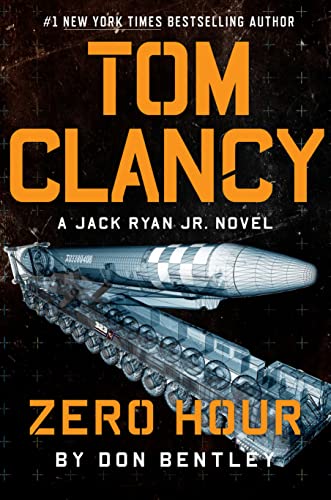


Publication Order of Standalone Books


Publication Order of Jack Ryan Books
About Marc Cameron
Marc Cameron is an American thriller novelist and retired Chief Deputy United States Marshal whose fiction draws heavily on nearly three decades in law enforcement. He is best known for the Jericho Quinn and Arliss Cutter series and for writing seven novels in Tom Clancy’s Jack Ryan universe. His work combines counterterrorism, fugitive investigation, political conspiracy, wilderness survival, military action, and the practical realities of armed professionals operating under pressure.
A native of Texas, Cameron began his career as a uniformed police officer. He subsequently served as a mounted patrol officer, SWAT officer, and detective before joining the United States Marshals Service in 1991. He advanced through assignments as a deputy marshal, fugitive task-force commander, supervisory deputy, senior inspector, and chief in the District of Alaska. His responsibilities included dignitary protection and operations extending from isolated Alaskan communities to major American cities and assignments in Canada and Mexico.
Cameron’s professional interests extend beyond conventional police work. He holds a second-degree black belt in jujitsu and has taught defensive tactics to law-enforcement personnel and civilian groups. He is also a certified scuba diver, trained man-tracking instructor, sailor, and adventure motorcyclist. Motorcycles appear frequently in his fiction, most notably through Jericho Quinn’s BMW GS, while tracking, protective operations, weapons handling, and physical confrontation are presented with the familiarity of someone who has practised the underlying skills.
His first major thriller series began with National Security in 2011. Jericho Quinn is an Air Force Office of Special Investigations agent recruited for highly sensitive counterterrorism missions. The novels move rapidly across international settings and involve biological threats, extremist organizations, covert government factions, nuclear danger, and attacks designed to destabilize entire countries. Quinn is physically formidable, but the series also depends on a recurring operational team and on the personal loyalties that survive beneath the secrecy of his work.
Cameron later created Arliss Cutter, a supervisory deputy U.S. marshal based in Alaska. Beginning with Open Carry, the series shifts away from the global scale of Jericho Quinn toward investigations shaped by remote communities, severe weather, family histories, Indigenous cultures, wilderness travel, and the broad responsibilities of the Marshals Service. Cutter is an experienced tracker with a rigid personal code and an understated manner. The books combine procedural crime fiction with a strong sense of place, using Alaska’s geography as an active element in searches, manhunts, and survival. Cameron had published eight Cutter novels through Back Track in July 2026.
In 2016, Cameron was chosen to continue the Jack Ryan novels created by Tom Clancy. Beginning with Power and Empire, he wrote seven installments centered primarily on President Jack Ryan and the senior political and intelligence figures surrounding him. His run concluded with Command and Control. These books preserved the franchise’s mixture of geopolitical strategy, military capability, intelligence analysis, and threats to the presidency while reflecting Cameron’s own experience with protective operations and interagency work.
He has also written Western fiction under the name Mark Henry, including stories later collected in To Hell and Beyond. His short fiction has appeared in publications including The Saturday Evening Post and Boys’ Life. These works broaden his bibliography, but his central identity remains that of a thriller writer interested in capable professionals confronting failures of authority.
Across his different series, Cameron avoids portraying training as invulnerability. His characters make mistakes, carry injuries, distrust bureaucracy, and depend on partners whose judgment may differ from their own. The authenticity of his fiction comes not only from procedural knowledge, but from an understanding that dangerous work is shaped by preparation, improvisation, loyalty, and the consequences that remain after an operation ends.