
Below is the complete list of Robin James books in order. For each series, the chronological reading order is the same as the order of publication.
Publication Order of Cass Leary Legal Thriller Books


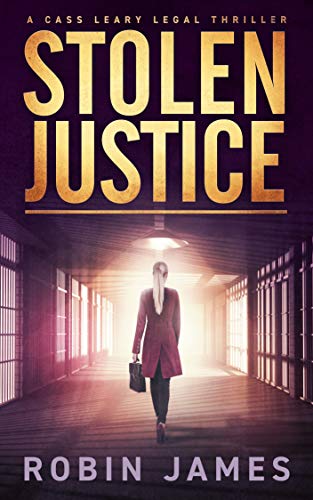


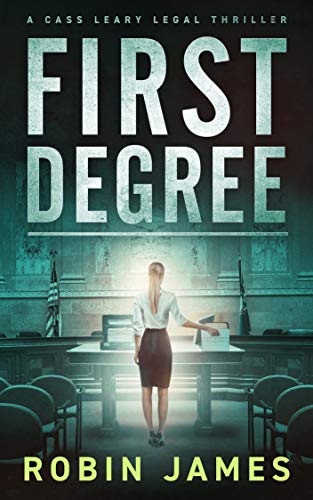






Publication Order of The Mannings Books


Publication Order of Mara Brent Legal Thriller Books


Publication Order of Mercy Gale Books


About Robin James
Robin James is an American author of legal thrillers and crime fiction, best known for the Cass Leary series. A practicing attorney as well as a novelist, James draws on her legal background to create courtroom-centered mysteries involving criminal defense, prosecutors, law enforcement, political pressure, and defendants whose guilt or innocence is rarely as straightforward as it first appears. Her fiction combines the investigative momentum of a crime thriller with the ethical conflicts and procedural maneuvering of courtroom drama.
James grew up in Michigan, and the state provides an important foundation for her fiction. She earned her undergraduate degree from the University of Michigan and later attended law school. Her professional experience as an attorney gives her novels a practical understanding of how legal cases develop beyond the dramatic moments in a courtroom.
Before establishing herself as a novelist, James worked in legal practice, experience that would become particularly valuable when creating Cass Leary. Rather than presenting the law simply as a mechanism for revealing a culprit, James is interested in the pressures placed on the people working inside the justice system. Lawyers must contend with imperfect evidence, unreliable witnesses, institutional interests, limited resources, and clients who may not tell them everything.
Cass Leary made her first appearance in Burden of Truth. A defense attorney with a complicated personal and professional history, Cass returns to her Michigan hometown and becomes involved in a murder case that forces her to confront both the evidence against her client and unresolved elements of her own past. The novel established the combination of legal strategy, investigation, family tension, and small-town secrets that would define the series.
The Cass Leary books subsequently developed into James’s principal body of work. Cass handles cases involving serious crimes and defendants facing potentially devastating consequences. The legal proceedings provide structure, but the stories frequently move outside the courtroom as Cass searches for information that can change how a case is understood.
This investigative dimension separates the novels from purely procedural courtroom fiction. Cass cannot simply wait for testimony to arrive neatly at trial. She has to question assumptions, examine relationships, identify weaknesses in the prosecution’s version of events, and determine which witnesses can be trusted. Her professional obligations sometimes place her in direct conflict with powerful people who would prefer certain facts to remain undiscovered.
James also gives considerable attention to the moral ambiguity of criminal defense. Representing an accused person does not necessarily mean knowing whether that person is innocent. Cass must work within a system in which the prosecution carries the burden of proof and every defendant is entitled to a defense, even when the facts are disturbing or incomplete. That uncertainty creates tension beyond the basic question of identifying a murderer.
The Michigan settings reinforce the personal nature of many of the cases. Communities have long memories, and professional disputes can overlap with family relationships, political influence, old grudges, and local reputations. Cass’s own connections mean she is not always an emotionally detached observer. The past can affect whom she trusts and how others respond to her.
Although legal procedure is fundamental to the novels, James writes primarily for a general thriller audience rather than for legal specialists. Courtroom arguments, evidentiary questions, investigative discoveries, and professional ethics are integrated into fast-moving plots. The technical background gives the conflicts credibility without turning the books into explanations of legal doctrine.
Family and personal relationships provide continuity between cases. Cass develops over the course of the series as the consequences of earlier investigations affect her later decisions. For that reason, the Cass Leary novels are more rewarding in publication order even though each installment has its own principal legal problem and crime.
James has also expanded her crime-fiction bibliography beyond Cass Leary, applying the same interest in justice, investigation, and morally difficult choices to other characters and stories. Her legal experience remains one of the distinguishing elements of her work, particularly when a seemingly simple case begins to unravel under closer examination.
Robin James writes from the perspective that the courtroom is rarely where a criminal case truly begins. By the time attorneys stand before a judge or jury, the outcome has already been shaped by witnesses, police decisions, hidden relationships, incomplete evidence, and choices made long before trial. Her thrillers explore that complicated territory, using the law not merely as a backdrop for suspense but as a system in which discovering the truth and proving it can be two very different things.