
Below is the complete list of Dean Koontz’s Frankenstein books in order. For this series, the chronological reading order is the same as the order of publication.
Publication Order of Frankenstein Books



About Frankenstein
Dean Koontz’s Frankenstein series is a modern thriller reimagining of Mary Shelley’s classic creation myth, moving the legend out of the Gothic past and into a world of biotechnology, police investigation, organized secrecy, and moral horror. The series does not retell Shelley’s novel in a simple updated form. Instead, it imagines that Victor Frankenstein survived into the modern age, reinvented himself as Victor Helios, and continued his obsession with creating life through new scientific means. Against him stands Deucalion, the original creature, now a scarred, powerful, and morally searching figure who has lived for centuries with the consequences of his maker’s ambition.
The series begins in New Orleans, a setting that suits Koontz’s blend of atmosphere, corruption, violence, and the uncanny. Prodigal Son introduces the main conflict through a serial murder investigation led by detectives Carson O’Connor and Michael Maddison. Their case gradually intersects with Deucalion’s arrival and Victor Helios’s hidden world of engineered beings. That combination gives the early books their distinctive structure: part police procedural, part science-fiction horror, part philosophical battle between creator and creation.
Victor Helios is not merely a mad scientist repeating an old experiment. Koontz turns him into a figure of extreme arrogance and control, someone who believes humanity is obsolete and that his own manufactured race can replace it. This makes the series less about one monster and more about the monstrousness of power without humility. The engineered beings around Victor are often physically perfect but emotionally unstable, incomplete, or trapped by the limits of their design. Through them, Koontz explores identity, free will, obedience, and what happens when life is treated as a product rather than a sacred mystery.
Deucalion gives the books their moral center. Unlike many versions of Frankenstein’s creature, he is not simply a victim or avenger. He is dangerous, wounded, intelligent, and spiritually burdened, but he has also developed a stronger sense of conscience than the man who made him. His opposition to Victor is not only personal revenge; it is a reckoning with the misuse of creation itself. That makes the conflict larger than a chase between enemies. It becomes a fight over what kind of beings deserve to inherit the future.
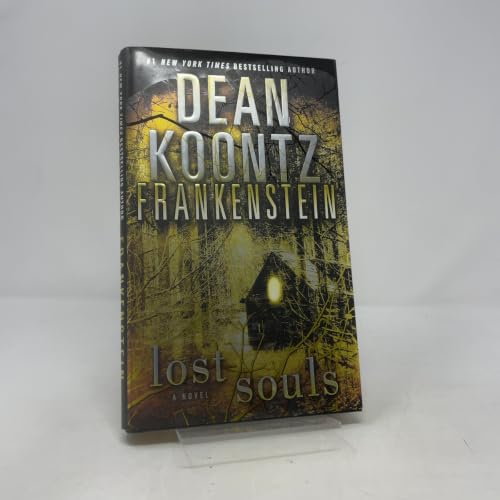
The first three books—Prodigal Son, City of Night, and Dead and Alive—form the original main arc around New Orleans and Victor’s expanding plans. The publication history is slightly unusual because the early volumes involved collaborators, though later editions and the series identity are strongly associated with Koontz. Lost Souls and The Dead Town continue the concept beyond the initial trilogy, shifting the threat into new territory while keeping the central idea intact: Victor’s legacy has not ended simply because one phase of his scheme has been challenged.
Compared with some of Koontz’s warmer suspense novels, Frankenstein is darker, more grotesque, and more explicitly concerned with body horror and scientific hubris. Still, it remains recognizably his work. The series contrasts cruelty with loyalty, engineered perfection with flawed humanity, and dehumanizing ambition with the stubborn value of compassion. Carson and Michael bring wit and grounded human courage to the story, while Deucalion adds mythic weight.
The Frankenstein series is best understood as a five-book modern myth rather than a conventional monster saga. Its appeal lies in the way Koontz takes a familiar literary figure and uses him to examine technology, control, evil, and the meaning of being fully human.