
Below is the complete list of Louis L’Amour’s Louis L’Amour’s Lost Treasures books in order. For this series, the chronological reading order is the same as the order of publication.
Publication Order of Louis L’Amour’s Lost Treasures Books







About Louis L’Amour’s Lost Treasures
Louis L’Amour’s Lost Treasures is unlike the author’s Sackett, Chantry, or Kilkenny books because it is not a fictional series with recurring characters or a continuing storyline. It is an archival publishing project developed by his son Beau L’Amour to explore manuscripts, story ideas, abandoned novels, research, correspondence, and other material Louis left behind when he died in 1988. The project also brought previously unpublished material into print and added behind-the-scenes postscripts to new editions of many familiar L’Amour novels.
The centerpiece is Louis L’Amour’s Lost Treasures: Volume 1, published in 2017. Rather than presenting a conventional collection of finished Western stories, it opens L’Amour’s working files and shows how widely his ambitions extended beyond the frontier fiction for which he became famous. Beau uses his father’s handwritten notes, journals, correspondence, partial manuscripts, and outlines to explain projects that were begun but never completed. Among the material are chapters from an unfinished novel involving the Trail of Tears, a Western horror story, an American Revolution tale connected with the Sackett family, and The Golden Tapestry, an adventure set in 1960s Istanbul. There are also fragments from an ambitious reincarnation story stretching across widely separated historical eras.
Volume 2, published in 2019, continues that exploration while showing even more clearly that L’Amour’s imagination was not restricted to Westerns. Its surviving projects range from post-apocalyptic science fiction and historical fiction set in India to a proposed nonfiction work about medieval traveler Ibn Battuta. One substantial unfinished manuscript concerns post-revolutionary China, a subject in which L’Amour became sufficiently interested to correspond with the Dalai Lama. Beau’s commentary places these fragments within his father’s development from struggling pulp writer to commercially successful novelist.
The project also produced No Traveller Returns, one of the most significant posthumous additions to L’Amour’s bibliography. It originated as his first novel, written decades before his Western career was established but never published during his lifetime. Set aboard a merchant ship, it follows sailors carrying their own histories, ambitions, and conflicts toward a dangerous confrontation at sea. Beau completed the unfinished manuscript using his father’s surviving material, and it was published through the Lost Treasures program in 2018.
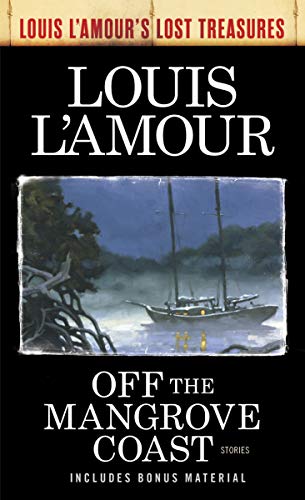
Another branch of Lost Treasures can create confusion in book lists. Numerous established novels—including Hondo, The Walking Drum, Last of the Breed, The Haunted Mesa, Kilkenny, Borden Chantry, and many others—have been reissued as Lost Treasures editions. These are not new novels or sequels. The original story remains intact, while the newer edition adds a postscript by Beau containing material such as unused scenes, alternate drafts, outlines, background notes, or an explanation of how the book developed.
That makes Louis L’Amour’s Lost Treasures less a traditional series than an exploration of the writer’s workshop. Finished stories sit beside abandoned experiments, ambitious projects that never found their final form, and evidence of interests ranging from Western history to Asia, seafaring, science fiction, and archaeology. For readers already familiar with L’Amour’s published fiction, the real attraction is seeing the paths he considered but never completed—and the much broader writer concealed behind his reputation as a master of the American Western.