Inspector Lynley Books in Order

Below is the complete list of Elizabeth George’s Inspector Lynley books in order. For this series, the chronological reading order is the same as the order of publication.

Publication Order of Inspector Lynley Books

  1. A Great Deliverance (1988)
    by Elizabeth George
    A Great Deliverance was published in 1988 and is listed as book #1 in the Inspector Lynley series.
  2. Payment in Blood (1989)
    by Elizabeth George
    Published in 1989, Payment in Blood is listed as book #2 in the Inspector Lynley series.
  3. Well-Schooled in Murder (1989)
    by Elizabeth George
    Well-Schooled in Murder is a 1989 release and appears as book #3 in the Inspector Lynley series.
  4. A Suitable Vengeance (1991)
    by Elizabeth George
    In the Inspector Lynley series, A Suitable Vengeance is book #4 and was published in 1991.
  5. For the Sake of Elena (1992)
    by Elizabeth George
    For the Sake of Elena was first published in 1992; within the Inspector Lynley series, it is listed as book #5.
  6. Missing Joseph (1992)
    by Elizabeth George
    Missing Joseph was published in 1992 and is listed as book #6 in the Inspector Lynley series.
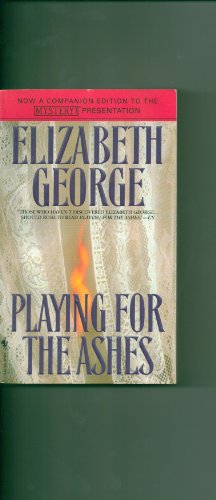
  7. Playing for the Ashes (1994)
    by Elizabeth George
    Published in 1994, Playing for the Ashes is listed as book #7 in the Inspector Lynley series.
  8. In the Presence of the Enemy (1996)
    by Elizabeth George
    In the Presence of the Enemy is a 1996 release and appears as book #8 in the Inspector Lynley series.
  9. Deception on His Mind (1997)
    by Elizabeth George
    In the Inspector Lynley series, Deception on His Mind is book #9 and was published in 1997.
  10. In Pursuit of the Proper Sinner (1999)
    by Elizabeth George
    In Pursuit of the Proper Sinner was first published in 1999; within the Inspector Lynley series, it is listed as book #10.
  11. A Traitor to Memory (2001)
    by Elizabeth George
    A Traitor to Memory was published in 2001 and is listed as book #11 in the Inspector Lynley series.
  12. A Place of Hiding (2003)
    by Elizabeth George
    Published in 2003, A Place of Hiding is listed as book #12 in the Inspector Lynley series.
  13. With No One as Witness (2005)
    by Elizabeth George
    With No One as Witness is a 2005 release and appears as book #13 in the Inspector Lynley series.
  14. What Came Before He Shot Her (2006)
    by Elizabeth George
    In the Inspector Lynley series, What Came Before He Shot Her is book #14 and was published in 2006.
  15. Careless in Red (2008)
    by Elizabeth George
    Careless in Red was first published in 2008; within the Inspector Lynley series, it is listed as book #15.
  16. This Body of Death (2010)
    by Elizabeth George
    This Body of Death was published in 2010 and is listed as book #16 in the Inspector Lynley series.
  17. Believing the Lie (2012)
    by Elizabeth George
    Published in 2012, Believing the Lie is listed as book #17 in the Inspector Lynley series.
  18. Just One Evil Act (2013)
    by Elizabeth George
    Just One Evil Act is a 2013 release and appears as book #18 in the Inspector Lynley series.
  19. A Banquet of Consequences (2015)
    by Elizabeth George
    In the Inspector Lynley series, A Banquet of Consequences is book #19 and was published in 2015.
  20. The Punishment She Deserves (2018)
    by Elizabeth George
    The Punishment She Deserves was first published in 2018; within the Inspector Lynley series, it is listed as book #20.
  21. Something to Hide (2022)
    by Elizabeth George
    Something to Hide was published in 2022 and is listed as book #21 in the Inspector Lynley series.
  22. A Slowly Dying Cause (2025)
    by Elizabeth George
    Published in 2025, A Slowly Dying Cause is listed as book #22 in the Inspector Lynley series.

About Inspector Lynley

Elizabeth George’s Inspector Lynley series is one of the most substantial long-running crime sequences in modern mystery fiction, and its real strength lies in how much it refuses to be only a detective series. The books begin with A Great Deliverance, but from the start George is doing more than arranging clues and suspects. She is writing about class, family, resentment, grief, shame, and the hidden private histories that make violence possible. The murder investigations matter, of course, but the deeper interest of the series is always human motive. George does not treat crime as an isolated event. She treats it as the point where a whole damaged emotional structure finally breaks open.

That is why publication order matters. Inspector Thomas Lynley and Sergeant Barbara Havers are not static genre figures dropped into one case after another. Their partnership develops slowly and sometimes painfully, and much of the richness of the series comes from the friction between them. Lynley is aristocratic, educated, controlled, and socially privileged in a way that sets him apart not only from suspects and witnesses, but from many of his colleagues. Havers is sharp, defensive, stubborn, and deeply aware of class in a way Lynley can never quite afford to be. Together they give the novels their central tension. They are not simply contrasting personalities for dramatic effect. They are two radically different ways of moving through English society, and George uses that contrast to widen the scope of every investigation.

The books are best read in order because that tension changes over time. Lynley and Havers come to understand one another gradually, and the emotional history between them becomes part of the architecture of the series. George also allows the private lives of her detectives to matter in serious ways. Relationships, losses, disappointments, and moments of fragile connection are not decorative subplots. They alter how the characters think, what they notice, and how much pain they can bear. Later novels carry far more weight when read with the earlier ones behind them.

Another reason publication order matters is tonal development. The early books establish the pattern that defines the series: a major crime opening into a wider social and psychological drama. But George grows more confident over time in letting the novels become expansive, even novelistic beyond the usual crime-fiction frame. These are often long books, and they use that length well. Instead of rushing from clue to clue, George gives space to family systems, buried scandals, emotional misreadings, and the small humiliations that turn into lifelong wounds. Her mysteries can feel almost like domestic or social novels until the full shape of the crime emerges. That is part of their appeal.

The “Inspector Lynley” label is also slightly narrower than the books themselves. Lynley may be the title figure, but this is not a one-man series. Barbara Havers is just as vital to the identity of the novels, and in many ways she becomes one of George’s deepest and most affecting creations. The series works because it belongs to both of them, even when one or the other is more centrally placed in a given book.

What distinguishes these novels from many procedural series is their seriousness about aftermath. George is not interested in neatness for its own sake. The solution to a murder does not restore innocence or erase damage. Often the truth only reveals how long suffering has already been in motion. That gives the books a gravity that rewards reading them in sequence. You are not just following detectives from crime scene to crime scene. You are watching a long emotional world take shape, where class, loyalty, love, humiliation, and memory are never far from the violence they eventually produce.

For readers who already have the order above, the real reward of the Inspector Lynley books is not only seeing who committed the crime. It is entering a series that treats crime fiction as a way of examining whole lives. Read in publication order, the novels become richer, sadder, and more powerful, because each case adds another layer to the people investigating it and to the society that keeps producing the need for them.

Leave a Reply

Your email address will not be published. Required fields are marked *