Below is the complete list of Elizabeth George books in order. For this series, the chronological reading order is the same as the order of publication.
Publication Order of Inspector Lynley Books
A Great Deliverance (1988)
by Elizabeth George
A Great Deliverance was published in 1988 and is listed as book #1 in the Inspector Lynley series.
Payment in Blood (1989)
by Elizabeth George
Published in 1989, Payment in Blood is listed as book #2 in the Inspector Lynley series.
Well-Schooled in Murder (1989)
by Elizabeth George
Well-Schooled in Murder is a 1989 release and appears as book #3 in the Inspector Lynley series.
A Suitable Vengeance (1991)
by Elizabeth George
In the Inspector Lynley series, A Suitable Vengeance is book #4 and was published in 1991.
For the Sake of Elena (1992)
by Elizabeth George
For the Sake of Elena was first published in 1992; within the Inspector Lynley series, it is listed as book #5.
Missing Joseph (1992)
by Elizabeth George
Missing Joseph was published in 1992 and is listed as book #6 in the Inspector Lynley series.
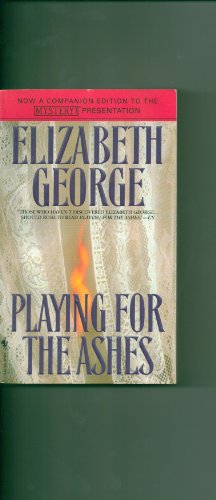
Playing for the Ashes (1994)
by Elizabeth George
Published in 1994, Playing for the Ashes is listed as book #7 in the Inspector Lynley series.
In the Presence of the Enemy (1996)
by Elizabeth George
In the Presence of the Enemy is a 1996 release and appears as book #8 in the Inspector Lynley series.
Deception on His Mind (1997)
by Elizabeth George
In the Inspector Lynley series, Deception on His Mind is book #9 and was published in 1997.
In Pursuit of the Proper Sinner (1999)
by Elizabeth George
In Pursuit of the Proper Sinner was first published in 1999; within the Inspector Lynley series, it is listed as book #10.
A Traitor to Memory (2001)
by Elizabeth George
A Traitor to Memory was published in 2001 and is listed as book #11 in the Inspector Lynley series.
A Place of Hiding (2003)
by Elizabeth George
Published in 2003, A Place of Hiding is listed as book #12 in the Inspector Lynley series.
With No One as Witness (2005)
by Elizabeth George
With No One as Witness is a 2005 release and appears as book #13 in the Inspector Lynley series.
What Came Before He Shot Her (2006)
by Elizabeth George
In the Inspector Lynley series, What Came Before He Shot Her is book #14 and was published in 2006.
Careless in Red (2008)
by Elizabeth George
Careless in Red was first published in 2008; within the Inspector Lynley series, it is listed as book #15.
This Body of Death (2010)
by Elizabeth George
This Body of Death was published in 2010 and is listed as book #16 in the Inspector Lynley series.
Believing the Lie (2012)
by Elizabeth George
Published in 2012, Believing the Lie is listed as book #17 in the Inspector Lynley series.
Just One Evil Act (2013)
by Elizabeth George
Just One Evil Act is a 2013 release and appears as book #18 in the Inspector Lynley series.
A Banquet of Consequences (2015)
by Elizabeth George
In the Inspector Lynley series, A Banquet of Consequences is book #19 and was published in 2015.
The Punishment She Deserves (2018)
by Elizabeth George
The Punishment She Deserves was first published in 2018; within the Inspector Lynley series, it is listed as book #20.
Something to Hide (2022)
by Elizabeth George
Something to Hide was published in 2022 and is listed as book #21 in the Inspector Lynley series.
A Slowly Dying Cause (2025)
by Elizabeth George
Published in 2025, A Slowly Dying Cause is listed as book #22 in the Inspector Lynley series.
Publication Order of Saratoga Woods Books
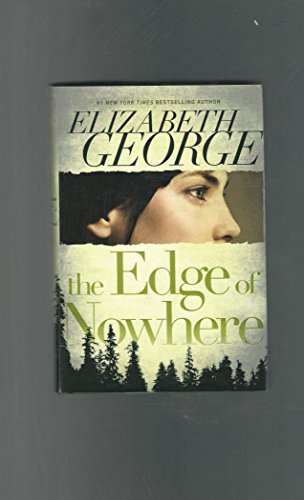
The Edge of Nowhere (2011)
by Elizabeth George
The Edge of Nowhere was published in 2011 and is listed as book #1 in the Saratoga Woods series.
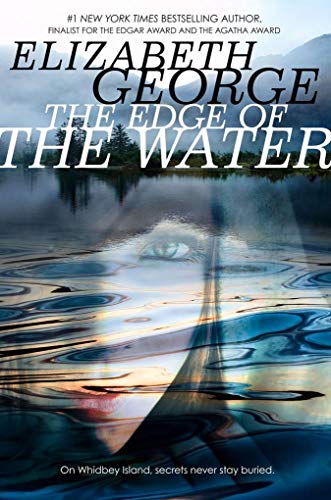
The Edge of the Water (2014)
by Elizabeth George
Published in 2014, The Edge of the Water is listed as book #2 in the Saratoga Woods series.
The Edge of the Shadows (2014)
by Elizabeth George
The Edge of the Shadows is a 2014 release and appears as book #3 in the Saratoga Woods series.
The Edge of the Light (2016)
by Elizabeth George
In the Saratoga Woods series, The Edge of the Light is book #4 and was published in 2016.
Publication Order of The Abandonment of Hannah Armstrong Books
Saratoga Woods (2024)
by Elizabeth George
Saratoga Woods was published in 2024 and is listed as book #1 in the The Abandonment of Hannah Armstrong series.
Possession Point (2024)
by Elizabeth George
Published in 2024, Possession Point is listed as book #2 in the The Abandonment of Hannah Armstrong series.
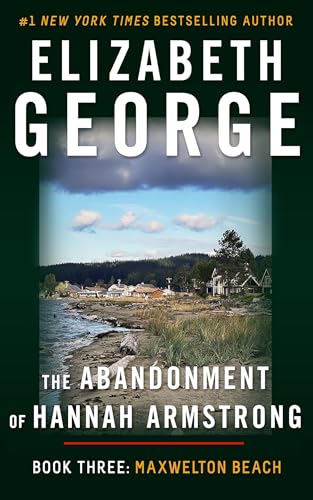
Maxwelton Beach (2024)
by Elizabeth George
Maxwelton Beach is a 2024 release and appears as book #3 in the The Abandonment of Hannah Armstrong series.
Deception Pass (2024)
by Elizabeth George
In the The Abandonment of Hannah Armstrong series, Deception Pass is book #4 and was published in 2024.
Fisherman’s Alibi (2024)
by Elizabeth George
Fisherman's Alibi was first published in 2024; within the The Abandonment of Hannah Armstrong series, it is listed as book #5.
Publication Order of Short Story Collections Books
The Evidence Exposed (1999)
by Elizabeth George
The Evidence Exposed was published in 1999 and is listed as book #1 in the Short Story Collections series.
I, Richard (2001)
by Elizabeth George
Published in 2001, I, Richard is listed as book #2 in the Short Story Collections series.
Publication Order of Non-Fiction Books
Write Away: One Novelist’s Approach to Fiction and the Writing Life (2004)
by Elizabeth George
Write Away: One Novelist's Approach to Fiction and the Writing Life was published in 2004 and is listed as book #1 in the Non-Fiction series.
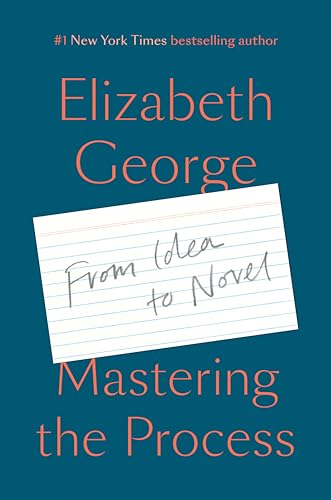
Mastering the Process (2020)
by Elizabeth George
Published in 2020, Mastering the Process is listed as book #2 in the Non-Fiction series.
Publication Order of Death Sentences: Stories To Die For Books
The Mysterious Disappearance of the Reluctant Book Fairy (2014)
by Elizabeth George
The Mysterious Disappearance of the Reluctant Book Fairy was published in 2014 and is listed as book #1 in the Death Sentences: Stories To Die For series.
About Elizabeth George
Elizabeth George occupies a distinctive place in modern crime fiction because she built one of the genre’s most enduringly British detective series while being American herself. That fact is not just biographical trivia. It helps explain the particular care and deliberation of her work. George did not grow into the Lynley novels from the inside of British police tradition or English village mystery by inheritance. She constructed them with extraordinary attention, creating a body of crime fiction that is less interested in formula than in psychology, class, motive, and the damage people carry beneath their public lives.
She was born in Ohio in 1949, raised in the United States, and later became widely known for novels set in England featuring Detective Inspector Thomas Lynley and Sergeant Barbara Havers. That pairing is the central achievement of her career. Lynley, aristocratic and educated, and Havers, abrasive, socially defensive, and working-class, are not simply contrasting detective types designed for easy tension. They are George’s way of opening British society from two directions at once. Through them, she writes not only investigations but also questions of privilege, shame, ambition, loyalty, and belonging. The contrast between the two characters gives the series much of its moral and emotional range.
Her career is best understood through that long-running Lynley line, which began with A Great Deliverance. From the beginning, George wrote bigger and denser novels than many of her crime-fiction contemporaries. Her books are not cozy puzzles and not hard-boiled thrillers either. They are expansive psychological mysteries, often deeply interested in family systems, buried histories, sexual politics, class performance, and the ways violence grows out of private emotional wreckage. The murders matter, but George is rarely satisfied with a simple whodunit solution. She wants the human architecture beneath the crime. That is one reason her novels tend to feel substantial even when they are highly readable.
The Lynley books dominate her bibliography, but they are not the whole story. George has also written nonfiction on the craft of writing, as well as a series of young adult novels. Those books show that she is not only a series specialist, though the Lynley world remains the clear center of her reputation. Her nonfiction is especially revealing because it matches what readers already sense in the novels: she is a highly methodical, deliberate writer. The scale and complexity of her mysteries are not accidental. They come from a writer who thinks hard about structure, character, and emotional layering.
What makes her bibliography especially rewarding is that the series deepens over time rather than merely repeating itself. Readers who move through the books in order see not just a run of cases, but the gradual accumulation of lives. Lynley and Havers do not remain fixed in place as purely functional sleuths. Their histories, losses, friendships, and emotional damage continue to matter. That continuity is one of George’s great strengths. She writes crime fiction with the long memory of a family saga, which is partly why her novels often feel richer than the average procedural.
Her style is also notable for seriousness without bleak emptiness. George writes about cruelty, betrayal, and grief, sometimes at considerable depth, but she is not interested in violence as spectacle. Her books are morally intense rather than merely dark. She pays close attention to interior life, and even minor characters are often given enough emotional density to feel as though they could have walked out of a different novel as protagonists in their own right. That generosity of characterization is one of the clearest markers of her work.
The best way to understand Elizabeth George’s bibliography, then, is as the work of a writer who used crime fiction to explore the deeper fractures of ordinary life. The Lynley novels may sit on the detective shelf, but they are also social novels, psychological dramas, and studies in the long afterlife of pain. George’s achievement is not simply that she created a famous detective pair. It is that she built, over many books, a world in which crime is never isolated from class, family, history, and the private wounds people spend years trying to disguise.