
Below is the complete list of Joanna Trollope books in order. For each series, the chronological reading order is the same as the order of publication.
Publication Order of Legacy Saga Books
as Caroline Harvey


Publication Order of Austen Project Books


Publication Order of Standalone Books




Publication Order of Non-Fiction Books


Publication Order of The BBC National Short Story Award Books

About Joanna Trollope
Joanna Trollope was a British novelist whose fiction examined marriage, family, work, class, generational conflict, and the social expectations shaping modern middle-class life. Although her novels were sometimes labelled “Aga sagas” because several were associated with prosperous English provincial settings, that description never adequately captured their range. Trollope was less interested in comfortable domestic surfaces than in what disturbed them: infidelity, divorce, financial dependence, aging parents, stepfamilies, frustrated careers, sibling rivalry, and the gradual renegotiation of women’s roles within marriage and work.
Born in Minchinhampton, Gloucestershire, in 1943, Trollope grew up partly in Surrey and studied English at St Hugh’s College, Oxford. She belonged to the extended family of Victorian novelist Anthony Trollope, though the relationship was distant enough that her own literary career developed independently of his legacy. After university she worked briefly for the Foreign and Commonwealth Office before becoming a teacher.
Her earliest fiction differed considerably from the contemporary novels that later made her famous. Trollope began with historical fiction, publishing books including Eliza Stanhope, Parson Harding’s Daughter, Leaves from the Valley, and The City of Gems. Several historical romances appeared under the pseudonym Caroline Harvey, including Legacy of Love, A Second Legacy, A Castle in Italy, and The Brass Dolphin. Parson Harding’s Daughter won the Romantic Novelists’ Association’s Romantic Novel of the Year Award.
The decisive change in her career came when she turned toward contemporary domestic fiction. The Choir established the territory she would explore for decades: communities that appear stable until competing loyalties expose how fragile their arrangements really are. A Village Affair examined sexuality, marriage, and small-town judgment, while The Rector’s Wife became one of Trollope’s defining successes. Its protagonist, Anna Bouverie, begins questioning the sacrifices expected of her as the financially constrained wife of an Anglican clergyman and seeks a more independent identity.
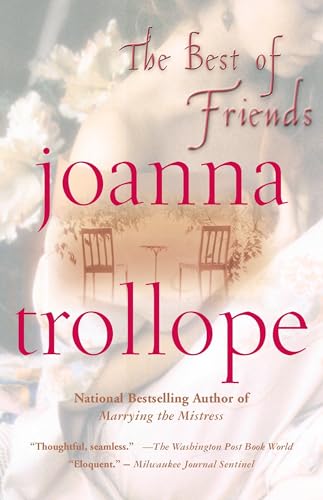
Trollope repeatedly returned to families undergoing structural change. Other People’s Children explores stepfamilies and the difficulties of bringing children from previous relationships into new marriages. Marrying the Mistress reverses the usual perspective on adultery by beginning when an older married man decides to leave his wife for another woman, forcing several generations to confront the consequences. Daughters-in-Law focuses on the shifting alliances created when adult sons marry, while The Soldier’s Wife examines the strain placed on a military marriage by deployment and reintegration.
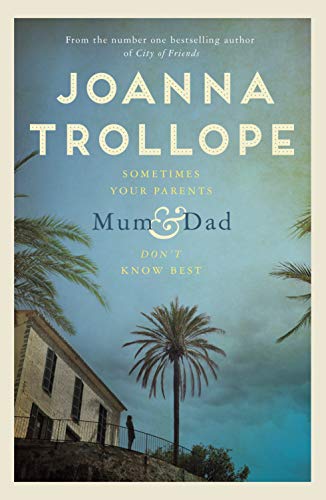
Her later novels moved comfortably into contemporary professional life. Balancing Act considers a family business passing between generations, and City of Friends follows women whose long friendship intersects with careers, relationships, and professional upheaval. Mum & Dad, published in 2020, became her final novel and returned to one of her enduring subjects: adult children suddenly having to reorganize their lives when aging parents can no longer manage independently.
Trollope also contributed Sense & Sensibility to the multi-author Austen Project in 2013, relocating Jane Austen’s Dashwood family into modern Britain. Several of her own novels, including The Rector’s Wife, The Choir, and Other People’s Children, were adapted for television.
She was appointed OBE in 1996 and CBE in 2019 for services to literature. Joanna Trollope died at her home in Oxfordshire on December 11, 2025, two days after her eighty-second birthday.
Her fiction remains valuable for the seriousness with which it treats apparently ordinary domestic decisions. Trollope understood that a marriage ending, a parent aging, a child leaving home, or a woman returning to work can alter an entire network of relationships. The dramas in her books are rarely spectacular, but their consequences are precisely the kind that shape real families for years.