
Below is the complete list of John Connolly’s Charlie Parker books in order. For this series, the chronological reading order is the same as the order of publication.
Publication Order of Charlie Parker Books
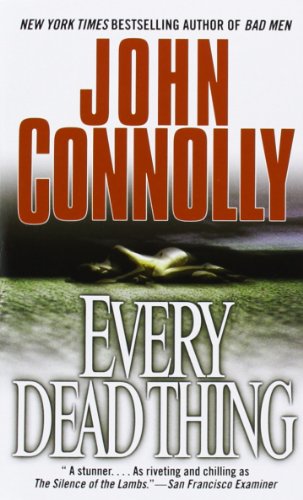


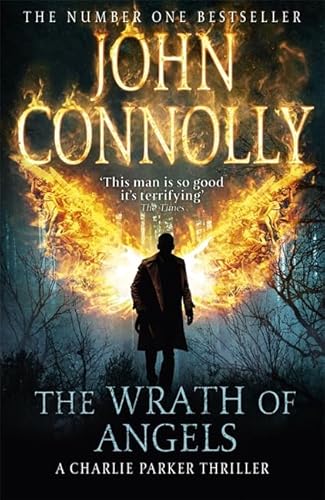
- The Charlie Parker Collection 2 (2013)
The Charlie Parker Collection 2 is a 2013 release and appears as book #13 in the Charlie Parker series. 




Publication Order of Charlie Parker Non-Fiction Books


About Charlie Parker
John Connolly’s Charlie Parker series is a long-running blend of private-eye crime fiction, psychological suspense, Gothic horror, and supernatural mystery. Beginning with Every Dead Thing in 1999, the novels follow former New York police detective Charlie “Bird” Parker as he investigates murderers, missing people, criminal organizations, and increasingly inexplicable manifestations of evil. Although many installments contain a distinct central investigation, Parker’s personal history and the supernatural mythology surrounding him develop continuously, making publication order particularly important.
When Every Dead Thing opens, Parker has been devastated by the murders of his wife, Susan, and their young daughter, Jennifer. His grief, guilt, and obsession with finding their killer transform him from a former police officer into a man whose life revolves around confronting violent people. His pursuit eventually leads toward the Traveling Man, a serial killer whose crimes establish the darkness against which much of the series unfolds.
The second novel, Dark Hollow, takes Parker to Maine and strengthens the connection between the character and the state that becomes his principal territory. Maine’s forests, isolated houses, old communities, severe winters, and buried histories are particularly suited to Connolly’s fiction. The landscape can be beautiful, but it frequently carries a sense that something unpleasant has survived beneath its surface.
Early books such as The Killing Kind, The White Road, and The Black Angel gradually move beyond conventional crime. Parker initially encounters cases that could belong to a particularly dark detective series, but supernatural possibilities become harder to dismiss. Ancient beliefs, ghosts, strange entities, religious imagery, and people who seem connected to something older than ordinary criminal violence increasingly enter the narrative.
Connolly handles this development gradually. Parker does not simply become a paranormal investigator hunting a different monster every book. Police, private investigators, lawyers, organized criminals, serial killers, and corrupt institutions remain important. The unsettling element comes from the suggestion that some human predators may be manifestations or servants of a deeper form of evil.
Two of Parker’s most important allies are Angel and Louis. Angel is a former burglar, while Louis is a formidable professional killer. They are partners in life as well as Parker’s friends, and their skills make them invaluable when an investigation moves into territory where ordinary legal methods offer little protection. Their loyalty provides one of the series’ strongest emotional anchors.
The relationship is deliberately paradoxical. Parker spends much of his life confronting killers while maintaining close friendships with men capable of lethal violence themselves. Connolly repeatedly uses such contradictions to question whether morality can be reduced to simple categories. Parker, Angel, and Louis operate according to personal codes that do not always align neatly with the law.
Parker’s family relationships are equally important. His losses in Every Dead Thing never become mere backstory, and later relationships give him both reasons to continue living and new vulnerabilities. His daughter Samantha is especially significant to his emotional development. The dead, meanwhile, never seem entirely absent from Parker’s world.
As the series progresses through novels including The Unquiet, The Reapers, The Lovers, The Whisperers, The Burning Soul, and The Wrath of Angels, Connolly expands the mythology while continuing to introduce individual investigations. The Reapers is particularly notable for placing greater emphasis on Louis and Angel and exploring Louis’s past, although Parker remains part of the larger continuity.
Later books deepen questions about Parker himself. His unusual connection with the dead, the enemies drawn toward him, and the recurring suggestion that his existence has significance beyond ordinary detective work become increasingly central. Figures and forces introduced in earlier novels can return many books later, rewarding readers who remember seemingly minor details.
The series is consequently very different from detective fiction in which the protagonist essentially resets after each case. Parker ages and accumulates wounds, losses, friendships, enemies, and knowledge. Actions have lasting consequences, and later novels frequently build upon events that occurred much earlier.
Connolly also varies the structure enough to prevent the sequence from becoming formulaic. Some books emphasize serial murder, others organized crime, historical wrongdoing, missing persons, religious mysteries, or supernatural threats. Shorter Parker fiction and related stories further expand the world, while recurring characters sometimes take temporary precedence over Parker himself.
Publication order is strongly recommended. A reader can understand the immediate mystery in many individual volumes, but jumping ahead can reveal major developments involving Parker’s family, Angel and Louis, recurring enemies, and the nature of the supernatural conflict. The gradual transition from dark crime fiction into something stranger is also one of the pleasures of reading the sequence from the beginning.
Charlie Parker endures because Connolly never allows him to become simply an invincible avenger. He is damaged, frequently uncertain, and aware that destroying one murderer does not remove evil from the world. Yet he continues investigating because individual lives still matter. Across the series, that persistence becomes the counterargument to its darkness: evil may be ancient and recurring, but so is the human refusal to surrender to it.