
Below is the complete list of Steve Higgs’ The Realm of False Gods books in order. For this series, the chronological reading order is the same as the order of publication.
Publication Order of The Realm of False Gods Books


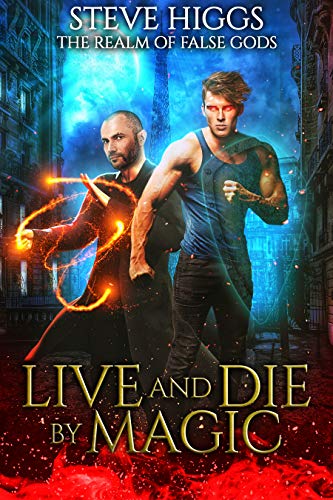


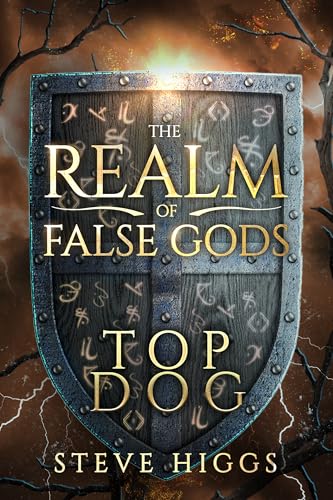


About The Realm of False Gods
Steve Higgs’s The Realm of False Gods series moves away from the cozy mysteries and comic investigations for which he is best known and into urban fantasy, supernatural action, and mythology. The sequence is built around a world in which beings once worshipped as gods are real, immensely powerful, and far less divine than humanity has been led to believe. Ancient mythology becomes the foundation for a modern conflict in which supernatural factions, hidden agendas, and human survival are tightly connected.
The central premise turns the familiar idea of gods living among mortals into something considerably more dangerous. These beings possess powers that once inspired worship and legend, but calling them gods does not necessarily make them benevolent, omniscient, or worthy of devotion. The word “false” in the series title is important: Higgs treats divinity as a claim that can be challenged rather than an unquestionable fact.
That approach allows the books to draw on mythology without simply retelling ancient stories. Legendary beings and supernatural powers are brought into a contemporary fantasy framework, where old rivalries and ambitions continue to have consequences. Myths that modern people regard as distant stories become fragments of a much larger hidden history.
The protagonists are consequently forced to reconsider what they understand about both the supernatural world and humanity’s past. Discovering that legendary beings exist is only the beginning. The more difficult problem is determining what those beings actually want, which of them can be trusted, and how ordinary humans can survive conflicts between opponents whose abilities place them far beyond normal physical limits.
Higgs combines this mythology with the brisk pacing familiar from his other fiction. The books emphasize confrontations, discoveries, escalating threats, and the gradual revelation of a supernatural order operating alongside everyday life. Humor remains part of his storytelling voice, but The Realm of False Gods places greater weight on action and fantasy than series such as Blue Moon Investigations or Albert Smith’s Culinary Capers.
The distinction from Blue Moon is particularly important. Blue Moon begins with apparently supernatural cases filtered through skeptical investigators and mystery conventions. The Realm of False Gods accepts a genuinely supernatural world as fundamental to its premise. The question is not simply whether an apparently impossible creature exists; powerful nonhuman beings are part of the reality the characters must learn to navigate.
This gives the series room to explore power on a much larger scale. An ordinary criminal can be arrested or exposed, but a being regarded as a god presents a different problem. Physical strength alone may be useless, and supernatural opponents can have knowledge, abilities, and plans extending far beyond a human lifetime. Survival depends on learning the rules governing these beings and identifying weaknesses hidden beneath their apparent invulnerability.
The title also points toward one of the series’ recurring concerns: the difference between possessing power and deserving authority. Human beings have historically interpreted extraordinary abilities through religion and myth, but the novels question whether power itself justifies worship. A supposedly divine figure can still be selfish, deceptive, ambitious, or cruel.
As the books progress, the mythology and relationships become increasingly interconnected. Revelations about characters and supernatural factions alter the meaning of earlier events, making the sequence more serialized than Higgs’s case-based cozy mysteries. Individual volumes may contain major conflicts of their own, but they contribute to a larger continuing struggle rather than resetting around an unrelated mystery each time.
For that reason, publication order is the appropriate reading order for The Realm of False Gods. Starting in the middle would mean encountering alliances, enemies, supernatural rules, and character histories whose significance was established in earlier installments. The progressive discovery of how the hidden world operates is part of the intended experience.
The Realm of False Gods demonstrates a different side of Steve Higgs’s bibliography. It retains his preference for accessible characters, quick pacing, humor, and escalating complications, but places them inside a much larger supernatural mythology. Instead of asking who committed a murder or whether a supposed ghost is genuine, the series asks what happens when humanity discovers that its ancient gods were real—and that being real never meant they deserved to be worshipped.