
Below is the complete list of Rina Kent’s Legacy of Gods books in order. For this series, the chronological reading order is the same as the order of publication.
Publication Order of Legacy of Gods Books




About Legacy of Gods
Rina Kent’s Legacy of Gods series brings the children of her established Rinaverse families into a volatile university world shaped by inherited rivalries, criminal power, obsessive relationships, and expectations formed long before they were old enough to resist them. The six novels are interconnected standalones, with each book following a different couple while the wider friendship groups, family conflicts, and social hierarchies continue developing in the background.
The series begins with God of Malice, centered on Killian Carson and Glyndon King. Killian’s polished public persona conceals a predatory and manipulative nature, while Glyndon is more emotionally vulnerable than the powerful King name suggests. Their confrontation establishes the darker boundaries of the series: attraction grows through fear, pursuit, coercion, and an intense imbalance of control rather than conventional courtship. It also introduces the younger generation as more than extensions of their famous parents. They have inherited privilege and protection, but also emotional damage, rivalry, and the consequences of family reputations.
God of Pain shifts to Creighton King and Annika Volkov, connecting the British King family with one of Kent’s Russian mafia dynasties. Creighton is quiet, emotionally inaccessible, and difficult to interpret, while Annika’s brighter manner exists alongside the restrictions of being raised within an influential criminal family. Their romance develops through opposition, concealed vulnerability, and the realization that silence can be as controlling as open aggression.
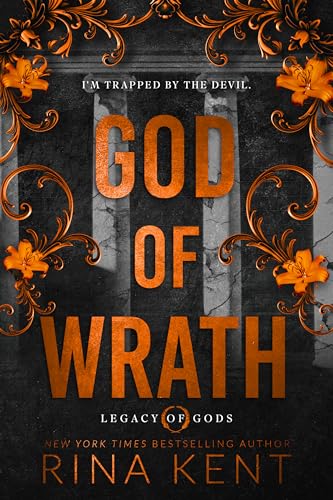
Jeremy Volkov and Cecily Knight take the lead in God of Wrath. Jeremy’s position as a mafia heir makes possession and violence part of the world he understands, while Cecily is drawn into his attention despite recognizing the danger surrounding him. God of Ruin then pairs Landon King with Mia Sokolov in a hostile contest between two highly combative personalities. Landon treats people as pieces in an intellectual game, but Mia refuses to accept the passive role he assigns her, turning their relationship into a struggle over revenge, manipulation, and who can inflict the greater damage.
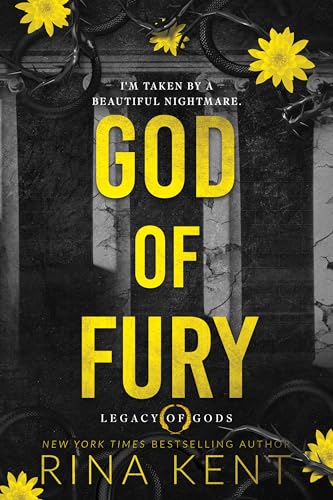
God of Fury changes the emotional balance through Brandon King and Nikolai Sokolov. Brandon is a controlled, private artist whose outwardly composed identity conceals significant internal conflict. Nikolai is a violent and openly intense mafia prince who pursues him without apology. Their relationship is the series’ male-male romance and one of its strongest examinations of identity, mental health, family expectation, and the difference between being admired publicly and understood privately.
The sequence closes with God of War, featuring Eli King and Ava Nash. Their marriage-of-convenience story incorporates lost memories, longstanding hostility, and a relationship whose true history must be reconstructed. As the final couple, they also bring several continuing friendships and family connections toward resolution without requiring a separate ensemble epilogue.
Although every novel completes one central romance, publication order gives the surrounding world its proper shape. Couples appear before and after their own books, rivalries evolve, and revelations about one sibling can change the interpretation of another. Familiarity with Royal Elite, the Deception Trilogy, Monster Trilogy, Empire, and other Rinaverse books adds generational context, but Legacy of Gods can be entered through God of Malice without reading the entire earlier catalogue.
The series derives much of its identity from inheritance. Its characters receive money, names, enemies, and influence from their parents, yet none inherits a simple emotional life. Kent uses the next generation to show how power travels through families: sometimes as protection, sometimes as damage, and often as a standard of ruthlessness the children must either embrace or survive.