
Below is the complete list of Melinda Leigh’s Rogue Justice books in order. For this series, the chronological reading order is the same as the order of publication.
Publication Order of Rogue Justice Books

About Rogue Justice
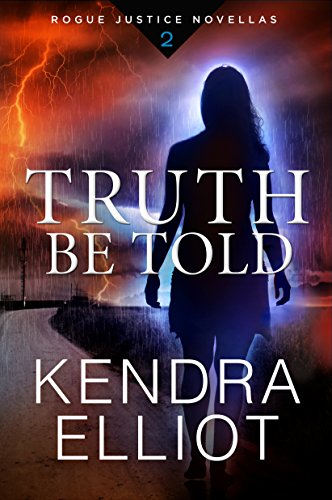
Rogue Justice is the fourth and final two-novella set in the shared Solitude, Oregon, romantic suspense world created by Melinda Leigh and Kendra Elliot. Following Rogue River, Rogue Winter, and Rogue Vows, the sequence returns to the Taylor family and the law-enforcement officers whose personal lives have become increasingly intertwined with the crimes affecting their small community. Melinda Leigh opens the story with Twisted Truth, while Kendra Elliot concludes it with Truth Be Told. The two novellas share one escalating crisis and are best read consecutively.
Twisted Truth centers on Detective Seth Harding, who responds to reports of gunfire and discovers a double homicide. The crime scene becomes far more disturbing when Seth finds a young boy chained in the basement. The child is alive but traumatized and refuses to speak, leaving investigators with an obvious witness who cannot explain who imprisoned him, what he saw, or whether the killer remains nearby.
Seth turns to his wife, Carly Taylor, the social worker he trusts most with a frightened child. Carly is still dealing with the effects of trauma from her own work, but her instinct to protect vulnerable children makes stepping away impossible. Bringing the boy to the Taylor family farm appears to offer him temporary safety while investigators search for answers.
At the same time, torrential rain begins overwhelming the region. Roads flood, the river rises, and Solitude faces the possibility of being cut off from outside assistance. Leigh uses the worsening weather as more than atmospheric suspense. Every washed-out road restricts police options, while the isolated farm that should protect the child can also become a trap if the killer discovers where he has been taken.
The investigation passes directly into Truth Be Told, where Stevie Taylor Duncan and her husband, Police Chief Zane Duncan, move to the foreground. The storm has now isolated Solitude, and the evidence suggests that the earlier double homicide belongs to something considerably larger. An unidentified body washes onto the riverbank, and two FBI agents are discovered shot inside a submerged vehicle near a flooded bridge.
More troubling still, the young witness whom federal authorities were supposed to protect has disappeared. With the town effectively sealed by flooding, Stevie and Zane know that whoever is responsible may still be trapped inside Solitude with everyone else. The situation creates a natural closed-circle mystery on the scale of an entire town: the investigators cannot easily call for reinforcements, suspects cannot simply leave, and deteriorating conditions make every search more dangerous.
Rogue Justice brings together the two principal couples who have carried the wider Solitude saga. Seth and Carly approach danger through criminal investigation and social work, while Stevie and Zane operate from within local law enforcement. Their marriages have been built through earlier cases, so the suspense now tests established partnerships rather than creating new romances.
The two novellas also provide a fitting endpoint to the four Rogue sets. What began in Rogue River with Stevie returning home after her father’s death has grown into an interconnected family of police officers, investigators, social workers, spouses, and children whose responsibilities repeatedly overlap. Each Rogue Justice novella contains its own major suspense movement, but the central mystery crosses directly between them.
Publication order is therefore essential, both within Rogue Justice and across the larger Rogue sequence. Twisted Truth establishes the child, murders, and approaching flood; Truth Be Told expands those events into the final confrontation. Together they close the Solitude cycle with its familiar combination of family loyalty, rural isolation, violent crime, and the conviction that protecting one vulnerable person can place an entire family in danger.