
Below is the complete list of James H. Cobb’s Amanda Garrett books in order. For this series, the chronological reading order is the same as the order of publication.
Publication Order of Amanda Garrett Books



About Amanda Garrett
James H. Cobb’s Amanda Garrett series, also known as the U.S.S. Cunningham series, is a five-book sequence of near-future naval thrillers built around advanced warships, shifting geopolitical crises, and the demands of command at sea. Its defining figure is Amanda Lee Garrett, a United States Navy officer whose authority rests not on theatrical aggression but on technical competence, disciplined judgment, and a detailed understanding of the people serving under her.
Garrett begins the series as commander of the USS Cunningham, an experimental stealth destroyer equipped with weapons, sensors, aircraft, and electronic systems beyond those found on conventional surface combatants of its era. Cobb treats the ship as more than a delivery platform for futuristic hardware. Its crew, internal organization, mechanical limitations, and evolving capabilities form a continuing environment in which every tactical decision carries human and political consequences.
Choosers of the Slain establishes that approach when the Cunningham, operating near Antarctica, becomes the principal obstacle to an Argentine attempt to seize territory and exploit the continent’s mineral resources. The setting gives the opening novel an unusual identity. Ice, extreme weather, distance from reinforcement, and the ecological vulnerability of Antarctica matter as much as missile ranges or naval maneuvering. Garrett must interpret uncertain orders, coordinate an inexperienced crew under combat conditions, and decide how much force can be justified before a regional confrontation becomes a wider war.
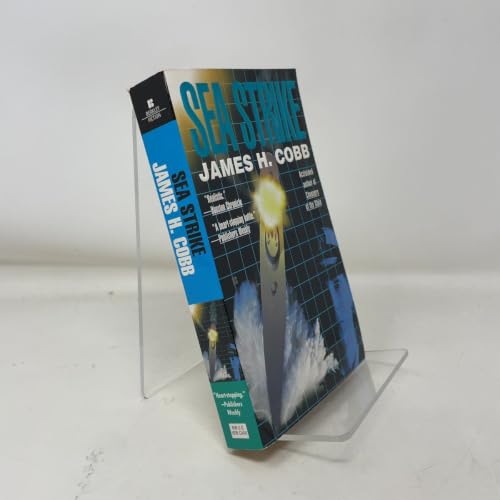
The following novels expand her responsibilities beyond command of a single vessel. A crisis involving China and Taiwan in Sea Strike—also published under the alternate title Storm Dragon—forces Garrett and her crew to identify signs of a developing offensive while operating far from reliable support. Later, she commands an international task force in Sea Fighter, confronting a West African conflict with a mixture of American, British, and French units. That progression reflects the series’ larger arc: Garrett develops from the captain of an advanced destroyer into the leader of the Sea Fighter task force, responsible for coordinating ships, aircraft, amphibious forces, and experimental combat systems.
Cobb’s military technology is speculative but generally tied to recognizable naval requirements. Stealth design, unmanned systems, hovercraft, precision weapons, information warfare, and mobile offshore bases are introduced as answers to particular operational problems rather than as decorative inventions. The novels repeatedly examine whether untested machinery can survive real combat and whether commanders can trust systems whose capabilities may exceed the doctrines governing their use.
Recurring personnel aboard the Cunningham give the sequence continuity, with professional loyalty growing through shared danger rather than repeated exposition. Garrett’s relationship with naval aviator Vince Arkady also develops across the books, creating tension between her private emotions and the distance expected of a commanding officer. In the later Indonesian storyline, the pirate leader Makara Harconan becomes particularly important, complicating the distinction between criminal ambition, regional politics, and strategic necessity.
The final two novels are more closely connected than the earlier installments. Target Lock begins with the seizure of a satellite containing sensitive technology and introduces a sophisticated maritime criminal network operating around Indonesia. Phantom Force carries those regional tensions into an insurrection threatening control of vital sea lanes. Reading the series in publication order preserves Garrett’s advancement, the development of the Sea Fighters, and the personal and political consequences carried into the concluding volume.
The Amanda Garrett novels stand apart within military fiction because command is portrayed as an exercise in listening, delegation, and accountability as much as tactical brilliance. Garrett succeeds not by behaving like an invulnerable action hero, but by understanding her ship, trusting trained specialists, and accepting responsibility when imperfect information makes every available choice dangerous.