
Below is the complete list of Donna Andrews’ Meg Langslow books in order. For this series, the chronological reading order is the same as the order of publication.
Publication Order of Meg Langslow Books






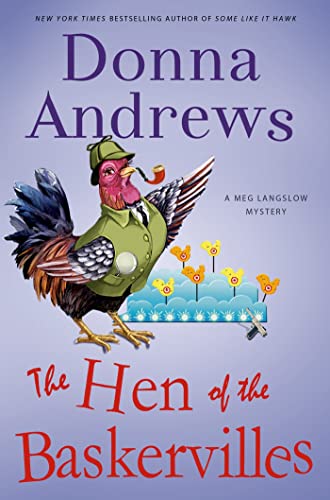


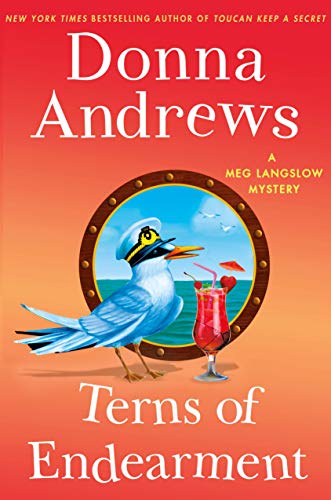


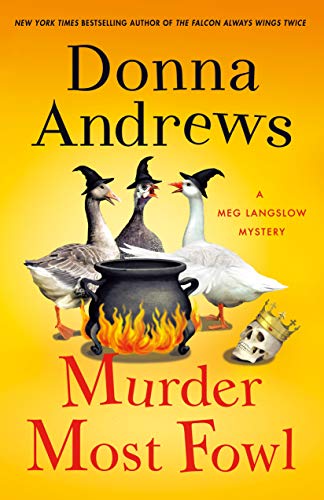


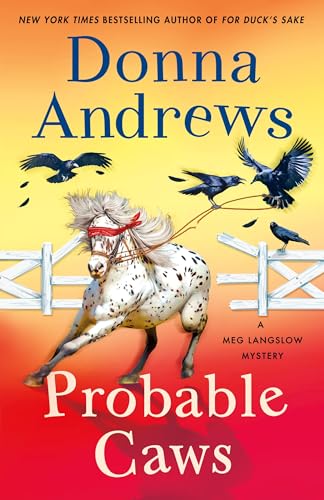
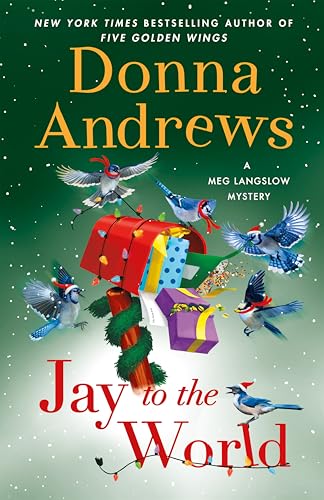
About Meg Langslow
Donna Andrews’s Meg Langslow mysteries are long-running, witty cozy mysteries centered on a heroine who is far more practical than the chaos around her. Meg is a decorative blacksmith, not a professional detective, and that choice is part of what gives the series its personality. She approaches problems with competence, common sense, and a dry sense of humor, which makes her the perfect counterweight to the wonderfully over-the-top people in her orbit. Set in Virginia, with Yorktown and the fictional town of Caerphilly as recurring anchors, the books build a world full of eccentric relatives, local traditions, community events, and murders that somehow keep finding Meg.
Meg herself is a huge part of why the series works. She is not flashy or theatrically brilliant. She is simply the most capable person in the room, the one trying to keep weddings, festivals, family gatherings, and public disasters from completely falling apart. That grounded practicality gives the books their rhythm. While everyone around her seems to be spiraling into melodrama, Meg keeps moving forward, asking the right questions and noticing what does not add up.
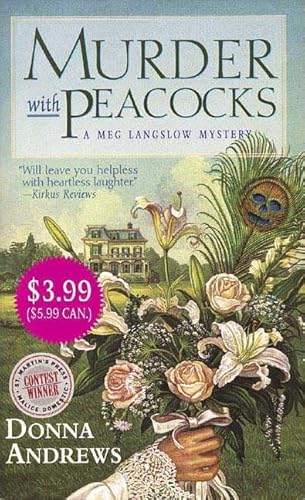
The series begins with Murder with Peacocks (1999), which immediately establishes the formula Andrews would refine so well: social chaos, comic timing, and murder colliding in the middle of everyday life. The early run, including Murder with Puffins and Revenge of the Wrought-Iron Flamingos, introduces Meg’s family and community while showing how naturally Andrews can turn weddings, reenactments, and local crises into strong mystery setups. These books are funny, but the mystery plots are not an afterthought. Andrews knows how to build an actual puzzle underneath the farce.
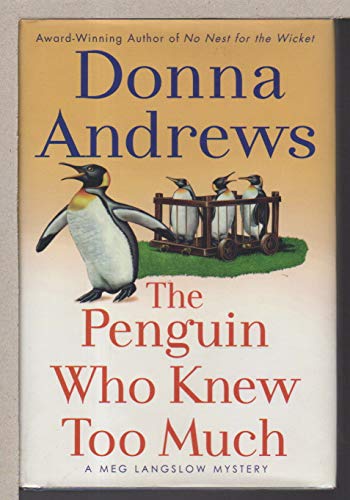
What makes publication order especially rewarding here is that the series is not just repeating the same idea with new bird-themed titles. Meg’s world accumulates. Her relationships deepen, her family grows more familiar, and Caerphilly becomes richer with each book. By the time you get into later entries such as Owls Well That Ends Well, The Penguin Who Knew Too Much, or Six Geese A-Slaying, much of the pleasure comes from the way Andrews keeps returning to this world and finding new comic pressure points inside it. The recurring cast is not decorative background; it is one of the series’ real strengths.
Another reason the books hold up is tonal balance. These are unquestionably cozy mysteries, but they are not weightless. Andrews has a knack for combining absurdity with genuine stakes. The humor can be broad, especially when Meg’s relatives are involved, but it works because Meg herself stays grounded. She reacts like a normal person would react if trapped inside a town where everyone is simultaneously eccentric, overcommitted, and somehow connected to a murder.
The bird-themed titles help give the series a recognizable identity, but they do not define it as much as the setting and voice do. Andrews writes small-town and family life with a sharp eye for how people actually behave when pride, tradition, and personal history get tangled together. Pageants, holiday gatherings, local performances, and community projects all become fertile ground for suspicion and disaster. That makes the books feel lived-in rather than gimmicky.
The series is also impressively durable. What starts as a funny mystery line about a smart blacksmith solving crimes gradually becomes one of the most distinctive long-running cozy series of its era. Readers do not return just to find out who the killer is. They return for Meg, for her family, for the town, and for the comic unpredictability of a world where any local event can go catastrophically wrong. Read in publication order, the books show Donna Andrews building not just a mystery series, but a whole social ecosystem around a heroine who remains steady no matter how ridiculous things get.