
Below is the complete list of Douglas Preston books in order. For this series, the chronological reading order is the same as the order of publication.
Publication Order of Pendergast Books
with Lincoln Child




- The Strange Case of Monsieur Bertin (2019)
The Strange Case of Monsieur Bertin was first published in 2019; within the Pendergast series, it is listed as book #20. 




Publication Order of Wyman Ford Books


Publication Order of Nora Kelly Books
with Lincoln Child


Publication Order of Gideon Crew Books
with Lincoln Child


Publication Order of Cash & Colcord Books


Publication Order of Standalone Novels Books


Publication Order of Non-Fiction Books





About Douglas Preston
Douglas Preston is an American novelist and journalist best known for high-concept thrillers that blend science, history, archaeology, and suspense. Born in 1956 in Cambridge, Massachusetts, Preston graduated from Pomona College and began his professional career at the American Museum of Natural History in New York, where he worked as an editor. That experience—immersed in scientific research, anthropology, and natural history—profoundly shaped the intellectual backbone of his fiction.
Preston first gained widespread attention through his collaboration with author Lincoln Child. Together, they published Relic in 1995, a techno-thriller set within the American Museum of Natural History. The novel introduced Special Agent Aloysius X.L. Pendergast, a character who would become central to a long-running series. Reading Preston’s books in publication order, especially the collaborative novels, allows readers to follow the gradual deepening of the Pendergast mythos and the expansion of recurring characters.
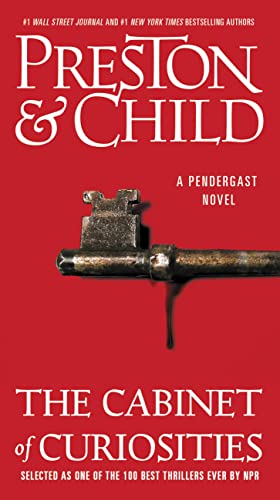
The Pendergast series—beginning with Relic and continuing through Reliquary (1997), The Cabinet of Curiosities (2002), and beyond—combines procedural investigation with gothic atmosphere and scientific intrigue. Pendergast, an enigmatic FBI agent from an old Southern family, anchors many of these stories. Over time, the character evolves from an eccentric supporting presence into the emotional and narrative core of the series. Publication order is essential here because the novels increasingly interconnect, particularly through multi-book arcs such as the Diogenes trilogy and the Helen Pendergast storyline.
In addition to his collaborations, Preston has written numerous solo novels and nonfiction works. His nonfiction titles, including The Hot Zone–style investigative narratives and books such as The Lost City of the Monkey God, reflect his longstanding interest in exploration and scientific discovery. His background as a journalist and contributor to publications like The New Yorker and National Geographic lends credibility and research depth to both his fiction and nonfiction.
Preston’s solo thrillers—such as Impact (2010) and Blasphemy (2008)—often revolve around scientific breakthroughs, high-stakes government secrets, and ethical dilemmas. While these novels are generally standalones, reading them chronologically highlights how his thematic interests in cutting-edge science and institutional power matured over time.
Across both collaborative and solo work, Preston’s fiction is defined by:
- Detailed scientific and historical research
- Layered plotting that blends action with intellectual puzzles
- Recurring characters whose backstories deepen across installments
- A balance of suspense, horror, and procedural crime elements
The evolution of the Pendergast novels in particular demonstrates increasing structural ambition. Early entries function largely as contained thrillers; later books form tightly connected sequences that reward sequential reading. Characters such as Constance Greene and Corrie Swanson develop substantially over time, and their arcs are best appreciated in publication order.
Preston’s career reflects a rare ability to bridge commercial thriller writing with substantive scientific inquiry. His novels often explore themes of forbidden knowledge, obsession, family legacy, and the consequences of pushing beyond ethical boundaries. The interplay between rational investigation and near-supernatural mystery has become a hallmark of his style.
Over nearly three decades of publishing, Douglas Preston has maintained a consistent presence in the thriller genre. Viewed chronologically, his bibliography traces the steady expansion of a fictional universe centered on one of modern suspense fiction’s most distinctive investigators. Reading his books in publication order preserves the intended pacing of revelations, character growth, and overarching narrative arcs that define his work.