
Below is the complete list of Martha Grimes’ Richard Jury books in order. For this series, the chronological reading order is the same as the order of publication.
Publication Order of Richard Jury Books






About Richard Jury
Martha Grimes’s Richard Jury series is a long-running detective sequence that blends Scotland Yard investigation with the atmosphere of English villages, eccentric country houses, old pubs, and damaged private lives. The series begins with The Man with a Load of Mischief, introducing Detective Chief Inspector Richard Jury, a thoughtful and restrained police detective whose cases often lead him far beyond the official routines of London policing. Alongside him is Melrose Plant, a wealthy aristocrat who has renounced his title and becomes Jury’s unofficial ally, friend, and social interpreter.
The series is famous for its titles, many of which are taken from the names of pubs, inns, or similarly evocative places. That naming pattern gives the books a distinctive flavor before the mysteries even begin. Grimes is interested in place as more than scenery. A pub, village, hotel, estate, or seaside town often carries memory, rumor, class tension, and old secrets. The setting usually feels lived-in and slightly theatrical, filled with people who may be funny, irritating, lonely, or quietly tragic.
Richard Jury himself is one of the series’ great strengths. He is not flamboyant, violent, or theatrically brilliant in the Sherlockian sense. His power lies in patience, empathy, and the ability to notice what grief or fear has done to people. Jury is often drawn to children, outsiders, and emotionally wounded characters, and his investigations are shaped by compassion as much as deduction. He can be dry and reserved, but he is rarely cold. That quiet emotional intelligence gives the series a deeper mood than a simple clue puzzle.
Melrose Plant provides a different kind of intelligence. He has access to upper-class spaces, country-house circles, and social absurdities that Jury may encounter from a professional distance. His relationship with his difficult aunt Agatha, his friendships in Long Piddleton, and his ironic view of privilege give the books much of their comedy. Plant is not merely comic relief, though. His outsider-insider status lets Grimes examine class, performance, and the boredom or cruelty that can hide behind polished manners.
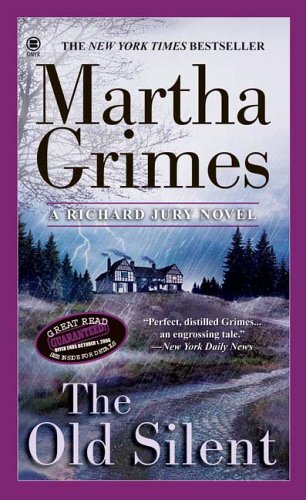
The early books, including The Old Fox Deceiv’d, The Anodyne Necklace, Jerusalem Inn, and Help the Poor Struggler, establish the recurring pattern of murder disrupting places that already feel uneasy. Later novels such as The Old Silent, The Blue Last, The Lamorna Wink, and The Knowledge show how flexible the series becomes, moving through London, villages, coastal settings, wartime memory, art, children’s stories, and increasingly layered emotional histories. The books can be witty and whimsical, but they are often shadowed by loss.
Grimes’s style sets Richard Jury apart from more procedural detective fiction. The police work matters, but the novels are equally interested in conversation, atmosphere, literary allusion, and character eccentricity. Some mysteries unfold almost like social comedies darkened by murder, while others move toward melancholy studies of loneliness and memory. This tonal mixture is part of the series’ identity: light and dark are rarely kept separate.
The Richard Jury books are best read as atmospheric literary mysteries rather than fast, mechanical thrillers. Each case can stand on its own, but the pleasure grows through familiarity with Jury, Melrose Plant, Sergeant Wiggins, Long Piddleton, and the recurring social world around them. Across the series, Martha Grimes builds a version of England that is witty, haunted, theatrical, and emotionally bruised, with Richard Jury moving through it as a detective who understands that solving a murder rarely solves all the sorrow behind it.