
Below is the complete list of Lisa Gardner’s FBI Profiler books in order. For this series, the chronological reading order is the same as the order of publication.
Publication Order of FBI Profiler Books



About FBI Profiler
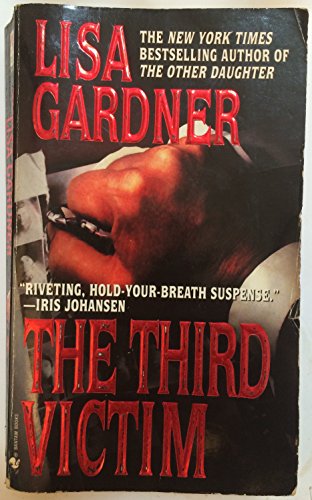
Lisa Gardner’s FBI Profiler series is one of the core strands of her thriller fiction, but it is not a simple one-hero procedural from beginning to end. The books start with FBI profiler Pierce Quincy and gradually widen into a family-and-partnership-driven crime series that also helps bridge into Gardner’s broader suspense world. On Gardner’s official site, the FBI Profiler sequence includes The Perfect Husband, The Third Victim, The Next Accident, The Killing Hour, Gone, Say Goodbye, the e-short The 4th Man, and Right Behind You. Her series page also makes clear how the emotional center shifts over time: Quincy first stands alone, then Rainie Conner becomes central, and later Quincy’s daughter Kimberly takes on a more active role.
That evolution is a big part of what makes the series work. The Perfect Husband introduces Quincy in a story driven by psychological tension and domestic menace, and it establishes the side of Gardner’s writing that has always been strongest: crime as something intimate, destabilizing, and deeply personal rather than merely procedural. Quincy is a profiler, but these books are never only about his professional skill. They are about the emotional cost of violence, the way fear reshapes ordinary lives, and the difficulty of ever really getting ahead of someone determined to destroy.
When Rainie Conner enters the picture in The Third Victim, the series finds a fuller emotional balance. Gardner’s own summary of the line points to Rainie as the major turning point after Quincy’s introduction, and that feels right. She is not there simply to support Quincy or soften the series. She changes its texture. The books become richer because they are no longer anchored only by one profiler’s perspective. Rainie brings another kind of intelligence, another emotional temperature, and eventually a more complicated partnership that gives the series continuity beyond the individual cases.
That continuity matters because the books are linked more by character accumulation than by one giant master plot. The Next Accident and Gone deepen Quincy’s personal stakes, while The Killing Hour shifts attention toward Kimberly Quincy, bringing the next generation into the series in a meaningful way. Lisa Gardner’s official pages explicitly note that Kimberly joins the FBI in The Killing Hour and remains important in later books, which helps explain why the series feels less like a fixed detective line and more like an expanding family-centered thriller sequence. The cases stand on their own, but the relationships do not reset. They carry damage, memory, loyalty, and change from one book to the next.
Another reason the series stands out is tone. These are not cozy or puzzle-oriented crime novels. Gardner writes with urgency, but also with a real interest in trauma and survival. Even when the plots are fast-moving, there is usually something bruised underneath them. The FBI Profiler books are often at their strongest when they narrow in on the aftermath of violence rather than just the mechanics of catching a killer. That gives Quincy, Rainie, and Kimberly more depth than they might have had in a more formulaic suspense line. They are not simply recurring investigators. They are people repeatedly altered by what they see and what they fail to prevent.
The structure can look slightly confusing because Gardner’s official site also places later crossover titles such as When You See Me on the FBI Profiler page, while major series listings still treat Right Behind You as the last numbered core novel and The 4th Man as an interstitial e-short. That overlap reflects how connected Gardner’s fictional worlds became over time. The cleanest way to understand the FBI Profiler books is as the Quincy-Rainie-Kimberly arc at the center, with later crossover material brushing against that line without changing what its core identity is.
Read in order, the FBI Profiler books offer more than a sequence of dark cases. They trace the movement from one profiler’s expertise into a broader emotional world shaped by partnership, parenthood, loss, and endurance. That is what gives the series its staying power. The killers matter, the investigations matter, but the real draw is the way Gardner lets the people doing the hunting remain vulnerable to the darkness they keep confronting.