
Below is the complete list of Colleen Hoover’s It Ends With Us books in order. For this series, the chronological reading order is the same as the order of publication.
Publication Order of It Ends With Us Books
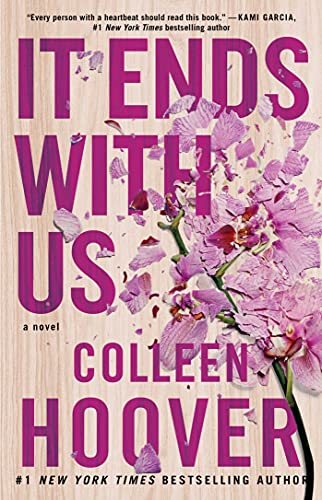

About It Ends With Us
Colleen Hoover’s It Ends With Us series is a contemporary romance duology centered on Lily Bloom, a woman whose adult life forces her to confront love, family history, painful patterns, and the difference between wanting a relationship to work and recognizing what it is doing to her. The series begins with It Ends With Us and continues with It Starts With Us, creating a two-part emotional arc that moves from survival and difficult choice toward healing, co-parenting, and the possibility of a healthier future.
It Ends With Us introduces Lily after she has moved to Boston and begun building a life of her own. She is ambitious, independent, and shaped by a childhood that taught her complicated lessons about love, anger, and loyalty. When she meets Ryle Kincaid, a neurosurgeon with charm, intensity, and emotional force, the relationship begins with attraction and possibility. Hoover then gradually complicates that romance by showing how painful relationship patterns can appear alongside tenderness, apology, passion, and hope. The book’s power comes from refusing to make Lily’s choices look simple from the inside.
Atlas Corrigan is the other major figure in Lily’s emotional history. He was her first love and someone connected to a vulnerable period in her teenage years, when both of them were trying to survive loneliness in different ways. His reappearance in It Ends With Us does not merely create a love triangle. It forces Lily to measure the woman she has become against the girl she once was, and to consider what safety, respect, and love should actually feel like. Atlas represents memory, kindness, and unfinished feeling, but the first book remains Lily’s story above all: her awakening, her courage, and her decision to break a cycle rather than excuse it.
It Starts With Us continues after the events of the first novel, shifting the emotional focus toward Lily and Atlas as adults with history, responsibilities, and unresolved longing between them. The sequel is gentler in tone, though not free of tension. Lily is now a mother and must navigate co-parenting with Ryle while deciding whether there is room in her life for Atlas again. Hoover also gives Atlas more narrative space, allowing readers to understand his past, his emotional restraint, and the life he has built after surviving his own difficult beginnings.
The two books work differently. It Ends With Us is heavier, more painful, and built around recognition: Lily has to see her relationship clearly even when love and hope make that difficult. It Starts With Us is more concerned with rebuilding. It gives Lily and Atlas a chance to explore the connection that was interrupted years earlier, but with adult complications that require patience rather than fantasy. That contrast is important because the sequel does not erase the first book’s pain. Instead, it asks what comes after the hardest decision has already been made.
The series is one of Hoover’s most widely discussed works because it blends romance with serious emotional subject matter. Its appeal lies not only in the central relationships, but in Lily’s inner conflict: her empathy, her fear, her memories of her parents, and her determination to make a different life for her daughter. The books are intimate, direct, and emotionally accessible, which is why they have reached readers far beyond the usual romance audience.
It Ends With Us is best understood as a duology about cycles, choice, and healing. The romance matters, but the deeper story is Lily’s movement toward self-trust. Across both books, Hoover follows a woman learning that love cannot be measured only by intensity or history; it also has to make space for safety, dignity, and peace.