
Below is the complete list of Stephen King’s Holly Gibney books in order. For this series, the chronological reading order is the same as the order of publication.
Publication Order of Holly Gibney Books




About Holly Gibney
Holly Gibney’s path through Stephen King’s fiction is unusually organic for a recurring character. She first appears in Mr. Mercedes as part of the Bill Hodges story rather than as the planned center of her own series, then grows from an anxious, socially uncomfortable supporting figure into an independent private investigator capable of carrying novels herself. Her continuity now extends across the Bill Hodges trilogy, The Outsider, the novella If It Bleeds, Holly, and Never Flinch, making hers one of the clearest long-form character arcs in King’s later career.
The starting point is Mr. Mercedes, where Holly enters Bill Hodges’s orbit through family connections and becomes involved in the pursuit of Brady Hartsfield. She is intelligent and observant but constrained by severe anxiety, a difficult relationship with her controlling mother, and years of being treated as incapable of managing her own life. King does not transform her instantly into a fearless detective. Through Finders Keepers and End of Watch, she gains confidence unevenly, develops practical investigative skills, and builds a chosen circle around Hodges and Jerome Robinson.
That gradual development matters because Holly’s later independence is rooted in the Bill Hodges books. Her work with the investigative agency Finders Keepers, her attachment to Bill, and the confidence he places in her all become part of the emotional history she carries forward. The trilogy also shifts genres around her: its first book is primarily a crime thriller, while End of Watch introduces a stronger supernatural dimension. Holly therefore emerges from a sequence already testing the boundary between detective fiction and the uncanny.
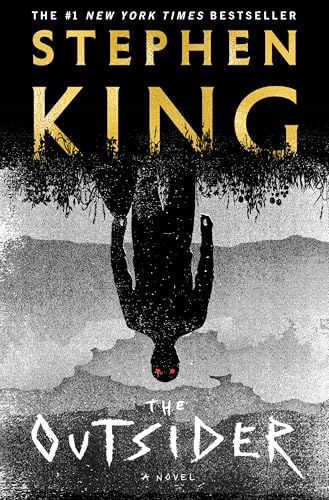
The Outsider moves her into a different narrative environment. The novel begins with apparently overwhelming evidence against a man accused of a horrific crime, only for contradictory facts to make the case impossible by ordinary standards. Holly enters after the investigation is well underway and brings a willingness to consider explanations that conventional investigators resist. Her importance comes not from supernatural powers but from intellectual flexibility. Having survived events that expanded her understanding of what can exist, she is prepared to follow evidence beyond comfortable assumptions.
The title novella in If It Bleeds gives Holly a more central investigation and develops directly from that broader supernatural awareness. While investigating connections surrounding a devastating school bombing and a television reporter with an uncanny relationship to tragedy, she must increasingly trust her own judgment. The story is an important bridge between the ensemble role she occupies in earlier books and the full narrative weight she carries later.
Holly places her decisively at the center. While dealing with personal grief and the continuing effects of her difficult family history, she investigates a disappearance that leads toward other missing people and a deeply disturbing secret. The novel emphasizes how far she has traveled without pretending that anxiety has vanished. Her routines, habits, caution, and vulnerabilities remain part of her character; competence develops alongside them rather than replacing them.
Never Flinch continues that independent phase through intertwined threats. Detective Izzy Jaynes seeks Holly’s help after a letter announces a planned campaign of retaliatory killings, while Holly also becomes involved in protecting controversial activist Kate McKay during a hostile lecture tour. The novel broadens her role again, placing her between investigative work and direct protective responsibility while continuing relationships established in her later books.
The Holly Gibney bibliography is therefore structurally different from a conventional series bearing one protagonist’s name from the beginning. Her story grows through another detective’s trilogy, branches into The Outsider, continues in novella form, and only later gives her top billing in full-length novels. That irregular structure is part of its appeal. Across the sequence, readers watch a woman repeatedly underestimated by others—and often by herself—develop into a formidable investigator without losing the traits, fears, loyalties, and personal history that made her distinctive in the first place.