
Below is the complete list of Jussi Adler-Olsen books in order. For each series, the chronological reading order is the same as the order of publication.
Publication Order of Department Q Books


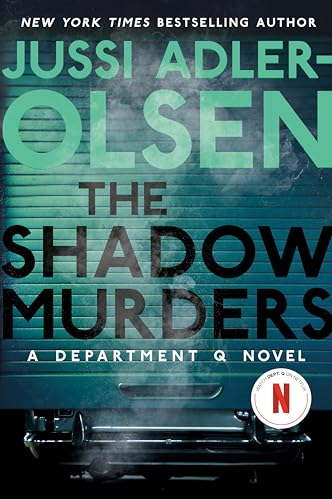


Publication Order of Standalone Books


About Jussi Adler-Olsen
Jussi Adler-Olsen is a Danish crime novelist best known for Department Q, his internationally successful series about a neglected Copenhagen police unit investigating cold cases. His fiction combines elaborate mysteries, institutional corruption, social injustice, psychological damage, and sharply timed black humor. Although his plots often confront cruelty and political failure, their distinctive energy comes from the difficult relationships among investigators whose personal histories are almost as complicated as the crimes they reopen.
Born in Copenhagen in 1950, Adler-Olsen was the youngest of four children and the only boy. His father was a psychiatrist, and the family lived at several Danish psychiatric hospitals during his childhood. Growing up around medical institutions and people experiencing severe psychological distress contributed to his later interest in damaged personalities, social exclusion, and the uncertain boundary between apparently respectable behavior and deeper instability.
His education was broad rather than directed toward a conventional literary career. He studied medicine, social and political subjects, and film, completing qualifications in modern political history and film studies. Before becoming a full-time novelist, he worked across publishing, editing, translation, comics, journalism, business management, and media production. He wrote scripts for Disney and Walter Lantz comic stories, helped produce reference works about comics, published material about Groucho Marx, and held senior positions in Danish publishing companies.
Adler-Olsen’s first novel, The Alphabet House, appeared in 1997. Set partly during the Second World War, it follows two British airmen who survive behind enemy lines by assuming the identities of mentally ill German officers. The book introduced concerns that would continue throughout his work: hidden identity, institutional confinement, psychological survival, and the lasting consequences of betrayal. His other early thrillers include The Company Basher, later revised and republished under another Danish title, and The Washington Decree, a political thriller about an American president responding to personal tragedy through increasingly authoritarian measures.
His career changed decisively with The Keeper of Lost Causes in 2007. The novel introduced Carl Mørck, a talented but abrasive Copenhagen detective reassigned after a shooting that killed one colleague and left another paralyzed. Placed in charge of the newly created Department Q, Carl is expected to dispose quietly of unresolved cases from the police archives. Instead, assisted by the enigmatic Hafez el-Assad and later by the formidable Rose Knudsen, he begins uncovering crimes that powerful people believed had been forgotten.
Department Q became the center of Adler-Olsen’s bibliography. The novels combine cold-case investigations with a continuing personal story involving Carl’s guilt, Assad’s concealed past, Rose’s psychological struggles, and hostility within the police establishment. Adler-Olsen frequently gives substantial space to victims and offenders, allowing past crimes to unfold alongside the present investigation. This structure creates suspense while examining how institutional indifference permits abuse to remain hidden for years.
English-language readers may encounter different titles for the same Department Q books. Several early novels received separate British and American titles: Mercy is also The Keeper of Lost Causes, Disgrace is The Absent One, and Redemption is A Conspiracy of Faith. These are alternate editions, not additional installments.
Adler-Olsen wrote the first ten Department Q novels, bringing Carl’s principal arc to a major resolution in Locked In. The series subsequently continued through No Song for the Dead, credited jointly to Adler-Olsen and Danish crime writers Stine Bolther and Line Holm. His bibliography is therefore best divided between his independent thrillers, nonfiction and early publishing work, the original ten-book Department Q sequence, and the later collaborative continuation.
Across those categories, Adler-Olsen’s defining strength is his ability to place bleak crimes beside stubborn humanity. His investigators are damaged, disobedient, and frequently exasperating, but their loyalty to forgotten victims gives the novels their moral center.