
Below is the complete list of Paul Garrison books in order. For each series, the chronological reading order is the same as the order of publication.
Publication Order of Paul Janson Books


Publication Order of Standalone Books



About Paul Garrison
Paul Garrison is the principal pen name of American novelist Justin Scott, an author whose extensive career encompasses maritime thrillers, crime fiction, historical adventure, espionage, and collaborative continuation novels. The Garrison name is associated mainly with modern stories of danger at sea and with Scott’s contributions to Robert Ludlum’s Paul Janson series. Readers navigating his bibliography should therefore treat Paul Garrison and Justin Scott as the same writer rather than as two authors with overlapping work.
Scott was born in Manhattan and grew up on Long Island’s Great South Bay in a family of professional writers. His father, A. Leslie Scott, produced hundreds of Western novels under several names, while his mother, Lily K. Scott, wrote novels, romances, and short fiction. His sister, Alison Scott Skelton, also became a novelist. Growing up around working authors gave Scott an early understanding of writing as a sustained profession rather than an abstract literary ambition.
He earned bachelor’s and master’s degrees in American history, an academic background that later supported the detailed historical and institutional settings of his fiction. Before writing full time, he held a varied collection of jobs: operating boats and trucks, building houses on Fire Island, tending bar in New York’s Hell’s Kitchen, and editing an electronic-engineering journal. He also travelled extensively for research, often visiting the ports, cities, ships, and political environments used in his novels.
Under his own name, Scott became particularly known for thrillers involving maritime danger. The Shipkiller, one of his signature novels, follows an obsessive campaign against a massive oil tanker and demonstrates his ability to make navigation, weather, machinery, and seamanship integral to suspense. He also created the Ben Abbott mystery series, set within the wealthy but secretive communities of Connecticut, and received two Edgar Award nominations from the Mystery Writers of America. His other pen names include J. S. Blazer and Alexander Cole.
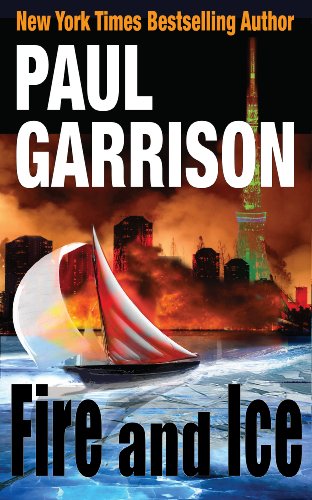
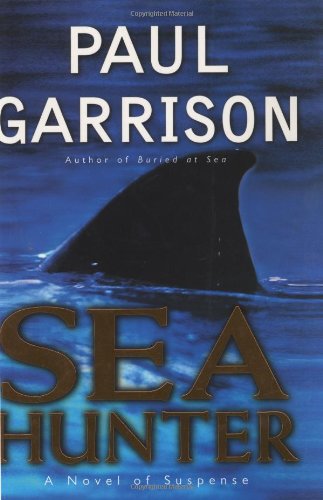
The Paul Garrison identity gave Scott a distinct home for contemporary sea thrillers. Beginning with Fire and Ice, the Garrison novels place ordinary or professionally capable characters inside crises shaped by ships, international waters, military technology, environmental danger, and geopolitical rivalry. Red Sky at Morning, Buried at Sea, Sea Hunter, and The Ripple Effect continue that emphasis without forming a single conventional series. Each is an independent thriller, connected more by maritime expertise and international scope than by recurring protagonists.
Garrison’s experience with technically grounded adventure made him a natural choice to continue Paul Janson, the former covert operative introduced by Robert Ludlum in The Janson Directive. He wrote The Janson Command and The Janson Option, developing Janson’s new career as an independent operative who accepts missions according to a personal ethical code. These books retain Ludlum’s interest in hidden power and international conspiracy while drawing heavily on Garrison’s command of seaborne action, piracy, unstable governments, and conflicts involving strategic resources.
Scott has also collaborated with Clive Cussler on numerous Isaac Bell historical adventures, although those books are published under the Justin Scott name. This division of names helps clarify his catalogue: Paul Garrison primarily identifies the modern maritime thrillers and two Janson continuation novels, while Justin Scott encompasses his broader thrillers, mysteries, historical fiction, and collaborations.
Across both identities, his fiction is distinguished by practical knowledge, rapidly escalating danger, and an interest in skilled people confronting systems much larger than themselves. Ships are rarely decorative settings in the Garrison novels. They are complex environments governed by engineering, weather, hierarchy, and human judgment, where one flawed decision can turn political tension or private obsession into catastrophe.