
Below is the complete list of Richard A. Knaak’s World of Warcraft books in order. For this series, the chronological reading order is the same as the order of publication.
Publication Order of World of Warcraft Books


- Tides of Darkness (2007)
(By Aaron Rosenberg)
In the World of Warcraft series, Tides of Darkness is book #4 and was published in 2007. 






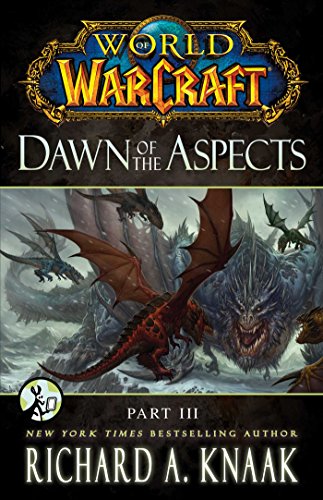
Publication Order of World Of Warcraft: Dawn Of The Aspects Books




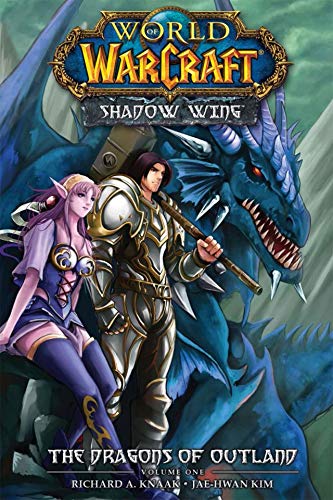
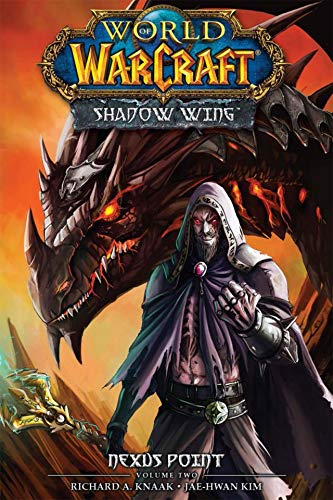
Publication Order of World of Warcraft: Shadow Wing Books
About World of Warcraft
Richard A. Knaak’s World of Warcraft novels form part of the much larger body of fiction surrounding Blizzard Entertainment’s Azeroth, but his contributions have a particularly recognizable focus. Dragons, the Dragon Aspects, night elves, ancient magical catastrophes, and characters whose lives stretch across enormous periods of history recur throughout his work. While other Warcraft authors often concentrate on particular wars, factions, or political leaders, Knaak repeatedly explores the mythology beneath Azeroth’s present-day conflicts and the events that created the world players encounter in the games.
Night of the Dragon provides an important bridge between Knaak’s earlier Warcraft fiction and his World of Warcraft novels. It returns to Grim Batol, the fortress associated with the enslavement of Alexstrasza and the red dragonflight in Day of the Dragon. Krasus—actually the red dragon Korialstrasz—senses that something dangerous is again developing there. His investigation eventually intersects with other figures, including the mage Rhonin and the blue dragon Kalecgos, while experiments involving dragonkind reveal that Grim Batol’s legacy remains far from finished.
Knaak shifts from dragons to the Emerald Dream in Stormrage. Malfurion Stormrage has become trapped within a corrupted dream realm as the Emerald Nightmare spreads beyond its expected boundaries. Tyrande Whisperwind and other allies are drawn into the effort to reach him while Azeroth itself begins suffering the consequences. The novel develops Malfurion’s connection to druidism and the Emerald Dream on a scale that earlier fiction had only partially explored, making the struggle both a personal rescue and a threat to the waking world.
Wolfheart moves closer to the political conflicts of contemporary Azeroth. Following the Cataclysm, tensions between the Alliance and Horde continue to intensify, while the night elves face new pressures in Ashenvale. King Varian Wrynn becomes a major figure as the Alliance attempts to function as a more unified force, and the worgen of Gilneas—particularly King Genn Greymane—become increasingly important. Knaak combines military conflict with Varian’s personal development, using the story to examine leadership within an Alliance composed of peoples with very different histories.
Dragons return to the center of Dawn of the Aspects, but from an unusual historical perspective. After the Dragon Aspects have sacrificed their extraordinary powers, Kalecgos struggles to understand what purpose remains for dragonkind. A mysterious artifact gives him visions connected to Malygos and transports his awareness into the distant era when Alexstrasza, Ysera, Malygos, Nozdormu, and Neltharion were still proto-dragons.
Those visions reveal their struggle against Galakrond, an enormous and increasingly monstrous proto-dragon whose existence threatens the survival of their kind. The story consequently reaches deeper into Azeroth’s past than most of Knaak’s earlier novels, showing the future Aspects before they possessed their familiar titles and responsibilities. Dawn of the Aspects was initially released as five digital installments in 2013 before being collected as a single volume, which can produce duplicate-looking entries in some bibliographies.
Knaak’s World of Warcraft fiction is closely connected to his earlier Warcraft novels rather than representing a completely separate fictional continuity. Characters such as Krasus, Rhonin, Malfurion, and Kalecgos cross those publishing labels, while events from Day of the Dragon, the War of the Ancients trilogy, and the Sunwell manga remain relevant to later stories. The distinction is therefore primarily bibliographic: World of Warcraft became the branding for later fiction within the same evolving Azeroth.
Across these novels, Knaak’s strongest contribution is his treatment of Azeroth as a world with layers of history beneath its current wars. Whether exploring the Emerald Dream, Alliance politics, Grim Batol, or the origins of the Dragon Aspects, he repeatedly connects present crises to events and powers whose roots extend far into Warcraft’s past.