
Below is the complete list of Kyla Stone books in order. For each series, the chronological reading order is the same as the order of publication.
Publication Order of Edge of Collapse Books


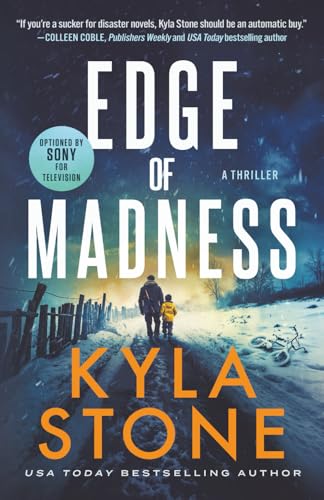


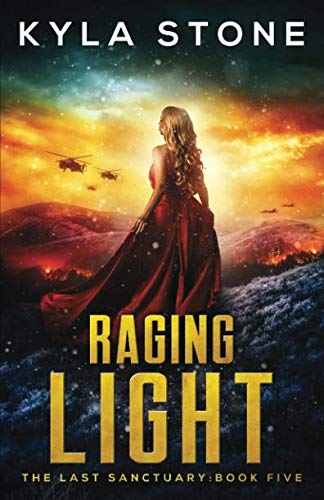
Publication Order of The Last Sanctuary Books


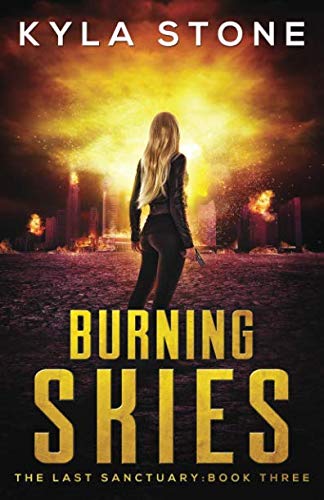



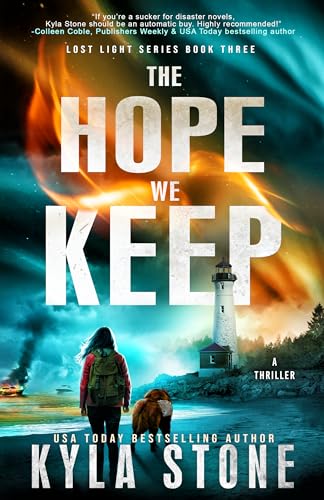
Publication Order of Lost Light Books



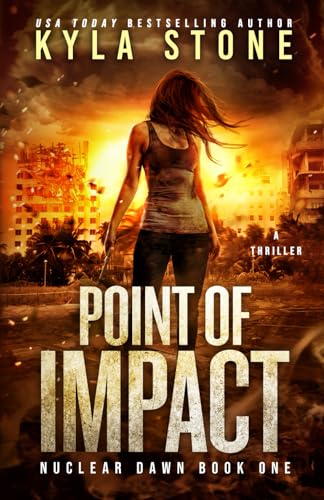
Publication Order of Nuclear Dawn Books


Publication Order of Standalone Books


About Kyla Stone
Kyla Stone is an American novelist best known for post-apocalyptic and survival thrillers that place ordinary people inside large-scale disasters. Her major series include Edge of Collapse, Nuclear Dawn, The Last Sanctuary, and Lost Light, each approaching societal breakdown from a different direction. Although catastrophe provides the framework, Stone’s fiction concentrates heavily on the people caught inside it: families separated by disaster, damaged survivors trying to protect others, communities struggling to function, and individuals forced to decide what they will sacrifice when established systems no longer protect them.
Stone began publishing fiction before becoming primarily associated with apocalyptic thrillers. Her early work includes Beneath the Skin and its companion novel Before You Break, contemporary stories dealing with emotionally difficult subjects and troubled young characters. She also wrote Labyrinth of Shadows, demonstrating that her bibliography was not initially confined to the survival fiction that would later become her strongest author identity.
Her move into large-scale apocalyptic storytelling became clear with The Last Sanctuary. The five-book series imagines a devastating pandemic against a broader background of political instability and social collapse. Stone uses multiple characters and perspectives to show a crisis operating at both personal and societal levels, a structure she would continue to develop in later work.
The Nuclear Dawn series shifts to the aftermath of nuclear attacks on the United States. Rather than concentrating solely on the initial destruction, the books explore the prolonged consequences of a country whose infrastructure and normal systems of support have been shattered. Radiation, shortages, violence, displacement, and the search for safety become immediate survival problems, while the characters must also determine whom they can trust as institutions weaken.
Stone reached a much larger readership with Edge of Collapse. The series begins after an electromagnetic pulse destroys the electrical grid across much of the United States. Its central storyline brings together Hannah Sheridan, who escapes years of captivity when the blackout disables her prison, and Liam Coleman, a former soldier accompanied by his German shepherd, Ghost. Their journey unfolds alongside the wider collapse, allowing Stone to combine a deeply personal survival story with the consequences of losing electricity, communications, transportation, emergency services, and reliable government authority.
The series became particularly characteristic of Stone’s approach because the disaster itself is only one source of danger. Winter, hunger, isolation, and failing infrastructure threaten the characters, but so do people willing to exploit the disappearance of law and order. The prequel Chaos Rising provides additional background, while the main sequence develops into a broader struggle involving the survival of communities rather than simply individuals.
With Lost Light, Stone returned to an America transformed by the failure of its electrical infrastructure but created a separate story and cast. Beginning with The Light We Lost, the series follows characters navigating the aftermath of a catastrophic solar event. Across four novels, Stone again emphasizes relationships and community alongside the mechanics of survival, showing how prolonged catastrophe changes people after the immediate shock has passed.
Her major apocalyptic series are independent of one another rather than parts of a single fictional universe. This makes Stone’s bibliography best understood as several distinct examinations of societal collapse: pandemic, nuclear devastation, electromagnetic disruption, and other threats provide different starting conditions, while survival and human behavior provide the common ground.
That consistency has become the defining feature of Stone’s work. Her novels are fast-moving and threat-driven, but their central concern is rarely destruction for its own sake. Catastrophe strips away the structures on which her characters once depended, forcing questions of loyalty, courage, trauma, family, leadership, and trust to the surface. The result is survival fiction in which rebuilding a reason to continue can be as important as finding food, shelter, or a safe place to endure the next crisis.