
Below is the complete list of Anne Rice’s Sleeping Beauty books in order. For this series, the chronological reading order is the same as the order of publication.
Publication Order of Sleeping Beauty Books
as A.N. Roquelaure


About Sleeping Beauty
Anne Rice’s Sleeping Beauty series is the major erotic-fantasy work she published under the pen name A. N. Roquelaure. It began in the 1980s as a trilogy—The Claiming of Sleeping Beauty, Beauty’s Punishment, and Beauty’s Release—and was later expanded with Beauty’s Kingdom in 2015. The books are entirely separate from Rice’s Vampire Chronicles and Mayfair Witches novels, though they share some of her recurring artistic interests: power, surrender, transformation, ritual, beauty, shame, longing, and the instability of desire.
The series reimagines the Sleeping Beauty fairy tale in a deliberately adult register. Instead of ending with the princess’s awakening, the first book treats that moment as the beginning of Beauty’s entrance into a highly stylized world of erotic obedience, courtly display, and elaborate rules of domination and submission. Rice removes the story from ordinary realism and places it in a dreamlike medieval kingdom where hierarchy, punishment, ceremony, and desire are inseparable from the social order. The result is not a conventional romance and not a continuation of the familiar fairy tale, but a sustained exploration of erotic fantasy through a mythic frame.
The Claiming of Sleeping Beauty establishes the premise and the atmosphere: Beauty is awakened and taken from her previous life into Prince Alexi’s kingdom, where royal captives are trained through rituals of submission. The language is lush and formal, closer to fantasy pageantry than modern domestic realism. Rice’s interest is not simply in shock value, but in the psychology of surrender and control—the way identity can be stripped, remade, resisted, or strangely intensified under conditions of absolute power.
Beauty’s Punishment broadens the setting by moving Beauty and Prince Tristan away from the royal court into the village, where the systems of public discipline and desire take different forms. This middle volume is important because it shows that the kingdom’s erotic structure is not confined to palace life. The village expands the social world of the series and introduces a wider range of relationships, temperaments, and responses to the same rules. Rice uses the shift in location to vary the emotional pressure rather than merely repeat the first book’s pattern.
Beauty’s Release moves still farther outward, taking Beauty, Laurent, and others into the realm of Sultanate fantasy. The third book intensifies the sense of the series as an erotic journey through changing forms of power. It also brings the original trilogy toward resolution by placing freedom, attachment, and choice beside the extreme rituals that have shaped the characters’ experiences. Within the trilogy’s own stylized terms, release is not only physical escape but a question of what the characters now understand about themselves.
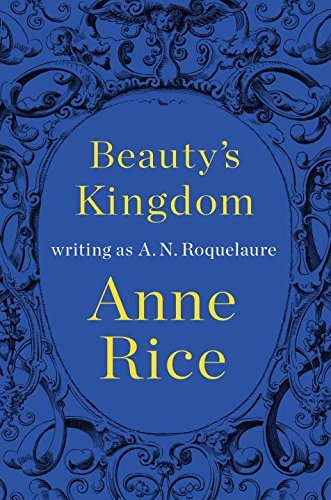
Beauty’s Kingdom arrived decades later and changed the shape of the series from a trilogy into a quartet. Rather than simply continuing immediately from the earlier ending, it revisits the kingdom after time has passed and reflects on how the world of Beauty’s story might be remade. The book is still erotic fantasy, but it carries a different perspective, shaped by return, memory, and the possibility of reorganizing power under altered terms.
The Sleeping Beauty books remain among the most distinct and controversial works in Rice’s bibliography. They are explicit adult fiction, written with the intensity and theatricality that mark her gothic novels, but directed toward erotic myth rather than vampires, witches, or religious struggle. Their significance lies in how fully Rice commits to fantasy as a closed imaginative system: a kingdom governed by desire, where questions of freedom and submission are pushed to extremes.