
Below is the complete list of Anne Rice’s The Life of Christ books in order. For this series, the chronological reading order is the same as the order of publication.
Publication Order of The Life of Christ Books
About The Life of Christ
Anne Rice’s Life of Christ series, published under the title Christ the Lord, is one of the most striking departures in a career better known for vampires, witches, erotic fantasy, and gothic supernatural drama. The sequence consists of two completed novels: Christ the Lord: Out of Egypt and Christ the Lord: The Road to Cana. They are written in the first person from the perspective of Jesus and belong to the period of Rice’s life when she had returned to Catholic faith after many years away from the church. The books are therefore not historical thrillers or speculative rewritings in the style of her supernatural fiction, but reverent, research-heavy attempts to imagine the human experience of Christ within the boundaries of faith.
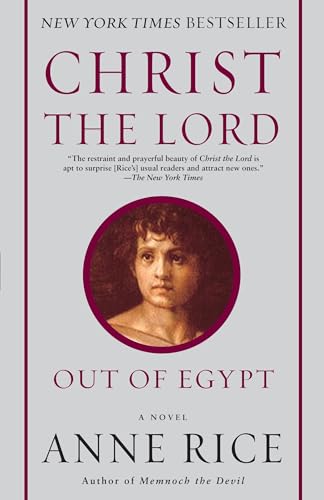
Out of Egypt begins with Jesus as a young child, around seven years old, as his family leaves Alexandria and returns to Nazareth. Rice approaches the story through the mystery of partial knowledge. The child Jesus understands that there are things about his birth, his powers, and his identity that the adults around him are reluctant to explain fully. This creates a narrative built not on suspense in the conventional sense, but on awakening: Jesus gradually becomes conscious of the extraordinary nature of his life while still experiencing family, travel, fear, village life, religious observance, and childhood perception.
That first book is especially important because it reveals how carefully Rice tried to separate this series from sensational treatment of sacred material. She drew on the Gospels, historical research, Jewish context, and early Christian traditions while writing in a voice meant to feel intimate rather than doctrinally abstract. The result is a novel concerned with embodiment: what it might have meant for Jesus to grow up inside a specific family, language, culture, and religious world while carrying a divine identity not yet publicly declared.
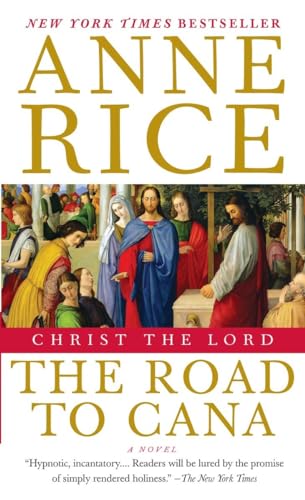
The Road to Cana moves the story forward to Jesus as an adult in Nazareth before the beginning of his public ministry. The novel follows him through ordinary village life, family obligations, work, grief, longing, and the mounting recognition that the time has come to step into the mission ahead of him. Its movement toward the baptism, the temptations in the wilderness, and the wedding at Cana gives the book a clearer sense of transition. Where Out of Egypt focuses on childhood awareness, The Road to Cana focuses on renunciation, obedience, and emergence.
The two novels are closely connected in tone, but they examine different forms of hiddenness. In the first, Jesus is hidden within childhood and protected by family secrecy. In the second, he is hidden within ordinary adult life, known to those around him as a carpenter and kinsman before the signs of ministry become public. Rice’s interest lies in the tension between the visible and the invisible: the daily life people see and the spiritual reality that has not yet been revealed.
The series remained unfinished at Rice’s death, so readers should approach it as a two-book fragment of a larger intended portrayal rather than a completed fictional life of Christ. It should also be distinguished from Called Out of Darkness, Rice’s memoir about her spiritual journey, which helps explain the religious seriousness behind the novels but is not part of the fiction sequence.
Within Anne Rice’s bibliography, the Life of Christ books stand apart because they replace gothic excess with restraint, confession, and devotion. Yet they still share a deeper connection with her best-known work. Rice was always drawn to immortal questions: the soul, guilt, beauty, suffering, faith, and the longing for meaning. In Christ the Lord, those concerns are no longer filtered through vampires or witches, but through her most direct and reverent attempt to imagine the mystery at the center of Christian belief.