
Below is the complete list of Walter Mosley’s Fearless Jones books in order. For this series, the chronological reading order is the same as the order of publication.
Publication Order of Fearless Jones Books


About Fearless Jones
Paris Minton wants nothing more than to run his secondhand bookstore and avoid trouble, but his friendship with Fearless Jones makes a peaceful existence nearly impossible. Walter Mosley’s Fearless Jones series follows two very different men navigating the dangerous streets of 1950s Los Angeles, where criminal conspiracies, racial prejudice, and personal loyalties frequently collide. Through three novels published between 2001 and 2006, Mosley combines hardboiled detective fiction with humour, historical detail, and a compelling examination of friendship.
Despite the series’ title, its narrator is Paris Minton, a cautious, book-loving man who regards physical confrontation as something best avoided. Paris owns a modest bookstore on Florence Avenue in South Los Angeles, where he hopes to earn a living surrounded by literature. Intelligent and observant, he understands his neighbourhood and possesses considerable knowledge acquired through reading, but he lacks the physical courage commonly associated with traditional fictional detectives.
His closest friend, Tristan “Fearless” Jones, is almost his complete opposite. A fearless fighter and fiercely loyal companion, Jones approaches danger with a confidence that Paris finds both reassuring and alarming. His extraordinary courage can also make him reckless, creating situations that require Paris’s intelligence and practical judgment to resolve.
The partnership works because each man possesses qualities the other lacks. Fearless provides protection and an uncompromising willingness to confront dangerous individuals, while Paris recognises inconsistencies, understands human motivations, and identifies connections that might otherwise remain hidden.
Their first investigation unfolds in Fearless Jones (2001), set in 1954. Paris’s relatively quiet life collapses after an encounter with a mysterious woman leads to violence, threats, and the destruction of his bookstore. Desperate for assistance, he turns to Fearless, who has been serving time in jail.
What initially appears to be a personal misfortune develops into a complicated investigation involving deception, murder, and people whose motives are considerably darker than their outward appearances suggest. Paris discovers that escaping danger requires more than simply identifying the criminals responsible.
The novel establishes Mosley’s distinctive approach to detective fiction. Unlike conventional investigators who actively seek dangerous assignments, Paris repeatedly becomes involved in mysteries because circumstances leave him little alternative. His reluctance makes the dangers feel immediate, while his observations provide an often humorous perspective on the people surrounding him.
In Fear Itself (2003), the partnership faces another investigation when Fearless becomes involved in searching for a missing man. The assignment quickly draws both friends into a tangled situation involving suspicious deaths, hidden wealth, and individuals prepared to use violence to protect their interests.
Paris’s attempts to avoid involvement prove unsuccessful, particularly when his sense of loyalty makes abandoning Fearless impossible. Their contrasting personalities remain central to the narrative, with Paris frequently questioning decisions that Fearless regards as perfectly reasonable.
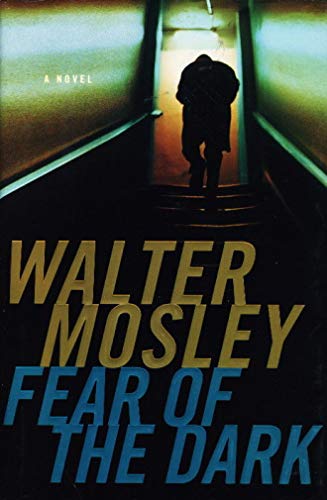
The third novel, Fear of the Dark (2006), introduces a more personal complication through Paris’s cousin, Ulysses S. Grant IV, known as Useless. A habitual troublemaker with a talent for deception, Useless disappears after becoming involved in a dangerous scheme.
When his mother, Three Hearts, arrives from Louisiana seeking help, Paris reluctantly begins searching for him. Fearless joins the investigation, which uncovers blackmail, concealed relationships, and increasingly serious criminal activity.
Family obligation becomes especially significant in this instalment. Paris recognises his cousin’s dishonesty, yet refusing to help would mean abandoning someone connected to his own history. The conflict reinforces Mosley’s recurring interest in loyalty as both a source of strength and a dangerous responsibility.
The historical setting is essential to all three novels. Mosley’s Los Angeles is shaped by racial segregation, economic inequality, police hostility, and the precarious circumstances facing Black residents during the 1950s. Paris and Fearless must navigate dangers created not only by criminals but also by institutions that cannot always be trusted to protect them.
Although the series shares its period setting and social concerns with Mosley’s Easy Rawlins mysteries, it features a separate investigative partnership. Easy is a more naturally capable detective, whereas Paris approaches criminal investigations with considerable hesitation and often depends upon Fearless for survival.
The relationship between Paris and Fearless gives the novels their distinctive emotional character. Their friendship is not always comfortable or uncomplicated, but each recognises the other’s essential qualities. Through their adventures, Mosley examines the difference between physical bravery and moral courage, suggesting that fear does not necessarily prevent someone from acting with determination when the people they care about are in danger.