
Below is the complete list of Walter Mosley books in order. For each series, the chronological reading order is the same as the order of publication.
Publication Order of Crosstown to Oblivion Books


Publication Order of Easy Rawlins Books


Publication Order of Fearless Jones Books


Publication Order of King Oliver Books


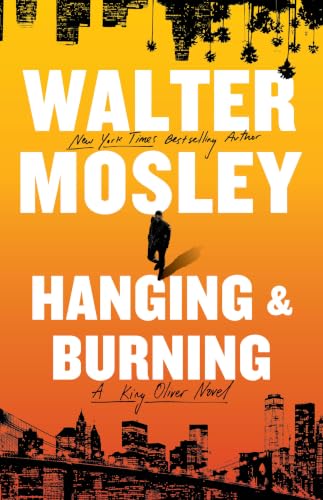
Publication Order of Leonid McGill Books


Publication Order of Socrates Fortlow Books


Publication Order of Standalone Books


- Parishioner (2012)
Published in 2012, Parishioner is listed as book #12 in the Standalone series. 


Publication Order of Short Stories/Novellas Books


- Archibald Lawless, Anarchist at Large (2016)
Archibald Lawless, Anarchist at Large was first published in 2016; within the Short Stories/Novellas series, it is listed as book #5.
Publication Order of Short Story Collections Books

Publication Order of Graphic Novels Books

Publication Order of Non-Fiction Books


Publication Order of Plays Books

Publication Order of Akashic Noir Books


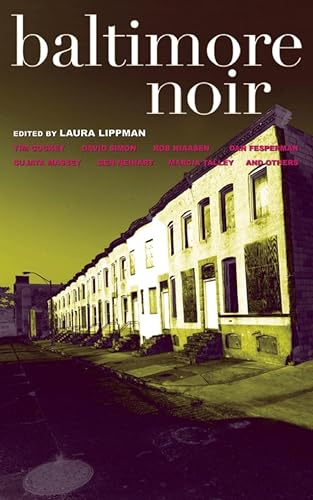


- Pittsburgh Noir (2011)
Pittsburgh Noir was first published in 2011; within the Akashic Noir series, it is listed as book #45. 


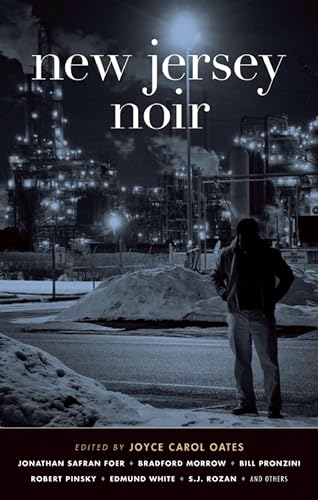


- Providence Noir (2015)
Providence Noir was first published in 2015; within the Akashic Noir series, it is listed as book #70. 


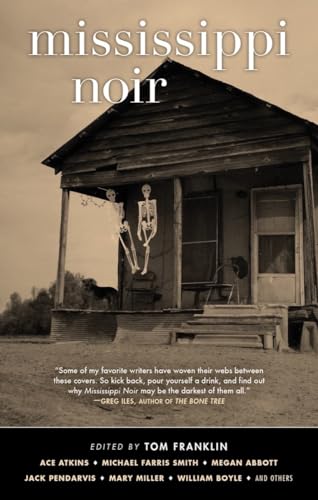


- Addis Ababa Noir (2020)
Published in 2020, Addis Ababa Noir is listed as book #107 in the Akashic Noir series. 


- Denver Noir (2022)
In the Akashic Noir series, Denver Noir is book #114 and was published in 2022. 


Publication Order of Transgressions Books


About Walter Mosley
Walter Mosley is an American novelist, playwright, and essayist whose work has significantly influenced modern crime fiction. Best known for his Easy Rawlins mysteries, he combines the traditions of hardboiled detective fiction with penetrating examinations of race, class, power, and American history. His literary career extends well beyond mysteries, encompassing science fiction, historical fiction, social commentary, and philosophical novels. Across these different forms, Mosley frequently portrays characters navigating societies in which justice and opportunity are unequally distributed.
Born on January 12, 1952, in Los Angeles, California, Mosley grew up in a working-class family. His father, Leroy Mosley, was an African American school custodian, while his mother, Ella, was a Jewish woman whose family background introduced him to another cultural tradition. His upbringing in Los Angeles gave him firsthand familiarity with the neighbourhoods and social divisions that would later become central to his fiction.
Before becoming a professional writer, Mosley pursued several different interests. He attended Goddard College in Vermont, where he earned a degree in political science, and subsequently worked as a computer programmer. He began writing fiction seriously in his thirties and later completed a Master of Fine Arts in creative writing at the City College of New York.
His breakthrough came with Devil in a Blue Dress (1990), introducing Ezekiel “Easy” Rawlins, a Black World War II veteran living in postwar Los Angeles. Recently unemployed and struggling to maintain his home, Easy becomes involved in a dangerous investigation that exposes corruption, racial prejudice, and the hidden relationships connecting the city’s powerful and vulnerable residents.
The novel established Mosley’s reputation for combining compelling mysteries with detailed social history. Rather than depicting Los Angeles merely as a setting for criminal investigations, he presents the city as a changing environment shaped by migration, racial segregation, economic ambition, and political influence.
The Easy Rawlins series subsequently developed into his most recognisable achievement. Its continuing narrative follows Easy through different periods of American history, allowing Mosley to examine changing social attitudes while developing the detective’s personal relationships and moral convictions. The series continued through novels including Farewell, Amethystine (2024) and Gray Dawn (2025).
Devil in a Blue Dress was adapted into a 1995 film starring Denzel Washington as Easy Rawlins and Don Cheadle as Raymond “Mouse” Alexander.
Mosley expanded his crime fiction through several other recurring protagonists. The Fearless Jones mysteries follow Paris Minton, a Los Angeles bookstore owner whose friendship with the formidable Fearless Jones repeatedly draws him into dangerous situations.
The Leonid McGill series, beginning with The Long Fall (2009), moves to contemporary New York City. Its central investigator is a former boxer and private detective attempting to distance himself from a morally compromised past.
Mosley’s Joe King Oliver novels introduce a former New York police detective whose wrongful imprisonment leads him into private investigation. Beginning with Down the River unto the Sea (2018), the series examines corruption, institutional injustice, and the complicated distinction between legal authority and personal morality.
His literary fiction is equally substantial. The Socrates Fortlow books follow a former prisoner confronting questions of responsibility and redemption, while The Last Days of Ptolemy Grey (2010) explores ageing, memory, and family obligations. The latter was adapted into a television miniseries starring Samuel L. Jackson.
Mosley’s science-fiction works include Blue Light, Futureland, and the Crosstown to Oblivion stories. These novels and shorter works explore speculative futures while retaining his concern with inequality, identity, and the consequences of power.
His nonfiction includes This Year You Write Your Novel and Elements of Fiction, reflecting his interest in the craft of storytelling. He has also worked in television, including as a writer and executive producer on the crime drama Snowfall.
Mosley’s literary achievements include the Mystery Writers of America Grand Master Award, PEN America’s Lifetime Achievement Award, and the National Book Foundation’s Medal for Distinguished Contribution to American Letters. His work has been translated into numerous languages, establishing an international readership.
A defining characteristic of Mosley’s writing is his ability to connect individual experience with broader historical and social forces. His protagonists are frequently imperfect men confronting violence, difficult moral choices, and institutions that offer little protection. Through direct prose, memorable dialogue, and psychologically complex characters, he portrays crime not simply as a puzzle to be solved, but as an expression of the society in which it occurs.
Across his extensive bibliography, Mosley has consistently challenged the boundaries separating popular genre fiction from literary and political storytelling. His work gives particular attention to lives often neglected in traditional American narratives, establishing him as a distinctive and enduring voice in contemporary literature.