
Below is the complete list of Jeff Shaara books in order. For each series, the chronological reading order is the same as the order of publication.
Publication Order of World War II: 1939-1945 Books


Publication Order of Civil War: 1861-1865 Books


Publication Order of Civil War: 1861-1865, Western Theater Books


Publication Order of American Revolutionary War: 1770-1783 Books


Publication Order of Standalone Books


Publication Order of Non-Fiction Books

About Jeff Shaara
Jeff Shaara is an American historical novelist best known for his military fiction exploring major conflicts in American history, including the Revolutionary War, the Civil War, the First and Second World Wars, and the Korean War. His novels combine documented historical events with imagined conversations and private thoughts, allowing readers to experience military campaigns through the perspectives of commanders, soldiers, and political leaders. He is also the son of Pulitzer Prize-winning novelist Michael Shaara, whose Civil War novel The Killer Angels helped establish the literary tradition that Jeff Shaara later continued.
Born on February 21, 1952, in New Brunswick, New Jersey, Shaara grew up in a family with strong literary interests. He graduated from Florida State University with a degree in criminology and initially pursued a career outside publishing. Before becoming a novelist, he worked in the jewelry business, spending many years as a businessman rather than a professional writer.
His entry into historical fiction followed the renewed popularity of his father’s work. Michael Shaara’s The Killer Angels, published in 1974, depicted the Battle of Gettysburg through the perspectives of prominent participants, including Robert E. Lee, James Longstreet, and Joshua Lawrence Chamberlain. The novel won the Pulitzer Prize for Fiction in 1975 and later inspired the 1993 film Gettysburg.
After his father’s death in 1988, Jeff Shaara was encouraged to expand the story surrounding Gettysburg. His first novel, Gods and Generals, appeared in 1996 and served as a prequel to The Killer Angels. It follows important figures during the years leading up to Gettysburg, including Robert E. Lee, Thomas “Stonewall” Jackson, Winfield Scott Hancock, and Joshua Lawrence Chamberlain.
Shaara followed it with The Last Full Measure in 1998, continuing the Civil War narrative from the aftermath of Gettysburg through the final campaigns of the conflict. Together, these novels and Michael Shaara’s The Killer Angels form a connected trilogy, although the middle volume was written by his father.
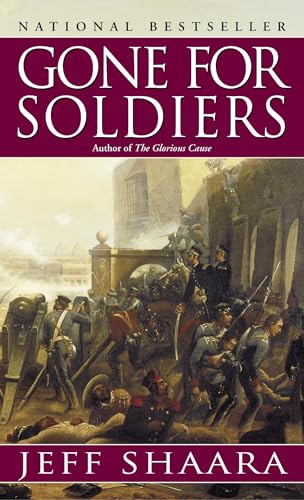
The success of these books established Shaara as a historical novelist in his own right. He subsequently broadened his subject matter beyond the Civil War, beginning with Gone for Soldiers in 2000, which examines the Mexican-American War and the early military careers of figures who would later become prominent during the Civil War.
His American Revolution novels, Rise to Rebellion and The Glorious Cause, explore the political and military struggle for independence. The books portray figures such as George Washington, Benjamin Franklin, John Adams, and other participants whose decisions shaped the founding of the United States.
Shaara returned to the Civil War with a four-book sequence covering the Western Theater. Beginning with A Blaze of Glory, the series follows campaigns including Shiloh, Vicksburg, Chattanooga, and the advance through Georgia and the Carolinas. These novels shift attention away from the eastern battles that dominate many popular accounts of the conflict.
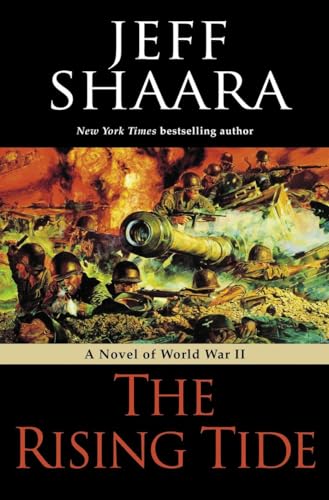
The Second World War has also occupied a substantial portion of his bibliography. His World War II trilogy begins with The Rising Tide, continues with The Steel Wave, and concludes with No Less Than Victory. The novels trace major Allied operations in North Africa and Europe, including the Normandy invasion and the final campaigns against Nazi Germany.
In The Final Storm, Shaara turned to the Pacific War, portraying the closing stages of the conflict against Japan. He later explored the Korean War in The Frozen Hours, focusing on the brutal fighting around the Chosin Reservoir.
His First World War novel To the Last Man examines the American experience of the conflict while incorporating the perspectives of aviators, infantrymen, and senior commanders. Shaara’s interest in aviation also appears in The Eagle’s Claw, which portrays the Battle of Midway during the Second World War.
Across these books, Shaara relies on historical research to reconstruct campaigns, military decisions, and the experiences of participants. His narratives frequently alternate between individuals on opposing sides, allowing readers to understand how incomplete information, conflicting priorities, and personal judgments influenced events.
Rather than presenting battles solely through their outcomes, he emphasizes the uncertainty experienced by those involved. Commanders must make decisions without knowing what their opponents intend, while ordinary soldiers confront exhaustion, fear, confusion, and the physical realities of combat.
Shaara has also written about the American Civil War’s final phase and other major historical turning points, continuing to build a bibliography that spans several centuries of military history. His books are historical novels rather than academic histories, and their dialogue and interior reflections are fictional reconstructions, even when the underlying events are extensively documented.
Jeff Shaara’s contribution to historical fiction lies in making large military campaigns accessible through individual experiences. Although his career began by extending the world of The Killer Angels, his subsequent novels have established a much broader body of work, connecting the strategic decisions of famous leaders with the human consequences of warfare.