
Below is the complete list of Alice Hoffman books in order. For each series, the chronological reading order is the same as the order of publication.
Publication Order of Practical Magic Books


Publication Order of Water Tales Books


Publication Order of Green Angel Books


Publication Order of The Once Upon a Time Bookshop Stories Books


Publication Order of Standalone Books










Publication Order of Short Story Collections Books


Publication Order of Standalone Plays Books

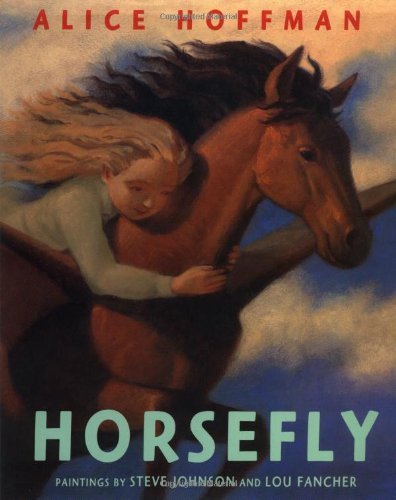
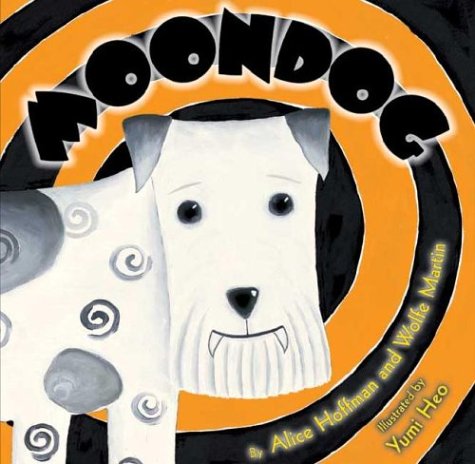
Publication Order of Picture Books

Publication Order of Non-Fiction Books

Publication Order of Inheritance Collection Books




About Alice Hoffman
Alice Hoffman is an American novelist whose work moves between literary fiction, historical fiction, family drama, fantasy, and writing for younger readers. Born in New York City in 1952 and raised on Long Island, she studied at Adelphi University before receiving a fellowship to Stanford University’s Creative Writing Center. While at Stanford, she wrote her first novel, Property Of, at the age of twenty-one. Published in 1977, it began a career that would eventually encompass more than thirty novels, short-fiction collections, screenwriting, and books for children and young adults.
Hoffman’s fiction is recognizable less by a single genre than by its atmosphere. Her characters often inhabit ordinary towns, families, and historical settings touched by the uncanny: prophetic dreams, inherited gifts, unusual weather, folk remedies, ghosts, curses, or coincidences that feel like fate. She rarely treats magic as a system requiring elaborate explanation. Instead, it exists alongside grief, illness, romantic longing, family conflict, and the difficult choices through which people shape their lives.
Her best-known novel, Practical Magic, introduced the Owens family, generations of women whose romantic lives are shadowed by a curse. The book inspired the 1998 film starring Sandra Bullock and Nicole Kidman and later became the foundation of a multigenerational sequence. Hoffman expanded the family history through The Rules of Magic, Magic Lessons, and The Book of Magic, moving backward and forward across centuries rather than following a simple chronological progression. The Practical Magic novels stand apart within a bibliography otherwise dominated by independent stories.
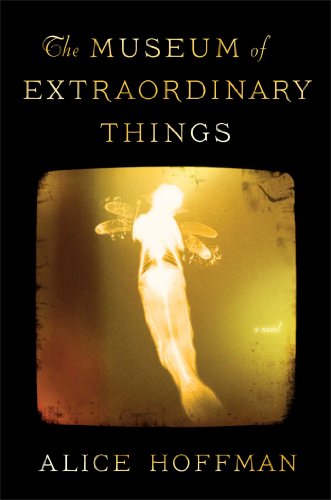
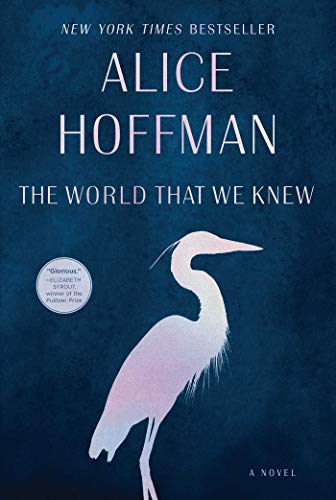
Several of Hoffman’s most significant works use history to explore survival and the lives of women whose experiences are easily overlooked. The Dovekeepers reimagines the siege of Masada through four women connected to the ancient desert fortress. The Museum of Extraordinary Things unfolds against early twentieth-century New York, while The Marriage of Opposites draws on the Caribbean childhood of painter Camille Pissarro. The World That We Knew, set during the Holocaust, blends historical danger with Jewish folklore and the legend of the golem.
Her contemporary novels often give equal weight to place and character. Long Island appears repeatedly, sometimes as a landscape of childhood memory and sometimes as a setting marked by social division, loss, and transformation. Here on Earth, selected for Oprah’s Book Club, reworks elements of Wuthering Heights through a destructive adult relationship. Faithful follows a young woman burdened by survivor’s guilt, while The Invisible Hour connects a troubled modern life with the liberating force of literature.
Hoffman has also written extensively for younger audiences. Aquamarine, later adapted for film, combines friendship and adolescence with a mermaid story. Green Angel and Green Witch follow a girl rebuilding her life after catastrophe, using spare, lyrical prose and fairy-tale imagery. Other young-adult works, including Incantation, address persecution, identity, and historical memory.
Her writing style is lyrical but controlled, frequently using compressed chapters, recurring images, shifting viewpoints, and statements that anticipate later loss. Love in her novels is rarely presented as uncomplicated rescue. It can heal, endanger, bind generations together, or require a person to leave what is familiar. Mothers, daughters, sisters, outsiders, and women carrying concealed histories occupy much of her imaginative territory.
Hoffman’s bibliography is therefore best approached as several overlapping bodies of work: the connected Practical Magic novels, historical fiction, contemporary stand-alones, short fiction, and writing for younger readers. Across those forms, she has maintained a distinctive interest in how people survive what appears impossible—and how storytelling, memory, and a little unexplained magic can alter the meaning of what remains.