
Below is the complete list of Sister Souljah books in order. For each series, the chronological reading order is the same as the order of publication.
Publication Order of The Coldest Winter Ever Books

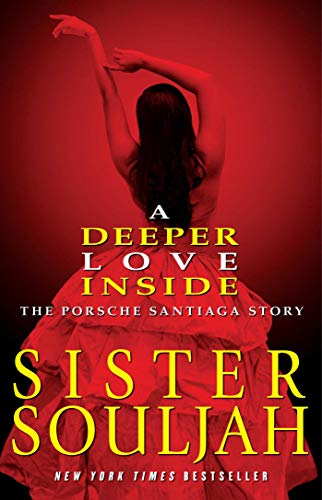


Publication Order of The Midnight Books


Publication Order of Non-Fiction Books

About Sister Souljah
Sister Souljah is an American novelist, memoirist, activist, educator, and recording artist whose work combines political argument, cultural criticism, family drama, and uncompromising portrayals of urban life. Born in the Bronx and raised partly in New York housing projects, she developed a public voice grounded in Black community organizing long before fiction became the principal focus of her career. Her novels are known for forceful narrators, morally complicated characters, and stories in which wealth, loyalty, faith, violence, and personal responsibility are continually tested against one another.
She attended an advanced-placement summer program at Cornell University, studied abroad at the University of Salamanca in Spain, and earned a degree in American history and African studies from Rutgers University. During and after college, she became involved in youth education and community activism. Her work included helping establish the African Youth Survival Camp for children from homeless families and organizing programs concerned with education, culture, recreation, political awareness, and the pressures facing young people in underserved communities.
Souljah later served as executive director of Daddy’s House Social Programs, a charitable organization founded by Sean Combs. She developed academic initiatives, camps, and travel opportunities for young people during her years with the organization. That practical involvement with education and institution-building is important to understanding her writing, which frequently places individual choices within larger systems of poverty, family instability, racism, gender expectations, criminal economies, and cultural influence.
Her early public career also included hip-hop. She was associated with Public Enemy as its female performing voice and released the politically charged album 360 Degrees of Power in 1992. That same year, comments attributed to her after the Los Angeles uprising became the subject of national political controversy when presidential candidate Bill Clinton publicly criticized her. The episode produced the enduring political expression “Sister Souljah moment,” but it represents only one part of a career that later became far more closely identified with books and readership.
Souljah entered publishing with No Disrespect, a candid autobiographical work examining race, class, gender, family, love, and the development of her political consciousness. Rather than presenting her life as a smooth progression toward success, the memoir uses important relationships and difficult experiences to explore how personal beliefs are formed, challenged, and sometimes contradicted by behavior.
Her first novel, The Coldest Winter Ever, became the defining book of her fiction career. Through Winter Santiaga, the privileged and fiercely self-interested daughter of a Brooklyn drug dealer, Souljah created a narrator whose confidence, appetite, and flawed judgment made her both compelling and divisive. The novel helped bring urban fiction to a much wider mainstream audience, although Souljah has resisted attempts to treat her work as artistically separate from literature concerned with comparable themes of ambition, crime, desire, and social conflict.
Her later novels form two closely related character sagas. The Midnight books follow a disciplined Sudanese Muslim immigrant whose ideas about honor, faith, family, masculinity, and protection collide with American urban life. The Santiaga stories return to Winter and her younger sister Porsche, extending the consequences of the family’s collapse while shifting perspectives and introducing stronger spiritual and supernatural dimensions.
Souljah’s bibliography is best understood as an interconnected body of fiction rather than a collection of interchangeable street stories. Her narrators often hold rigid beliefs, make damaging choices, and speak with complete confidence even when events expose their limitations. That tension gives the novels their distinctive force: they entertain through drama and momentum while asking readers to judge character, power, culture, and accountability for themselves.