
Below is the complete list of John Le Carre’s George Smiley books in order. For this series, the chronological reading order is the same as the order of publication.
Publication Order of George Smiley Books


About George Smiley
George Smiley is the quiet intelligence officer at the center of John le Carré’s most influential Cold War fiction. Short, bespectacled, badly dressed, and outwardly unremarkable, he is the opposite of the glamorous secret agent. His strength lies in patience, memory, psychological insight, and an ability to recognize the human weakness behind an operation. Across the novels, Smiley serves not only as an investigator and spymaster but also as le Carré’s most persistent observer of betrayal, institutional decay, and the moral damage inflicted by espionage.
Smiley first appears in Call for the Dead, where a routine security interview is followed by the apparent suicide of a Foreign Office employee. His refusal to accept the official explanation introduces both his investigative temperament and the British intelligence organization later known as the Circus. The novel also establishes important elements of his personal life, particularly his painful marriage to the beautiful and repeatedly unfaithful Ann.
A Murder of Quality temporarily removes Smiley from professional espionage. Asked to investigate a threatening letter connected to a murder at an elite boarding school, he operates as a private detective within a closed society governed by class, reputation, and concealed resentment. The setting differs from the Circus, but the mystery reinforces Smiley’s ability to penetrate institutions that protect themselves by maintaining a respectable appearance.
He plays a less dominant yet significant role in The Spy Who Came in from the Cold. Alec Leamas carries the main narrative, while Smiley remains connected to the operation unfolding around him. The novel’s ruthless manipulation of agents and civilians gives essential context to Smiley’s later disillusionment. His smaller appearance in The Looking Glass War similarly places him near a failing intelligence operation driven by nostalgia, bureaucratic rivalry, and dangerously outdated assumptions.
Smiley becomes the undisputed center of the Karla trilogy, beginning with Tinker Tailor Soldier Spy. Recalled from forced retirement, he must uncover a Soviet mole operating at the highest level of the Circus. The investigation draws upon old files, damaged careers, and testimony from officers who possess only fragments of the truth. Smiley’s adversary is Karla, the Moscow Centre strategist who has exploited personal vanity and institutional weakness to compromise British intelligence.
The Honourable Schoolboy follows Smiley as he attempts to rebuild the Circus and pursue evidence against Karla through an operation extending into Asia. Journalist and occasional agent Jerry Westerby occupies much of the foreground, while Smiley directs events from a position of authority that exposes him to political interference and the moral compromises of command. Their contest reaches its culmination in Smiley’s People, where the murder of a former Soviet agent gives Smiley an opportunity to attack the private vulnerability Karla has tried to conceal.
The Secret Pilgrim presents an older Smiley through the memories of intelligence officer Ned. Invited to address a graduating class of agents, Smiley prompts reflections on decades of Cold War operations, failures, and compromised victories. A Legacy of Spies later returns to the consequences of The Spy Who Came in from the Cold, with Peter Guillam summoned to answer for an operation conducted under Smiley’s direction. Smiley is not always the narrative lead in these later books, but his decisions and influence remain central.
The novels vary considerably in structure and in the size of Smiley’s role. Some are direct investigations, others place him behind another agent, and the Karla books form the strongest continuous narrative. Reading them in publication order preserves the gradual construction of the Circus, Smiley’s troubled marriage and career, and his movement from diligent officer to disillusioned master of the intelligence system.
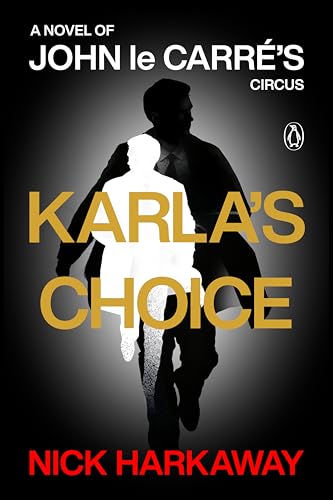
The Smiley world was extended after le Carré’s death by his son Nick Harkaway in Karla’s Choice. Set between The Spy Who Came in from the Cold and Tinker Tailor Soldier Spy, it is an authorized continuation rather than a novel written by le Carré himself. The original sequence nevertheless remains complete on its own: a career-long examination of a man whose remarkable intelligence never frees him from the human cost of knowing how deception works.