
Below is the complete list of Fredrik Backman’s Beartown books in order. For this series, the chronological reading order is the same as the order of publication.
Publication Order of Beartown Books


About Beartown
Fredrik Backman’s Beartown series is a three-novel portrait of an isolated Swedish community that has placed its pride, economic hopes, and sense of identity in ice hockey. The setting is not merely a backdrop for competition. The rink is where status is assigned, loyalties are tested, children are turned into symbols, and adults attempt to recover the importance the town believes it has lost. Across the trilogy, Backman uses sport as the organizing force around a much larger examination of power, belonging, violence, responsibility, and the stories communities tell to protect themselves.
Beartown begins with the town’s junior team approaching a national semifinal, an achievement that seems capable of reversing years of decline. The players carry expectations that reach far beyond the game, particularly Kevin, the celebrated star; Benji, his fiercely loyal friend and teammate; and Amat, a gifted younger player from a less privileged part of town. Peter Andersson, the club’s general manager and a former professional player, has returned with his family to help rebuild the organization. His wife, Kira, and their children, Maya and Leo, become central to a story in which private harm collides with public ambition.
A serious act of violence divides Beartown and exposes how readily institutions and neighbors can place reputation above truth. Backman does not reduce the conflict to a single offender and victim or treat it as an isolated scandal. He follows the families, witnesses, coaches, sponsors, supporters, and young players whose decisions determine what the town is willing to acknowledge. The novel’s many viewpoints show how group pressure operates through friendship, fear, money, gender expectations, and the desire to remain accepted.
Us Against You continues directly from those consequences. The hockey club’s future is uncertain, relationships have fractured, and the rivalry with nearby Hed becomes increasingly important. Political maneuvering enters the struggle around the team, while new leadership changes the balance among players and supporters. The second book broadens the series from a moral crisis within one community to a study of tribal identity: how easily devotion becomes hostility, how leaders exploit resentment, and how individuals are forced to choose between a group and their own principles.
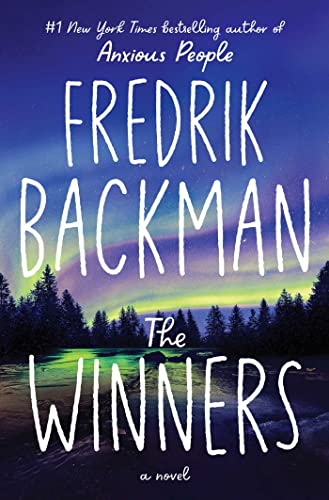
The Winners brings Beartown and Hed into an even wider reckoning. A destructive storm reconnects the neighboring towns while old conflicts, hidden compromises, and unresolved grief continue to shape their residents. The final novel gives substantial attention to established characters while introducing new figures whose lives reveal other parts of the community. Its scale is larger and its tone more reflective, allowing Backman to trace the long aftermath of choices made earlier in the trilogy rather than offering a simple contest between heroes and villains.
Although hockey drives the action, the series is fundamentally an ensemble drama. Backman moves rapidly among perspectives, sometimes revealing a character’s future before explaining how it will be reached. His narration repeatedly shifts judgment by exposing the fear, love, shame, or loyalty beneath an action. Benji, Maya, Amat, Peter, Kira, Bobo, Ana, and other recurring characters develop across the entire sequence, and even secondary residents contribute to the sense that Beartown is a living social system rather than a collection of separate subplots.
The novels are best read in publication order because their emotional force is cumulative. Later books disclose the outcomes of earlier conflicts, continue major relationships, and assume familiarity with the town’s divisions. What begins as the story of a junior hockey team becomes a generational account of two communities struggling with what they owe their children, what forgiveness can and cannot repair, and whether loyalty remains a virtue when it demands silence.