
Below is the complete list of Deborah Harkness’ All Souls Trilogy books in order. For this series, the chronological reading order is the same as the order of publication.
Publication Order of All Souls Trilogy Books


About All Souls Trilogy
An ancient manuscript discovered in Oxford’s Bodleian Library brings together a reluctant witch and a centuries-old vampire, setting in motion a conflict that reaches across history and threatens the foundations of the supernatural world. Deborah Harkness’s All Souls Trilogy combines historical fantasy, paranormal romance, alchemy, and scientific mystery in a richly developed story about forbidden love, inherited power, and the search for knowledge. Published between 2011 and 2014, the trilogy forms the original narrative at the heart of Harkness’s expanding All Souls universe.
The central character is Diana Bishop, an accomplished historian specialising in the history of science and alchemy. Descended from a distinguished family of witches, Diana has deliberately avoided practising magic since childhood, preferring the intellectual certainty of academic research. Her carefully controlled existence changes when she requests an unusual manuscript, Ashmole 782, during her research at Oxford.
The manuscript, known as the Book of Life, is an enchanted volume believed to contain secrets about the origins of supernatural creatures. Its unexpected appearance attracts the attention of witches, vampires, and daemons, all of whom have different reasons for wanting to possess it.
Among those drawn to Diana is Matthew Clairmont, a geneticist and vampire whose existence spans more than fifteen centuries. His scientific interests initially explain his fascination with the manuscript, but his growing attachment to Diana complicates an investigation already surrounded by danger.
Their relationship violates the longstanding covenant enforced by the Congregation, a governing body responsible for maintaining order among supernatural species. The prohibition against relationships between different creatures creates immediate consequences, placing Diana and Matthew in opposition to powerful institutions determined to preserve established traditions.
In A Discovery of Witches (2011), Diana must confront the magical inheritance she has spent years suppressing. As supernatural enemies pursue her, she gradually recognises that her unusual abilities are connected to a much larger mystery involving her family and the origins of creatures themselves.
The second novel, Shadow of Night (2012), takes the couple into Elizabethan England. Their journey through time introduces historical figures, political conspiracies, and the intellectual culture of the sixteenth century. Matthew’s past becomes particularly significant as Diana encounters people and circumstances that shaped his long existence.
Harkness’s academic expertise is especially evident in these historical passages. Alchemy, manuscript scholarship, religious disputes, and Renaissance scientific thought become integral to the narrative rather than decorative background details.
The trilogy concludes with The Book of Life (2014), which returns Diana and Matthew to the present as they confront the consequences of their discoveries. The search for the manuscript’s missing pages intensifies, while rival supernatural factions threaten their future together.
Across the three novels, Diana develops from a scholar determined to reject her magical abilities into a woman increasingly prepared to understand and control them. Matthew undergoes a different transformation, confronting the guilt, violence, and deeply ingrained loyalties accumulated during his extraordinarily long life.
Their relationship provides the emotional foundation, but the supporting characters give the trilogy much of its complexity. Sarah Bishop and Emily Mather represent Diana’s family connections, while members of the powerful de Clermont family introduce centuries of vampire history and political obligation.
The series’ supernatural mythology distinguishes it from conventional vampire fiction. Witches possess varied magical abilities, vampires maintain complicated familial and political structures, and daemons are associated with extraordinary creativity and unconventional thought. Harkness also incorporates genetic research into the mysteries surrounding their origins, connecting ancient beliefs with modern scientific questions.
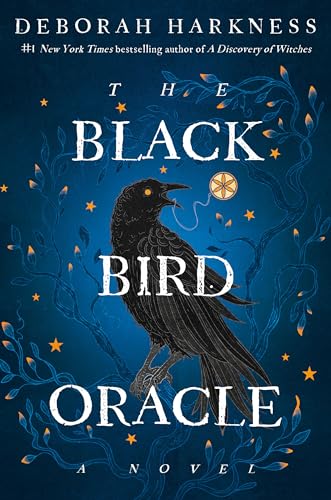
Although the original trilogy reaches a substantial conclusion, the All Souls universe continues beyond it. Time’s Convert (2018) explores Marcus MacNeil’s history and transformation into a vampire, while The Black Bird Oracle (2024) returns to Diana and Matthew as they confront new challenges involving their children and Diana’s ancestral magic. These are continuations of the broader All Souls series, not additional volumes of the original trilogy.
The books inspired the television adaptation A Discovery of Witches, starring Teresa Palmer and Matthew Goode. Broadcast across three seasons from 2018 to 2022, the series follows the central storyline while adapting certain characters and events for television.
The All Souls Trilogy stands apart through its integration of historical scholarship and supernatural storytelling. Libraries, laboratories, ancestral homes, and Renaissance courts become places where the boundaries between science and magic repeatedly dissolve. Beneath its elaborate mythology lies a story about challenging inherited prejudices, reconciling with the past, and discovering whether love and knowledge can overcome institutions determined to resist change.