
Below is the complete list of Lynn Austin’s Chronicles of the Kings books in order. For this series, the chronological reading order is the same as the order of publication.
Publication Order of Chronicles of the Kings Books




About Chronicles of the Kings
Lynn Austin’s Chronicles of the Kings is a five-book biblical historical fiction series beginning with Gods and Kings and continuing through Song of Redemption, The Strength of His Hand, Faith of My Fathers, and Among the Gods. Set in the ancient kingdom of Judah, the series draws primarily on the biblical accounts in 2 Kings and 2 Chronicles, transforming the reign of King Hezekiah and the generations surrounding him into an extended narrative of political danger, family conflict, religious reform, and faith.
Gods and Kings introduces Prince Hezekiah as the son of King Ahaz, a ruler whose fear and political compromises have led Judah toward idolatry. Austin portrays Hezekiah’s childhood against a disturbing background of pagan worship and royal instability, including the practice of child sacrifice. The experiences of his youth shape both his understanding of his father and the decisions he will eventually face as a ruler.
Hezekiah’s development provides the main continuity through the early novels. He inherits a kingdom threatened externally by the expanding Assyrian Empire and weakened internally by religious division. His challenge is therefore larger than simply surviving court politics. He must decide what kind of king he intends to become and whether Judah’s security rests on alliances, military calculation, or renewed faith in God.
Song of Redemption moves Hezekiah further into his reign and his efforts to reverse the policies of Ahaz. Religious reform becomes inseparable from politics as he attempts to restore worship of the God of Israel and repair a kingdom whose institutions and loyalties have been damaged. Austin combines figures drawn from Scripture with fictionalized personal stories, giving the larger biblical events a domestic and emotional dimension.
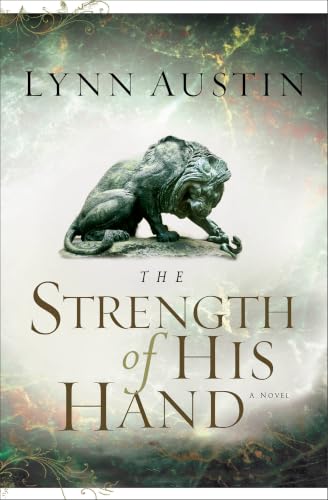
The Assyrian threat becomes increasingly important as the series progresses. Historically, Hezekiah ruled during the expansion of the Assyrian Empire under rulers including Sennacherib, and the confrontation between Judah and Assyria provides Austin with one of the sequence’s central sources of tension. The Strength of His Hand develops the pressures on Hezekiah as political decisions, personal suffering, and questions of trust converge.
The final two novels broaden the generational scope. Faith of My Fathers explores the consequences of Hezekiah’s legacy through his son Manasseh. The contrast is deliberately stark: reforms and convictions established by one generation do not guarantee that the next will preserve them. Manasseh’s reign allows Austin to examine rebellion, inherited faith, personal responsibility, and the destructive consequences of abandoning principles that once shaped the kingdom.
Among the Gods completes the sequence by following the later course of Manasseh’s story and the possibility of transformation after profound failure. The series therefore develops beyond a straightforward fictional biography of Hezekiah. Taken as a whole, it becomes a multigenerational account of Judah in which belief can be embraced, rejected, rediscovered, and tested repeatedly.
Several biblical figures appear alongside the royal family, including the prophet Isaiah. Austin uses such characters within the framework supplied by Scripture while employing historical fiction to imagine conversations, relationships, motivations, and everyday experiences that the biblical accounts do not describe in detail. The distinction is important: the major historical and biblical framework comes from the source material, while much of the characterization and connective narrative is necessarily fictionalized.
Austin’s interest in archaeology also informs the physical world of the novels. Before her first novel was published, she participated in an archaeological excavation at Timnah in Israel, an experience that contributed to her approach to biblical settings. Domestic life, warfare, religious practices, palace politics, and the geography of the ancient Near East help give the spiritual conflicts a tangible historical environment.
The Chronicles of the Kings should be read in publication order. The five novels form a continuing narrative, and later books depend on relationships, political circumstances, and spiritual conflicts developed earlier. Reading them sequentially also preserves Austin’s deliberate movement from Hezekiah’s childhood and reign into the consequences experienced by the following generation.
At its core, Chronicles of the Kings is concerned with the instability of inherited conviction. Kings can reform institutions but cannot command genuine faith, and parents can teach beliefs without determining what their children will choose. By following Hezekiah, Manasseh, and the people surrounding them across five novels, Austin turns an ancient royal history into a sustained examination of leadership, fear, power, repentance, and the difficult difference between receiving a legacy and making it one’s own.