
Below is the complete list of Jerry B. Jenkins’ The Chosen books in order. For this series, the chronological reading order is the same as the order of publication.
Publication Order of The Chosen Books


About The Chosen
Jerry B. Jenkins’s The Chosen novels transform the television drama created by his son, Dallas Jenkins, into a continuing series of biblical historical fiction. Rather than functioning as an unrelated spin-off, the books follow the broad progression of the screen series, with each principal novel corresponding to a season of the show. The result is a prose retelling of Jesus’s ministry that preserves the series’ emphasis on the people around him: disciples, family members, religious authorities, Roman officials, and others whose lives are altered by encounters they do not always understand.
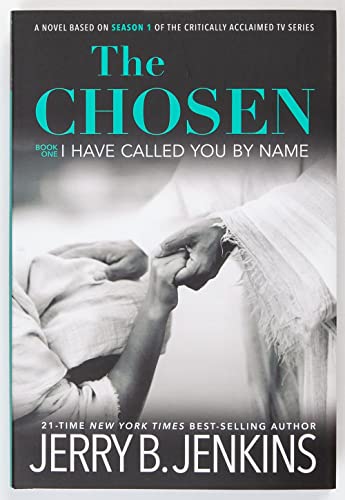
I Have Called You By Name establishes that approach through figures including Mary Magdalene, Simon Peter, Matthew, Nicodemus, and Jesus himself. The story is set within first-century Roman-controlled Judea and Galilee, where taxation, religious expectation, social divisions, political power, and ordinary hardship shape the characters’ lives. Jenkins does not treat the book as a detached biography of Jesus. The narrative moves among multiple viewpoints, giving substantial attention to the personal circumstances that surround familiar events and to the gradual formation of the group that will follow him.
That ensemble structure remains central as the sequence expands. Come and See, based on the second season, follows a growing movement whose success creates new difficulties. The disciples bring different backgrounds, temperaments, loyalties, and expectations into close proximity, while public interest in Jesus attracts scrutiny from both religious and political authorities. The series repeatedly draws tension from this contrast: events understood by believers as signs of extraordinary significance are simultaneously perceived by others as disruption, blasphemy, instability, or a possible threat to established power.
And I Will Give You Rest widens the pressure further as Jesus’s ministry becomes increasingly visible. Healings and teachings draw crowds, but popularity does not simplify the relationships around him. The disciples must contend with exhaustion, disagreement, uncertainty, and the limits of their own understanding. Jenkins’s prose format gives him room to linger inside those reactions, extending moments that television necessarily presents through performance, dialogue, and visual implication. Internal thought and narrative transitions can make motives more explicit while still following the dramatic framework developed for the screen series.
The later novels move into a darker phase. Upon This Rock corresponds to the fourth season and includes major losses, increasing opposition, questions of forgiveness, and the growing recognition that Jesus’s path will not lead toward the kind of earthly triumph some followers might expect. The emotional weight shifts as earlier curiosity and excitement give way to danger. Relationships among the disciples matter increasingly because the group is being tested not simply by outside enemies but by fear, misunderstanding, grief, ambition, and conflicting ideas about what should happen next.
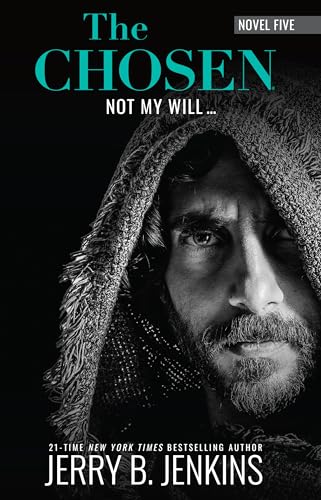
Not My Will…, the fifth novel, carries the narrative into Holy Week. The triumphant entry into Jerusalem, confrontation at the Temple, intensifying hostility from powerful opponents, Judas’s betrayal, and Jesus’s anguish in Gethsemane place the series near the central crisis toward which earlier installments have been moving. By this stage, Roman authority, priestly leadership, private loyalty, public expectation, and spiritual conviction are tightly intertwined.
The books occupy a distinct place within the wider Chosen publishing program, which also includes devotionals, study material, children’s titles, and other companion works. Jenkins’s novels are the main prose adaptations of the television seasons and should be distinguished from those separate branches. Their strongest continuity comes from the season-by-season progression of the same developing story.
Across the sequence, Jenkins combines his long experience in Christian fiction with the characterization and dramatic architecture established by the television production. The novels offer a more inward version of The Chosen’s world, preserving its ensemble focus while using prose to explore thought, hesitation, conflict, and personal response. That makes the series less a simple transcript of the show than a parallel narrative treatment of the same interpretation of Jesus’s ministry and the people drawn into its consequences.