
Below is the complete list of Lois Lowry’s Gooney Bird Greene books in order. For this series, the chronological reading order is the same as the order of publication.
Publication Order of Gooney Bird Greene Books


About Gooney Bird Greene
Few second-graders can command a classroom quite like Gooney Bird Greene. With her eccentric clothes, extraordinary confidence, and talent for turning ordinary experiences into captivating stories, she transforms everyday lessons into unexpected adventures. Created by Lois Lowry, the Gooney Bird Greene series consists of six children’s chapter books that combine humour, friendship, and imaginative learning. Set in an elementary school classroom, the stories celebrate individuality while introducing young readers to the pleasures of language, creativity, and storytelling.
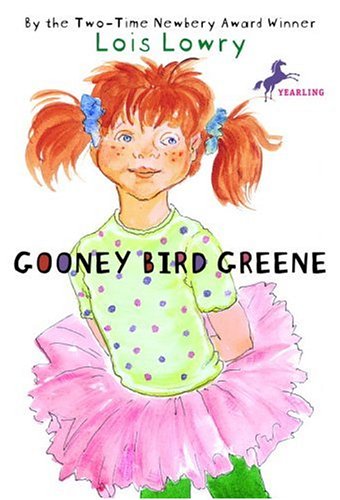
Gooney Bird makes her memorable entrance in Gooney Bird Greene (2002), arriving at Watertower Elementary School as the newest student in Mrs. Pidgeon’s second-grade class. Wearing colourful, mismatched outfits and displaying remarkable self-assurance, she immediately announces that she prefers sitting in the middle of everything, where she can receive the attention she believes she deserves.
Her unusual personality quickly fascinates her classmates, particularly when she begins sharing stories about her experiences. Gooney insists that every story she tells is absolutely true, although her dramatic titles and improbable circumstances initially suggest otherwise. Through clever explanations and unexpected details, she demonstrates how ordinary events can become entertaining narratives when presented with imagination and careful attention to language.
Mrs. Pidgeon recognises Gooney’s storytelling ability and uses her enthusiasm to encourage the other children to develop their own creative voices. This relationship between an understanding teacher and an unconventional student becomes one of the series’ defining features.
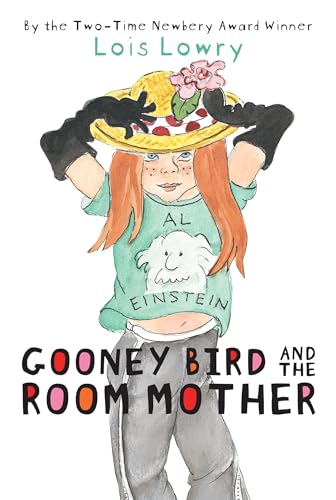
The classroom provides a consistent setting, but each instalment introduces a different educational activity or seasonal event. In Gooney Bird and the Room Mother (2005), preparations for a Thanksgiving pageant create an unusual challenge when the class struggles to find a parent willing to serve as room mother. Gooney devises an inventive solution, introducing a mysterious volunteer whose identity becomes a source of considerable curiosity.
Gooney the Fabulous (2007) shifts attention toward fables, as Mrs. Pidgeon’s students learn about stories that communicate lessons through animal characters. Gooney encourages her classmates to create their own fables, but the activity becomes complicated when Nicholas struggles to participate. Her determination to understand his difficulties highlights a more considerate side of her attention-seeking personality.
The series also explores poetry in Gooney Bird Is So Absurd (2009). Gooney’s unconventional approach to stimulating creativity, including wearing underpants on her head, initially produces amusement and confusion. However, the classroom’s exploration of poetry eventually takes on greater emotional significance, demonstrating how imaginative expression can help children understand difficult feelings.
In Gooney Bird on the Map (2011), geography becomes the subject of another inventive classroom adventure. As the children anticipate their February vacation, conversations about distant destinations inspire Gooney to help transform an ordinary lesson into a memorable exploration of the United States.
The final novel, Gooney Bird and All Her Charms (2013), introduces a lighthearted mystery when a classroom skeleton disappears during a science lesson about the human body. Gooney’s curiosity and determination encourage her classmates to investigate, combining elementary science with observation and problem-solving.
Although Gooney dominates many classroom discussions, Lowry gives the supporting children distinctive personalities and concerns. Malcolm, Nicholas, and their classmates respond differently to Gooney’s enthusiasm, allowing their experiences to become increasingly important as the school year progresses.
A particularly appealing aspect of the series is its seasonal structure. Gooney arrives in October, and subsequent adventures follow the classroom through Thanksgiving, December celebrations, winter lessons, and early spring. The changing activities provide natural opportunities to introduce different subjects without abandoning the familiar characters.
Lowry’s humour frequently emerges from the contrast between Gooney’s unusual behaviour and her entirely serious explanations. Her confidence can be overwhelming, but her creativity also helps quieter classmates discover abilities they might otherwise overlook.
The books are illustrated by Middy Thomas, whose artwork complements the playful classroom situations and Gooney’s distinctive appearance. The short chapters, accessible vocabulary, and school-based adventures make the series particularly suitable for children beginning to read longer fiction independently.
Unlike Lowry’s more serious works, including The Giver and Number the Stars, Gooney Bird Greene finds its meaning in ordinary childhood experiences. Yet the underlying message remains consistent with her broader writing: individual differences deserve recognition, and children are capable of understanding more than adults sometimes assume.
Gooney’s greatest achievement is not simply attracting attention. Through her enthusiasm for stories and willingness to approach familiar problems differently, she helps an entire classroom discover that everyone has something worth saying.