
Below is the complete list of Lois Lowry’s Anastasia Krupnik books in order. For this series, the chronological reading order is the same as the order of publication.
Publication Order of Anastasia Krupnik Books




About Anastasia Krupnik
Anastasia Krupnik is the kind of girl who keeps lists of things she loves and hates, questions nearly everything adults tell her, and approaches ordinary childhood problems with the seriousness of a philosopher. Created by Lois Lowry, she became the central character of a nine-book children’s fiction series published between 1979 and 1995. Through Anastasia’s observations, misunderstandings, and increasingly complicated adventures, Lowry captures the humour, embarrassment, and uncertainty of growing up in an intellectually curious family.
At the beginning of Anastasia Krupnik (1979), Anastasia is ten years old and living in Cambridge, Massachusetts, with her parents. Her father, Myron Krupnik, is a poet and college professor, while her mother, Katherine, is an illustrator. Their household encourages creativity, independent thinking, and lively discussion, although Anastasia frequently finds her parents’ explanations less than satisfactory.
Her carefully maintained lists of likes and dislikes reveal a girl constantly reassessing her opinions about herself and the world. A person or experience that seems wonderful one day can become intolerable the next. These changing judgments give readers an entertaining glimpse into her developing personality while reflecting the contradictions of childhood.
A major disruption occurs when Anastasia learns that her mother is expecting another baby. Initially horrified by the prospect of becoming an older sister, she must adjust to the arrival of her younger brother, Sam. Their relationship becomes one of the series’ recurring sources of humour, particularly as Sam develops his own unusual interpretations of family life.
The Krupnik family moves from Cambridge to the suburbs in Anastasia Again! (1981), creating another challenge for a girl who values familiar surroundings and established friendships. Anastasia is convinced that her new environment will be unbearable, but her experiences gradually complicate that judgment. Lowry uses her resistance to change to explore the uncomfortable transition between childhood security and greater independence.
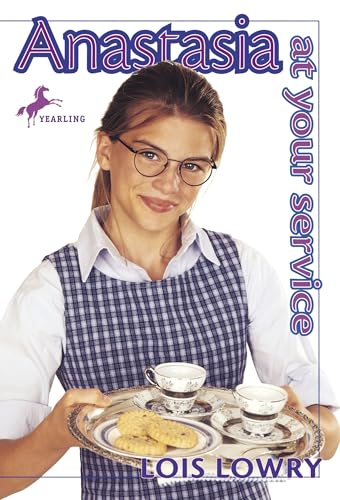
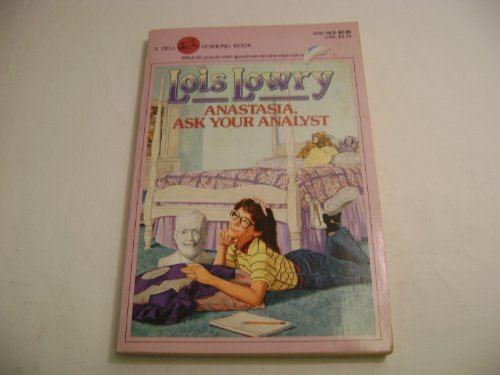
Throughout the series, Anastasia’s attempts to understand adult behaviour frequently lead to unexpected trouble. In Anastasia at Your Service (1982), her determination to find meaningful summer employment exposes her to the realities of responsibility and other people’s expectations. In Anastasia, Ask Your Analyst (1984), she becomes fascinated with Sigmund Freud and attempts to make sense of her problems through an unconventional approach to psychology.
These adventures demonstrate Lowry’s talent for portraying children as intelligent but inexperienced individuals. Anastasia’s reasoning is often logical within her limited understanding, even when the conclusions are hilariously mistaken. Rather than making her the subject of ridicule, Lowry allows readers to appreciate both her intelligence and her occasional absurdity.
As Anastasia grows older, her concerns increasingly involve friendships, boys, independence, and her uncertain future. Anastasia’s Chosen Career (1987) examines her changing ideas about personal ambition, while Anastasia at This Address (1991) explores romantic expectations through an ill-advised correspondence inspired by a personal advertisement.
Despite these changes, Anastasia never becomes an entirely different person. Her sharp observations, impulsive decisions, fierce opinions, and occasional insecurity remain recognisable throughout the novels.
One distinctive feature of the series is its treatment of time. Although the books appeared across more than fifteen years, Anastasia ages only from ten to thirteen. Lowry preserves her protagonist’s early adolescent perspective rather than following her into adulthood, allowing the stories to concentrate on the particular uncertainties of those years.
The Krupnik family also inspired a companion series featuring Anastasia’s younger brother. Beginning with All About Sam (1988), the four Sam Krupnik novels present family life through the eyes of a much younger child. Familiar characters appear in both series, but Sam’s perspective offers a different kind of humour based on childhood curiosity and literal interpretations of the world.
Unlike Lowry’s more serious novels, including The Giver and Number the Stars, the Anastasia Krupnik books draw their conflicts primarily from everyday experiences. Their appeal rests on believable family conversations, affectionate satire, and the recognition that growing up involves making mistakes without necessarily having all the answers.
Anastasia’s enduring charm comes from her refusal to accept the world without questioning it. She can be stubborn, dramatic, self-conscious, and remarkably perceptive, sometimes within the same conversation. Through her changing opinions and imperfect discoveries, Lowry creates an affectionate portrait of childhood intelligence finding its way toward maturity.