
Below is the complete list of Brian Freeman books in order. For each series, the chronological reading order is the same as the order of publication.
Publication Order of Jonathan Stride Books
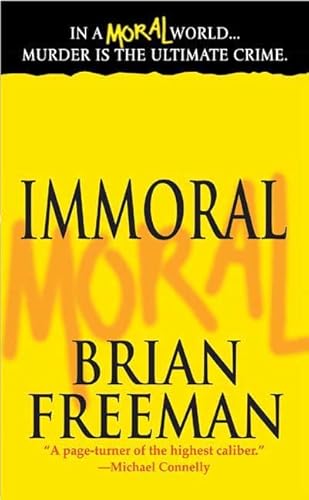


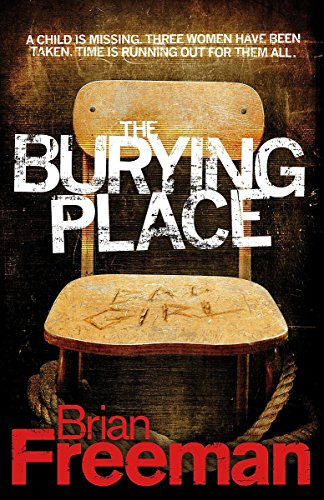
- Spitting Devil (2012)
Spitting Devil was published in 2012 and is listed as book #6 in the Jonathan Stride series. 


Publication Order of Tess Drake Books

Publication Order of Cab Bolton Books


Publication Order of Frost Easton Books


Publication Order of Standalone Books


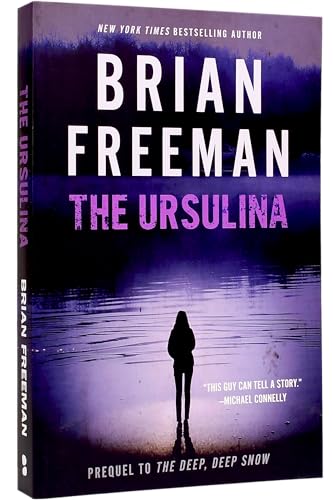


Publication Order of Jason Bourne Books


- The Bourne Legacy (2003)
(By Eric Van Lustbader)
In the Jason Bourne series, The Bourne Legacy is book #4 and was published in 2003. 




About Brian Freeman
Brian Freeman is an American novelist best known for psychological suspense, character-driven crime fiction, and his continuation of Robert Ludlum’s Jason Bourne series. His work ranges from long-running police procedurals to self-contained domestic thrillers and international espionage, but the connecting interest is usually the same: the private motive concealed beneath an apparently straightforward crime. Rather than treating twists as isolated shocks, Freeman builds them from guilt, obsession, grief, family history, and the compromises people make to protect the identities they have constructed.
Born in Chicago and raised in San Mateo, California, Freeman studied English at Carleton College in Minnesota. Before becoming a full-time novelist, he worked in marketing, communications, and public relations, including a senior role with an international law firm. Minnesota later became central to his fiction, particularly the severe weather, industrial landscape, and Lake Superior atmosphere surrounding Duluth.
His debut, Immoral, introduced Duluth police lieutenant Jonathan Stride and established the series that remains the foundation of his original bibliography. The novel won the Macavity Award for Best First Mystery and was also shortlisted for several other major debut awards. Stride is a capable investigator, but the books are as concerned with his emotional history and personal relationships as with the crimes before him. Serena Dial, Maggie Bei, and other recurring characters give the sequence continuity, while cases involving disappearance, murder, abuse, and deception repeatedly expose the distance between public appearances and private lives.
Freeman later developed several distinct series rather than simply reproducing the Stride formula. Cab Bolton is a wealthy, unconventional investigator whose cases move between Florida and other sharply rendered locations. The Frost Easton trilogy follows a San Francisco homicide detective and places strong emphasis on family trauma, civic corruption, and the city’s neighborhoods. The Shelby Lake novels center on a former police officer drawn into investigations in small-town Minnesota. These sequences are separate from one another and can be read independently, making Freeman’s bibliography easier to navigate by character rather than as one interconnected fictional universe.
His standalone thrillers allow him to experiment more freely with viewpoint and structure. Spilled Blood, which won the International Thriller Writers Award for Best Hardcover Novel, explores hostility between two Minnesota communities. The Deep, Deep Snow, Thief River Falls, and I Remember You use memory, perception, isolation, and uncertain identity to destabilize what both characters and readers believe. Place is rarely decorative in these books: snow, darkness, wilderness, urban geography, and physical distance shape the pressure under which the mysteries unfold.
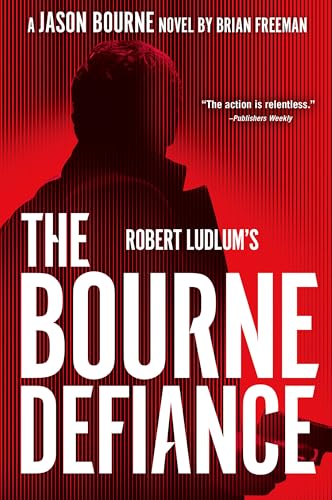
A separate branch of Freeman’s career began when he was chosen to continue Robert Ludlum’s literary Bourne series after Eric Van Lustbader. Beginning with The Bourne Evolution, his novels return attention to the tension between Jason Bourne and David Webb while placing the character inside contemporary geopolitical conspiracies. These books should be understood as franchise continuations, distinct from Freeman’s own crime series and standalones.
Freeman’s bibliography is therefore best divided into recurring detective series, independent psychological thrillers, and the Ludlum-branded Bourne novels. Across all three, his strongest signature is an emphasis on motive and emotional consequence. Crimes may drive the plot, but the real suspense usually comes from discovering why a character crossed a line—and what that decision has made impossible to repair.