
Below is the complete list of Robert Ludlum’s Jason Bourne books in order. For this series, the chronological reading order is the same as the order of publication.
Publication Order of Jason Bourne Books


- The Bourne Legacy (2003)
(By Eric Van Lustbader)
In the Jason Bourne series, The Bourne Legacy is book #4 and was published in 2003. 


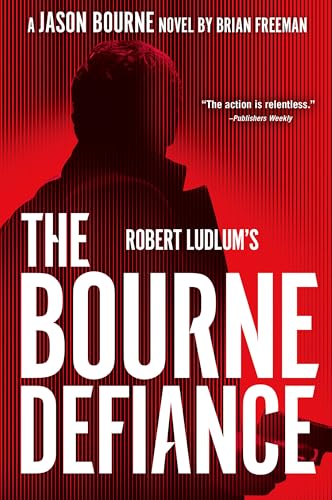


About Jason Bourne
Robert Ludlum’s Jason Bourne series began as a tightly constructed trilogy about identity, memory, political manipulation, and the psychological damage caused by covert warfare. Its central figure is David Webb, an American academic and intelligence operative whose mind fractures after a mission goes catastrophically wrong. When he is recovered from the Mediterranean with gunshot wounds and severe amnesia, he possesses the instincts of a professional killer but no reliable understanding of who he is. The name Jason Bourne becomes both his most important clue and the identity he fears may reveal him as a murderer.
The Bourne Identity follows Webb as he reconstructs his past through bank records, coded information, instinctive reactions, and encounters with people determined to kill him. He learns that Bourne was an identity created during Operation Treadstone, a covert plan designed to draw the international assassin Carlos the Jackal into the open. Rather than simply hunting Carlos, Webb had been transformed into a fictional rival whose apparent killings and reputation would provoke the terrorist into exposing himself.
Marie St. Jacques initially becomes entangled in Bourne’s escape against her will, but she gradually recognizes the difference between Webb’s character and the violent persona imposed upon him. Their relationship provides the emotional foundation of Ludlum’s trilogy. Marie represents the possibility that Webb can build a genuine life beyond Treadstone, while the recurring return of Bourne demonstrates how difficult it is to separate survival skills from the trauma that created them.
The Bourne Supremacy begins after David and Marie have attempted to establish a quieter existence. When an assassin begins committing killings under the Bourne name, intelligence officials force Webb back into the identity he hoped to abandon. The story moves heavily through Hong Kong and mainland China, combining political conspiracy with the appearance of a second Bourne. Webb must identify the impostor while navigating agencies willing to manipulate him and threaten Marie to achieve strategic goals.
Ludlum concluded his original sequence with The Bourne Ultimatum. David is older, married, and raising a family, but Carlos remains alive and determined to settle their conflict. Messages sent in Bourne’s name signal that the assassin is preparing a final confrontation. David must once again become Jason Bourne, infiltrating the powerful Medusa organization and using himself as bait. The novel brings the Webb-Bourne conflict and his long pursuit of Carlos to their intended conclusion.
After Ludlum’s death, his estate authorized Eric Van Lustbader to continue the character. Beginning with The Bourne Legacy, Lustbader wrote eleven further novels, expanding Bourne’s world through new conspiracies, intelligence organizations, personal relationships, and international threats. These books preserve David Webb’s divided identity but develop a continuity distinct from Ludlum’s completed trilogy.
Brian Freeman later assumed authorship with The Bourne Evolution. His sequence renewed Bourne’s connection to Treadstone and introduced continuing conflicts involving assassins, hidden operations, manipulated memories, political conspiracies, and intelligence databases capable of destabilizing governments. Freeman’s books form another connected phase and are best read in their own publication order after the Lustbader novels.
The series should therefore be understood in three authorship periods: Ludlum’s original trilogy, Lustbader’s continuation, and Freeman’s later revival. Readers interested only in Robert Ludlum’s complete Bourne story can stop after The Bourne Ultimatum. Those continuing beyond it should expect shifts in supporting characters, chronology, and interpretation.
The novels also differ substantially from their film adaptations. Ludlum’s Bourne is not merely an amnesiac assassin seeking revenge; he is a damaged man struggling to determine whether an invented identity has permanently altered his moral nature. Across every version of the series, that division remains the character’s defining conflict: David Webb wants a home and family, while Jason Bourne survives by trusting no institution, no memory, and almost no one.