
Below is the complete list of Scott Turow books in order. For each series, the chronological reading order is the same as the order of publication.
Publication Order of Kindle County Books


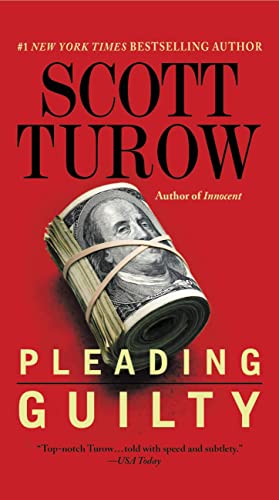


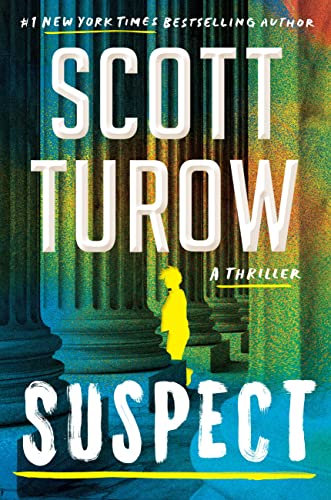

Publication Order of Presumed Innocent Books
Publication Order of Standalone Books
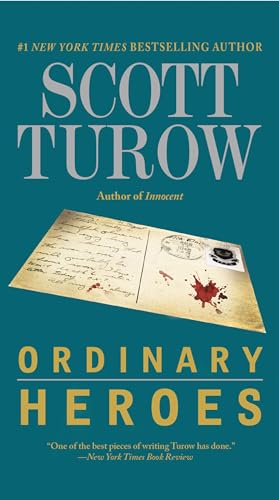
Publication Order of Non-Fiction Books


Publication Order of Low Down Dirty Vote Books

About Scott Turow
Scott Turow is an American novelist and lawyer whose work helped define the modern legal thriller as a serious form of crime fiction. His books are known for courtroom pressure, moral ambiguity, institutional detail, and characters whose public roles rarely match their private motives. Although he is most famous for Presumed Innocent, his bibliography reaches beyond a single landmark novel, moving through the fictional legal world of Kindle County, standalone fiction, nonfiction about law, and later returns to Rusty Sabich, the character who made his name internationally.
Turow’s path into fiction was unusually close to the subject matter that later shaped his career. He studied writing as an undergraduate at Amherst College, held a writing fellowship at Stanford, attended Harvard Law School, and later worked in the U.S. Attorney’s office in Chicago. That background gave his novels their distinctive authority. His legal scenes are not merely decorative; trials, plea negotiations, professional ethics, judicial politics, prosecutorial ambition, and the limits of proof become engines of character as much as plot.
Before his breakthrough as a novelist, Turow published One L, a nonfiction account of his first year at Harvard Law School. The book became a durable classic among readers interested in legal education, partly because it treats law school not simply as professional training but as psychological pressure. That same interest in how legal systems reshape people would later become central to his fiction. Turow’s later nonfiction, including Ultimate Punishment, also reflects his long engagement with justice, punishment, and the moral responsibilities attached to legal power.
Presumed Innocent, published in 1987, transformed Turow’s career and remains his signature work. The novel follows prosecutor Rusty Sabich after he is accused of murdering a colleague with whom he had been involved, turning the machinery of criminal justice back upon one of its own insiders. Its success helped establish a richer model for the legal thriller: not merely a puzzle or a courtroom contest, but a story in which desire, secrecy, professional ambition, marriage, reputation, and law collide. The book was adapted into a 1990 film and later into a 2024 television series, confirming its continued cultural life well beyond its original publication.
Kindle County became the main fictional territory through which Turow explored law and its consequences. It is not a conventional series built around one detective solving case after case. Instead, characters reappear, legal institutions overlap, and the same imagined civic world becomes the setting for different kinds of moral and procedural conflict. The Burden of Proof, Pleading Guilty, Personal Injuries, Reversible Errors, Innocent, The Last Trial, Suspect, and Presumed Guilty all show Turow returning to questions of guilt, responsibility, corruption, memory, and the gap between legal truth and human truth.
Rusty Sabich occupies a special place within that larger world. Turow returned to him decades after Presumed Innocent in Innocent, then again in Presumed Guilty, where Rusty is older and drawn back toward the courtroom when his partner’s son is accused of murder. This late continuation gives the Sabich books the shape of a life examined across time: prosecutor, accused man, judge, and finally aging lawyer confronting what the system can and cannot repair.
Turow’s writing stands apart from faster, more formula-driven legal suspense because he is often as interested in consequence as in revelation. His plots can be intricate, but their force usually comes from people trapped by their own compromises, by institutions they partly believe in, and by truths the law may expose without fully healing. Across more than three decades of fiction, he has remained one of the clearest examples of a novelist whose professional knowledge did not narrow his imagination, but gave it a durable subject: the courtroom as a place where private life, public judgment, and moral uncertainty meet.