
Below is the complete list of Scott Turow’s Kindle County books in order. For this series, the chronological reading order is the same as the order of publication.
Publication Order of Kindle County Books





About Kindle County
Scott Turow’s Kindle County books form one of the most important fictional legal worlds in modern crime writing, but they are not a conventional series built around one detective, one lawyer, or one repeating case formula. Kindle County is Turow’s invented Midwestern legal setting, strongly shaped by the politics, courtrooms, professional culture, and moral pressures associated with Chicago and its surrounding institutions. Across the books, prosecutors, judges, defense lawyers, investigators, politicians, witnesses, defendants, and families move through a shared civic world where law is never separate from ambition, memory, desire, and compromise.
The series begins with Presumed Innocent, Turow’s breakthrough novel and the book that introduced Rusty Sabich, a prosecutor accused of murdering a colleague with whom he had been involved. Its force comes not only from the courtroom suspense but from the reversal of professional identity: a man trained to build cases for the state suddenly becomes the accused. That tension between legal procedure and private guilt remains central to Kindle County, even when later novels shift to different characters and different corners of the justice system.
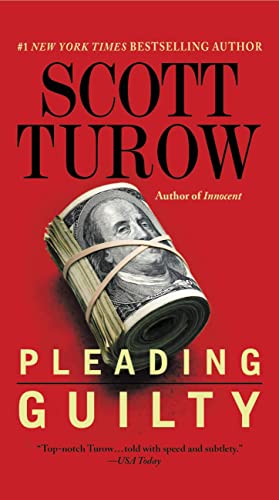
One reason the sequence has endured is its flexible structure. The Burden of Proof moves attention toward Sandy Stern, the defense attorney from Presumed Innocent, while Pleading Guilty turns to a lawyer investigating missing money and institutional rot. Other books explore judicial power, prosecutorial misconduct, capital punishment, sexual accusation, corruption, war crimes, family secrecy, and the long afterlife of old legal decisions. The connection is not always plot-dependent; it is often professional, geographic, and moral. Characters recur, reputations matter, and the same legal culture continues exerting pressure from book to book.
Rusty Sabich remains the most famous figure in the larger sequence. Turow returned to him in Innocent, decades after the events of Presumed Innocent, when Rusty is older, professionally transformed, and again caught in a death investigation that forces the past back into public judgment. Presumed Guilty later brings him into another late-life case, this time as an aging lawyer drawn into defending the son of the woman he loves. Taken together, the Rusty books trace a life across prosecutor, defendant, judge, and defense counsel, making them a distinct arc inside the broader Kindle County world.
Sandy Stern provides a different kind of continuity. Urbane, careful, and philosophically alert to the imperfections of law, Stern appears across several books and becomes the emotional center of The Last Trial. His presence allows Turow to examine legal advocacy as both vocation and burden, especially when courtroom skill collides with loyalty, age, illness, and ethical uncertainty. The recurrence of figures like Stern gives Kindle County the feeling of a legal community rather than a simple backdrop.
The books also vary in scale. Some stay close to courtroom procedure and trial strategy; others move through corporate crime, political life, investigation, or international law. Testimony, for example, broadens the frame beyond Kindle County itself while still belonging to Turow’s wider legal universe through its protagonist and concerns. That elasticity lets the series examine law as an institution rather than a single genre device.
What unifies Kindle County is Turow’s refusal to treat guilt as purely legal or innocence as purely personal. Verdicts matter, but they rarely settle everything. Evidence can be incomplete, motives mixed, memories unreliable, and justice shaped by people who are themselves compromised. The result is a series where the courtroom is only one arena of judgment. Behind every case lies a larger question about what the law can prove, what it cannot repair, and how people continue living after the official record has been written.