
Below is the complete list of Wilbur Smith books in order. For each series, the chronological reading order is the same as the order of publication.
Publication Order of Courtney Books


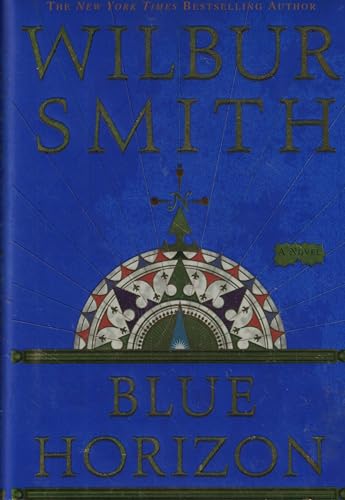
- Assegai (2009)
Assegai is a 2009 release and appears as book #13 in the Courtney series. 



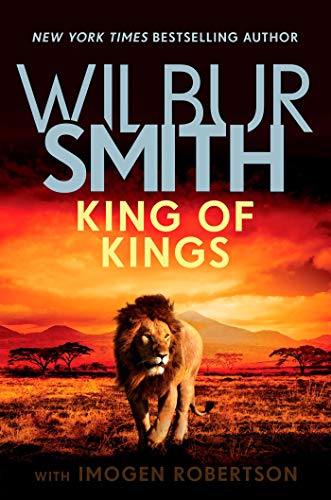


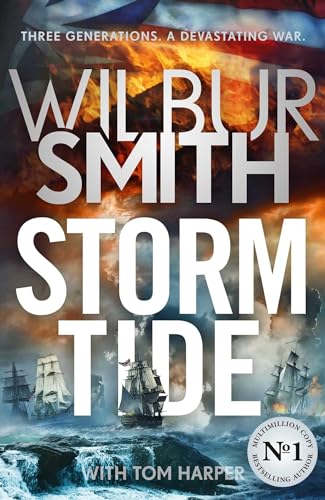
- Nemesis (2023)
(With Tom Harper)
Published in 2023, Nemesis is listed as book #22 in the Courtney series. 
- Crossfire (2025)
(With David Churchill)
In the Courtney series, Crossfire is book #24 and was published in 2025. 

Publication Order of Jack Courtney Books
with Christopher Wakling


Publication Order of Ballantyne Books


- Fire on the Horizon (2024)
(With Imogen Robertson)
Fire on the Horizon is a 2024 release and appears as book #8 in the Ballantyne series.
Publication Order of Ancient Egypt Books


- Testament (2023)
(With Mark Chadbourn)
In the Ancient Egypt series, Testament is book #9 and was published in 2023. - House of Two Pharaohs (2025)
(With Mark Chadbourn)
House of Two Pharaohs was first published in 2025; within the Ancient Egypt series, it is listed as book #10.
Publication Order of Hector Cross Books


Publication Order of Standalone Books




Publication Order of Non-Fiction Books

Publication Order of Prey Zone Books
with Steve Cole, Keith Chapman



About Wilbur Smith
Wilbur Smith was a Zambian-born British-South African novelist best known for large-scale adventure fiction set across Africa. Over a career spanning more than five decades, he built interconnected family sagas around war, exploration, colonial expansion, political upheaval, hunting, mining, and maritime conflict. His best-known work belongs to the Courtney and Ballantyne series, while his Ancient Egypt novels brought the same combination of historical sweep and action to a much earlier setting.
Wilbur Addison Smith was born on January 9, 1933, in Broken Hill, Northern Rhodesia, now Kabwe in Zambia. He grew up on a cattle ranch and developed an early familiarity with the landscapes, wildlife, and social divisions of southern Africa that would later dominate his fiction. He was educated in South Africa and studied commerce at Rhodes University, eventually qualifying as a chartered accountant.
Smith began writing while working in business. His first published novel, When the Lion Feeds, appeared in 1964 and introduced Sean Courtney, establishing the family around which much of his later fiction would revolve. The book follows Sean from the South African frontier through mining, conflict, ambition, and personal loss, and its commercial success allowed Smith to become a full-time novelist.
The Courtney novels eventually developed into a sprawling multigenerational saga extending across centuries. Rather than following a single protagonist, the series traces successive branches of the Courtney family through major periods of African and international history. Some books focus on nineteenth- and twentieth-century southern Africa, while later additions move backward into the seventeenth and eighteenth centuries.
Among the most prominent Courtney characters are Sean Courtney, Centaine de Thiry, Shasa Courtney, and generations of descendants whose lives intersect with wars, political change, business empires, and family rivalries. Books such as The Sound of Thunder, A Sparrow Falls, The Burning Shore, Power of the Sword, Rage, and A Time to Die helped establish the series as the central pillar of Smith’s career.
Smith created another major African family saga with the Ballantyne series. Beginning with A Falcon Flies, the books follow members of the Ballantyne family through nineteenth-century southern Africa, particularly territories that would become Zimbabwe. The series explores exploration, missionary activity, trade, colonial conflict, and competition for political and economic power.
The Courtney and Ballantyne families were originally developed as separate lines, but Smith later brought them into closer narrative proximity, creating a broader fictional history in which the two dynasties could intersect. This interconnected structure became one of the distinctive features of his bibliography.
Smith also moved far outside the modern African adventure with his Ancient Egypt novels. Beginning with River God, the sequence centers initially on Taita, an exceptionally intelligent eunuch, physician, strategist, and adviser. Set against dynastic conflict and invasion, the books combine historical inspiration with adventure, romance, warfare, and elements that become increasingly mystical in later installments.
His other fiction includes standalone and loosely connected adventure novels involving treasure hunting, espionage, piracy, international conflict, and maritime danger. The Eye of the Tiger, Shout at the Devil, Cry Wolf, and Those in Peril illustrate the breadth of his interest in survival stories and men and women operating under extreme pressure.
Smith’s novels are marked by physical scale. Deserts, oceans, battlefields, wilderness, mines, rivers, and frontier settlements often function as active forces within the story. His protagonists tend to be ambitious, resilient, and capable of violence, while family loyalty and betrayal frequently matter as much as politics or war.
His work also reflects the historical attitudes and tensions of the periods he wrote about, and aspects of his portrayal of colonial Africa, race, gender, and violence have attracted criticism alongside the enormous popularity of his books. His fiction is best understood as expansive historical adventure rather than restrained social realism.
In his later years, Smith increasingly worked with co-authors, including Tom Harper, David Churchill, Corban Addison, and others, allowing his major series and characters to continue appearing at a faster pace. These collaborations expanded the Courtney, Ballantyne, and Ancient Egypt lines while preserving Smith’s name as the central identity of the brand.
Wilbur Smith died on November 13, 2021, at his home in Cape Town, South Africa, aged 88. By then he had become one of the most internationally successful adventure novelists associated with Africa. His lasting reputation rests chiefly on the immense fictional history he created around the Courtney and Ballantyne families and on a style built around danger, ambition, family conflict, and the dramatic possibilities of history played out across vast landscapes.